Thursday, January 13, 2011

La tetera: una tactica de la policia de Inglaterra en contra los movimientos sociales

El lugar de luchar cambia, las formas de opresión cambian, pero la necesidad de luchar para liberarnos no cambia.
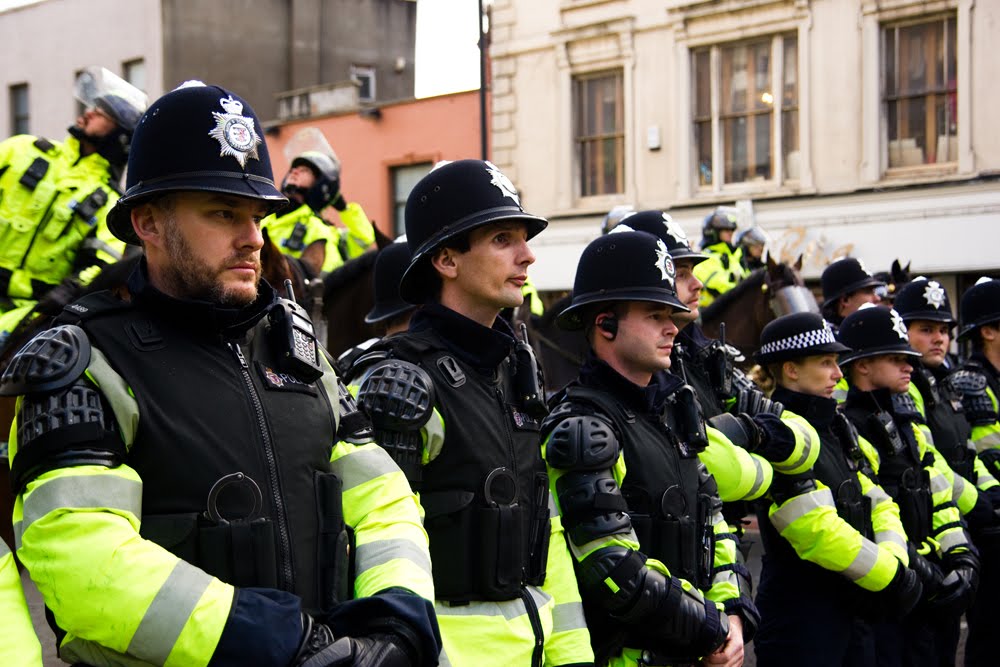
Estoy en la marcha con un grupo de amigos, formamos un hermoso grupo de afinidad donde nos cuidamos uno al otro. Me siento fuerte, empoderada, rodeada por gente con quien hemos caminado las calles mucho. La marcha es en contra los nuevas leyes del gobierno britanicó que aumentan la matricula a las universidades a $27,000 pesos colombiano por año! Si los salarios son mas altos acá pero la gente de la clase trabajador acá tan poco tienen este cantidad de plata. Este precio hace la univesidad aún mas privado y menos asequible a la mayoria de lxs jovenes. Y lxs jovenes estan molestos, bastantes.
La marcha va por una calle principal cuando vemos más camionetas de la policia llegando. Las con experiencia sabemos que quieren bloquear el camino de la march y acoralarla en una tacticá de acá que se llama “kettle”. Un kettle es una tetera literalmente, en la practica nos rodean por una cerca solída de policia con sus batones por horas. Si no respondemos rapidó lo lograrán y allá estaríamos hasta que nos morimos del frio o nos rebellamos y tratamos de salir a la fuerza y nos golpean. 

La marcha no tiene camino fijo ni organisadores ni voceros. en vez de enfocar la marcha en la llegada a un lugar simbolico se enfoca la marcha en construir poder entre la gente que marchen. en vez de la participacion pasiva comun en las marchas de aca todas participan activamente en decidiendo por donde vamos en el camino experimentando con la democracia directa. Es fundamental que experimentemos con otros formas de democracia como miramos la farsa de democracia de los partidos politicos que dicen una cosa para ser elegidos y luego hace el contrario. Tenemos un gobierno de coalicíon, una de los partidos ganaron puestos diciendo que iban a estar en contra el aumento de las matriculas. Menos que un año despues hacen el contrario.
Al ver las camiones llegando, la gente gritan propuestas de que hacer, se escuchan contra propuestas. La policia bajan de sus camionetas (hasta ahora no se mueva por moto como en Colombia) y gente con astucia muestran propuestas concretas. Corren para pasar antes de que hagan un muro inpenetrable. Lo demás siguen, animada por la idea. Este capacidad para responder rapidó y autonomá (sin que nadie te manda a hacer algo) a la situación que se desarolla nos permita sacar mucha ventaja a la policia. 
 
Para mi, es un ejemplo precioso y un metaforo al camino hacia nuestra propia liberación. Sin jefes orquestrando el movimiento de la gente, le gente mueven por su propia rabia y deseos sea en una marcha o en nuestra organisación. Si, compartamos experiencias del pasado y construyamos teorias desde nuestras observaciones, pero solo nosotras mismos quienes viven el presente deciden el que hacer en el presente. Ofrezco mis observaciones y ideas de acá como un aporte para el trabajo organisativo de ustedes allá.

Mas tarde ganaron la policia :( Unos de nosotras lo vimos venir pero la muchidumbre tenía un velocidad y no logramos cambiarla a tiempo. Rodearon todo la gente con una cerca de policia. Allá los detuvieron por 4 horas. En otras protestas en Diciembre era por 8 horas. No puedes salir para orinar, comprar comida, ir a una cita. No hay legislación que permite que te retengan sin detenerte formalmente. Es un secuestro masivo y siempre salen impunes.
Hasta ahora no se usa los gases lacrimogenos en mi tierra. Pero si te hacen morir de aburrimiento, orinarte o perder tu trabajo por llegar retarde. A veces la gente explotan con rabia y frustración por la situacíon y estás atrapado entre un conflicto.

Con este tactica quieren disuadirte de manifestar. Marco, un anarquista colombiano escribío algo que me parece cierto:
uno deduce ....que si acá nos matan de manera menos higiénica… a punta de bala o motosierra, allá, en Europa, los mecanismos de represión son más tecnificados y asépticos y el control social juega un factor decisivo en ese aspecto.” ver articulo
La tetera es un mecanismo de control de protesta, entre otras. Tanto como en Colombia se usa la sistema de justicia para dar condenas severas a lxs que opongan las politicas violentas del Estado. Un joven quien participó en la ocupación de la sede del partido de los Conservadores (el gobierno actual) fue condenada a 2 años de carcel por tirar un extinguidor del techo sin causar daño a nadie mientras que 2 años despues del asasinato de Ian Tomlinson por la policia aún no hay ningun condena.
Otro mecanismo de control es el uso de la policia secreto. Fue revelado que un compañero, alguien de confianza politica de acá quien participó en movilisaciones sociales y ambientales, es tombo. Da una sensación de nausea pero por lo menos nos confirma que nuestras ideas y practicas de solidaridad, de acción directa y de la horizontalidad son una amenaza a los elites de este pais. Así nuestras actos acá son actos continua de solidaridad con ustedes. El mismo supragobierno económico que quiere encarcelar nuestras vidas acá para callarnos es la misma esctructura que hace la guerra a ustedes. Pero también es el misma deseo humano que nos motiva en cualquier rincon del mundo a liberar nuestra espiritu de la sumisión y levantar la cabeza con orgullo y luchar.

Tuesday, August 24, 2010

An ecological experiment with bamboo and pop bottles

Please carry us” shouted the women to the bus driver that went slowly past us heading up the dusty unpaved road. The laughter filled the air even as it looked like the driver wasn't going to let us on but then he signalled us to climb on through the back door. The ten of us piled on, amidst “god bless you” and numerous jokes about how he would be a good husband. Solidarity on the normal buses is ever present and they always let you travel for less than the official price and sometimes when near the end of the line, they let you ride for free.... all ten of us.

Meanwhile the Transmillenium bus system, the multimillion dollar transport system never lets you on for less than the official price, imposing an altogether different culture of 'rights for those who can pay'. Several students have been run over and killed this year alone as they didn't have the money to pass through the barriers so instead tried to jump through the bus access doors. Students poured out of colleges on mass blocking the bus routes and demanding that a student price be introduced so that the city's poor students don't have to choose between eating, transport or risking their life. The response was the riot police but the political space seems to have been created for the debate.

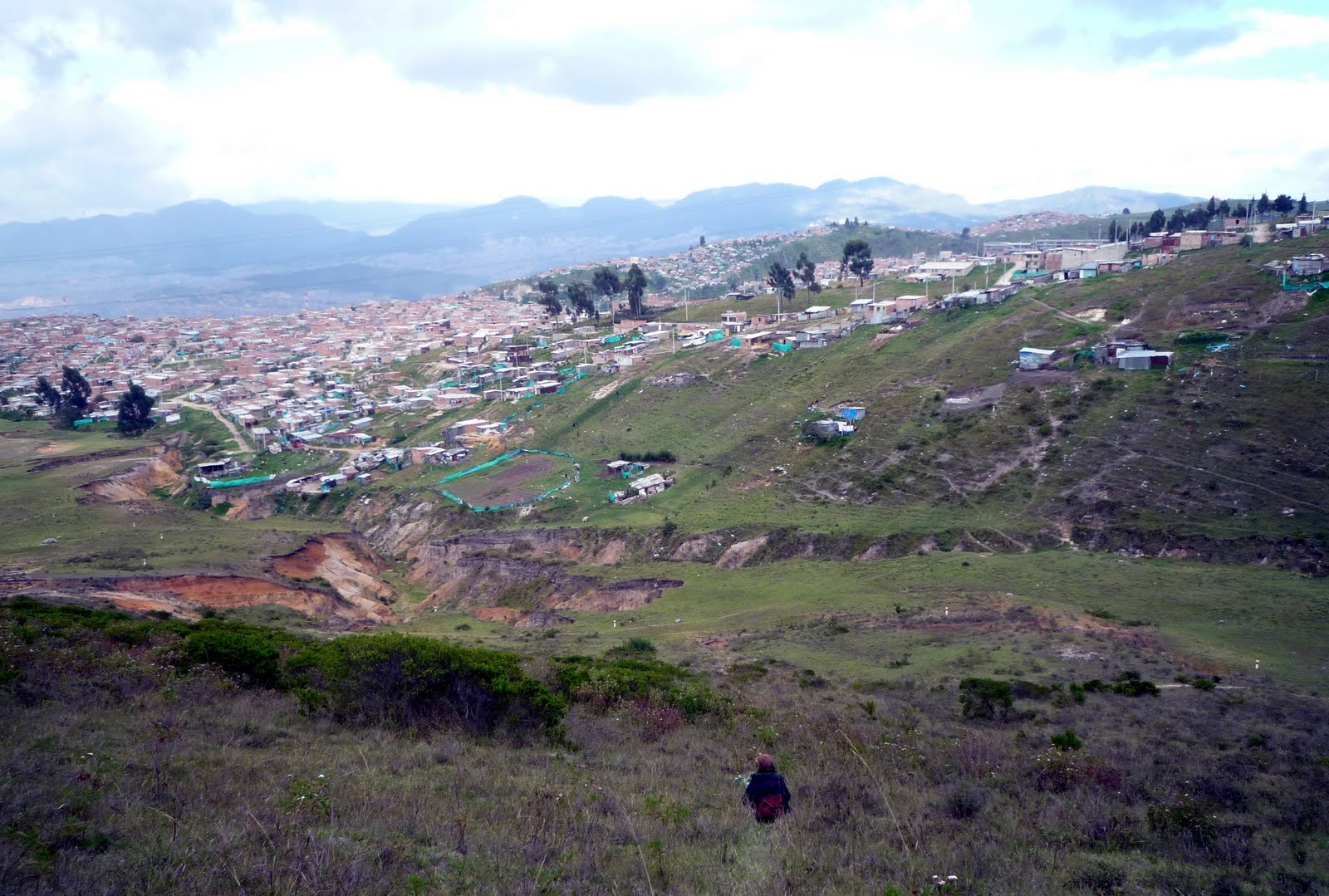
Back to our day out. We scrambled excitedly out of the bus at the end of the line and headed toward the plot of land. It is a plot right on the edge of the city, you only see fields and trees and most importantly you only breathe clean air, high up in the mountains above the smog level.

Wilson, a young lad from the organisation “Jovenes Proponen” -Youth Propose – from Ciudad Bolivar explains the project to us. “We want to have a place where young people can come and learn new skills, choose a different route in life to joining gangs and learn about the relationship between humans and our environment and how this capitalist way of building is destroying our environment, our home

They are building a education centre out of guadua, clay mixed with horse shit and plastic bottles filled with plastic bags. Seven thousand plastic bottles roughly. The women from Paraiso got excited and inspired “so many of us had to work so hard to buy the bricks for our house, they are so expensive. If only we had known about another way to build.....”. They offered immediately, only to happy to help, to collect bottles to contribute to the project,

Local neighbours have been inspired by the project and have got involved, coming down to help with work in their free time. They proudly tell us how they have planted peas, potatos, peppers and lettuces and about their irrigation system, again using plastic bottles. In return the women from Paraiso introduced themselves and shared their thoughs:

I like to be nosy and find out what is happening in other places, but not to be nosy for the sake of it but to learn new things. I am very happy to be here today” says Elvira

For me it is very important that people are building again with bamboo and clay. That's how they build in my region. And it is a great idea to use the rubbish from this city so we don't have to exploit more natural resources” says Carmen

It brings back memories being here, where I come from we used bamboo a lot. We used it to carry water in, and I use to hide avocados inside them” says Gratiniano. I didn't find out quite who he hid the avocados from.

Maria presents the women's project “We are a smallish but solid and determined group of women from Paraiso who want to organise ourselves so that we don't keep being exploited. We have a small allotment where we have strawberries and peas and arachacha planted and also we have a wormery so that we can make good compost from our waste products. If you wanted to come and visit us one day it would be good. So we can continue sharing experiences of how to produce food. Also it would be wonderful if we could come here and begin to cultivate some of the unused land around this plot.”

The land around the plot belongs to either Victor Caranza or Forrero Fetequa, we aren't sure which but we are sure that they are both part of Colombia's landowning class.

Colombia has one of the most unequal land distributions in the world, achieved through violent dispossession of the lands and wealth of first indigenous peoples and now also of peasant farmers and afro-colombian communities. At the end of 2009 there were up to 4.9 million internally displaced people (IDP) in Colombia, bringing it alongside Sudan as one of the two largest internal displacement situations in the world. In 2009 alone there was a reported 290,000 people displaced. This massive displacement has resulted in over 6 million hectares of productive land being abandoned by campesinos.

The current Internal Displacement Situation situation has to be seen in the context of a historical movement of expansion by the land-owning elites, an agrarian and structural problem, complicated and compounded since the 1970s by drug-trafficking and the presence of large international corporations.” [1]

Using this land above the urbanised part of Ciudad Bolivar for growing food on would definately ease the problem of hunger but the land is earmarked as part of the Mining Industry Park, which will not ease problems of hunger.

As we walked back to El Paraiso the women commented to me how many of the houses, built from tin, plastic and wood, that we passed on our way home were not their a year ago. Signs of displaced peasant farmers trying to find a patch of land where no one will violently kick them off.


[1] Internal Displacement Monitoring Centre

http://www.internal-displacement.org/idmc/website/countries.nsf/%28httpEnvelopes%29/7994964F3955C802C125719200585B76?OpenDocument

Monday, August 23, 2010

Building Popular Power: CISCA's regional assembly Part 2

My memory of assemblies are of day after day sat cross-legged
on school hall floors singing hymns from the Come and Praise hymn book and listening to fables and school news. Here in Latin America assemblies have a very different collective historical meaning.

Lets re-imagine the school assembly. Gone is the lifeless out of tune sound of childrens voices repeating kumbayah. Instead the space is alive with groups of teachers and students discussing the governments policy on education. Each group feeds back to the plenary and people listen eagerly for consensus from which school policy will be built. Others listen for unresolved questions and makes suggestions for how each class can work on exploring further the question so that for the next assembly the ideas will have been matured and advanced. This is the type of assembly I wish was in our collective memory.

As I try to bridge different cultures I will continue with the metaphor a little longer.... the Come and Praise hymn book where each song carried the same message of thanks to god is like the Colombian daily news which presents lots of different news but that all converges to the same idea: Democratic Security is good and necessary and anyone that opposes it is the enemy.

In CISCA's assembly the hymn book is replaced by presentations on topics related to the reality of the participants, the prayers replaced by group discussions, and the lecture by the head teacher replaced by large group discussions to make decisions and decide the ongoing strategy.


Some notes
No.1: National Current Situation

National, international and mafia capital mixed together in most investment projects. Free Trade Agreements with the EU and the US give more space for mafia profits to be “lost”. Huge accumulation of all three capital continues through three strategies:

  1. Over-exploitation of workers achieved through violating human rights. For example the majority of those lucky enough to find work in the formal sector will only have work for three months and then can now legally sacked so that the company can avoid all social security costs Companies have saved 75% in labour costs.

  2. Exploitation of Natural Resources and Peasant, Indigenous and Afro-Colombian Territories

  3. Financial Speculation

Colombia has been condemned to fulfil three roles in the global economy.

  1. Provider of fossil fuels

  2. Provide non strategic primary agricultural materials (fruits, rubber, cocoa)

  3. Transport Infrastructure so that global capital can circulate more quickly.

Santos, as the new president and part of Colombia's oligarchy, may decide to prioritise legal capital over mafia capital. Most worrying for the assembly of CISCA is his call for 'National Unity'.

The so called National Unity is an effort to remove all oppostion from the map and build an empty consensus through the power of the media that gives him complete freedom to advance however he wants without debate or even justification” [1]

In groups people discussed how this would mean a continuation of the State strategy of criminalising oppostion and expressed worries that the next four or eight years would be the same if not worse than what they have already lived through under the ex-President Uribe.

We are against the politics of the Santos government because they go against our Planes de Vida - our Community Development Plans” declared the assembly.

No.2: Mining in Colombia

Mining is a reality and I am not going to oppose it” stated the new Environmental Minister. “Well at least we know we can count on no support there, then” said Aramides. While the Environment Ministry bans the Bari indigenous people from entering the national park within their reserve to collect wood in the name of conservation, they are not going to put any obstacles in the way of plans for a 20,000 hectare open cast coal mine in the same park. After listening to a presentation about the negative and supposed positive impacts of mining we returned to groups again to discuss what CISCA's position on mining should be.

As peasant farmers we aren't trained to work in mines, the jobs will go to people from outside the region. We are skilled at getting a good crop. We should oppose the mine and increase food production to combat poverty.”

After much discussion, which began in 2007 and has been ongoing in CISCA's consultivas, the assembly reafirmed its commitment to oppose all extractive mining in its territory as part of the defense of their own community development plans.

No.3 Impacts of US Southern Command 2018 Strategy for Integrated Action

The USSOUTHCOM is implementing a military-civil strategy in 9 regions of Colombia, one of them being Catatumbo in order to win full territorial control. This included control of the economy, the physical area, the social organisations, the peoples mind. According to their Strategic Document 2018 “the region will not win the war against poverty increasing their participation in the reduced global agricultural sector. They should use their energy in producing more sophisticated exports.” This means that in Catatumbo the economic model that is already being imposed is production of non-basic food crops for export, such as palm, cocoa, tropical fruits. So where does the food come from? The so called unsophisticated exports, that is basic staples such as wheat, rice and maise, is now being exported to Colombia from.....the USA.

In practice, the doctrine of integrated action may mean that brigades of soliders begin to provide basic health cover or play the role of teachers in the region. Leaders expressed disgust that the USSOUTHCOM, with the full support of the Colombian State, is taking advantage of the overwhelming need for better health care and education to coopt and control the region through the use of government handouts, and is going against international humanitarian law to not involve the civilian population in the armed conflict.

In my group, men spoke about the hard work needed to convince their communities of the long term strategy behind these handouts which goes against the needs of the people in the region and to take a dignified position. They spoke about the need to not allow these programs to enter their communities in the first place. They reminded each other that it is the Colombian State that has a legal obligation to provide these human rights. The different groups later converged and there was a shared view in the assembly that they need to be more organised and mobilise to confront these programmes. Concrete proposals were put forward to reclaim community spaces such as schools, health centres from military occupation by marking them as 'peace spaces' (eg signs banning the entrance of arms, organising on mass to ask them to leave.) The need for this was marked by the (un)timely illegal arrival of the army to the assembly. They were politely but firmly asked to leave and reminded that we have the right to assembly without interference by the armed forces.

This is a just a snippet of the four days of discussion and decision making, a taste of a collective way to analyise what is going on and a way to come up with huge amounts of concrete actions to confront this (though I do fear they came up with way too many proposals and the collective decision making should have narrowed these down).

As we are leaving the assembly we hear news on the radio from the community of El Tarra, who are also particpating in the assembly. The army had been shot at in their barracks and in response, according to witnesses, they had shot at all young lads they found in the street at that moment, killing one and injuring three others. They had tried to place a gun by the side of the dead una joven aprendiendo como grabar
16 year old which caused indignation by those who saw and people
spontaenously rose up to oppose this injustice. Three army vehicles were burnt, the mayor's office and bank, and with sticks and stones the army was forced to retreat to their base admist shouts accusing them of murdering over 5000 people in the region.

Militry check point at entrance to El Tarra (2009)

While the assembly demanded the demilitrisation of the region and of civil life, the people of El Tarra were expressing with their bodies the urgent need to demilitrise their territory. And winning.


Thanks to J for the photos

[1] 'A dragon dressed as a dove', Editorial Periferia (in spanish)