Showing posts with label on the streets. Show all posts

Monday, June 6, 2011

Yes to Life, No to the Mine - Si a la Vida No a la Mina


(vea abajo por el español)
I wanted to write some poetry, I wanted to write some lyrical words, and what I seem to have written is anger and outrage manifested in these words. No apologies, just a heads up.
I walk through Belgrave, central London. It is a neighbourhood for the super rich, a neighbourhood build on the wealth of British colonialism and this wealth taken through a violent history of genocide, trickery and exploitation has never been returned.

Belgrave hits the human spirit hard. My eyes take in the white mansions and bullet proof 4x4's and the message that global wealth continues to be concentrated in central london. The tough lives of friends and unknown friends in Colombia and elsewhere are shaped by this power that resides in central London. I feel a combination of small, sick, angry and determined.
Thousands of miles away people are just waking up, excited and anxious. In a few hours time 12,000 people will be taking to the streets in the Colombian city of Ibague in the “Carnival for the Defense of Life”.

AngloGold Ashanti has been given the go ahead to open what will be – if we don't stop them – the largest opencast gold mine in South America. They are the third largest gold mining multinational in the world, and became so due to their history of getting rich by colonialsim in Africa. The city of London invests and profits from their mines.

From school kids to elderly people, 12,000 will fill the streets with a clear unequivocal united view “We want water, we want to live, Anglo Gold Ashanti leave this country in peace.”

Six hours earlier we are shouting the same words in the heart of the beast of capitalism. “We want water, we want to live, Anglo Gold Ashanti leave Colombia in peace.” Words break the silence of the fake peace of London. Words stretch across time and space, united in our sense of horror of what peoples lands would become if the mine goes ahead.
People are opposed to the mine as it will cause destruction to their environment – water, biodiversity, land - on which their lives in the region depend. The Colombia Solidarity Campaign have just published a great report "the Quest for El Dorado in Cajamarca".
A friend on the London demo had just returned from the Lake district and the reality of what La Colosa opencast gold mine means is made real by imagining gold being found in our beautiful lake district. Mountains removed to dig it out, huge slag heaps and contamination of Liverpool's and Manchesters water supplies with cianide. Would this be acceptable? Would Mancurians be expected to suffer so that others could profit? Is it that it is not in some peoples land but it is ok in someone elses?
Our silence on these questions could be their death toll. Silence is complicity in murder. And i don't use these words lightly. Pause. Stop, please consider them a moment.
Please consider this for a moment.
In Colombia 24,000,000 hectares of land are under threat of being mined. 
Protected areas and mining requests
The area in red is equivalent to the size of the UK.

I personally struggle to believe this, it seems beyond comprehension. I don't want to believe this. but it is fact.  My words seem pathetically insignificant yet my totally necessary. 
Where will people live? What will they eat? What air will they breathe? What will they drink?

Much of the investment that is driving this mining boom comes from London and the money made from this mining will flow back in to the city of London.
Meanwhile the poor and landless on our own island are being told to accept the privatisation of what little common resources we have left, such as libraries and the NHS, because the country is skint. This morning at work I was told that I have to cut an elderly disabled womans morning visit by a carer by half because there is a crisis and "we need to save money". This is a lie. It is a lie with brutal consequences for people. We are being told we need to save money so that those with capital can take even more. 
Colombians are being told they need to accept the privatisation of their gold. We are being told we need to accept the privatisation of our health care system.
A torrent of justifications are thrown at us, creating an ideology that convinces us that the only option is the privatisation of our common resources. It is not the only options. 
12,000 Colombians showed us it is not the only option. People came out on the street on Ibague on Friday shouting "Yes to life, no to the mine". 
Lets join them with our own twist relevent to our situation. 
 "yes to life, no to the mining of our NHS and welfare system for private profit."


Si a la Vida, No a la Mina
Quería escribir algo de poesía,  quería escribir algunas palabras lírica, y lo que me parece que he escrito es la ira y la indignación manifiestada en estas palabras.

Camino por Belgrave en el centro de Londres. Es un barrio de los súper ricos, un barrio construido por la riqueza del colonialismo británico, una riqueza tomada a través de una historia violenta de genocidio, el engaño y la explotación. Es una riqueza que nunca ha sido devuelto.

Belgrave golpea duro el espiritu de humanidad . A mis ojos observan las mansiones blancas y 4x4 blindados y la mensaje visual de que la riqueza del mundo sigue concentrada en el centro de Londres. La vida dura de las amigos y muchos compañeras en Colombia y en otros lugares se forman por este poder que reside en el centro de Londres. Me siento una combinación de ser pequeños, enojados y decididos.

Miles de kilómetros de distancia la gente está despertando, emocionados y ansiosos. En pocas horas 12.000 personas se tomarán a las calles en la ciudad colombiana de Ibagué en el "Carnaval para la Defensa de la Vida".

AngloGold Ashanti ha dado luz verde para abrir lo que será - si no se lo impidamos - la mina a cielo abierto de oro más grande de América del Sur. Se trata de la tercera mas grande multinacional de de oro en el mundo, y fue así debido a su historia de hacerse rico por el colonialismo en África. El centro financiero de Londres invierte y saca las ganancias de sus minas.

Desde niños a personas mayores, 12.000 se llenarán a las calles con una perspectiva unida "Queremos agua, queremos vivir, Anglo Gold Ashanti salir de este país en paz."

Seis horas antes, estamos gritando las mismas palabras en el corazón de la bestia del capitalismo. "Queremos agua, queremos vivir, Anglo Gold Ashanti salir de Colombia en paz." Las palabras rompen el silencio de la falsa paz de Londres. Las palabras se extienden a través del tiempo y el espacio, unidos en nuestra sensación de horror de lo que pasaría al territorio de Cajamarca si la mina sigue adelante.

Las personas se oponen a la mina, ya que causará la destrucción de su medio ambiente - el agua, la biodiversidad, la tierra - en el que la vida en la región dependen. La Campaña de Solidaridad con Colombia acaba de publicar un informe "la búsqueda de El Dorado en Cajamarca".

Un amigo en la demostración de Londres acababa de regresar de la región de los Lagos en el norte de Inglaterra y la realidad de lo que La Colosa significaría se haga mas real imaginando si el oro se encuentra en nuestro region de lagos tan hermoso . Montañas destruidas para cavar, enormes montones de escoria y la contaminación con Cianide del agua de las ciudades de Liverpool y de Manchester ¿Sería esto aceptable? La gente de Manchester se debe sufrir para que unos pocos podrían beneficiarse? ¿Es que no esta bien en algunos pueblos de la tierra, pero está bien en otros? Será eso una postura racista?

Nuestro silencio sobre estas cuestiones podría costar la vida de gente. El silencio es complicidad en el asesinato. Y yo no uso estas palabras a la ligera. Pausa. Pare, por favor considere por un momento.
Por favor, considere esto por un momento.
En Colombia 24 millones de hectáreas de tierra están bajo amenaza de ser extraído.
El área en rojo es equivalente al tamaño del Reino Unido.

Personalmente me cuestra trabajo creer esto, parece más allá de la comprensión. No quiero creer que sea la verdad. pero es un hecho. Mis palabras parecen patéticamente insignificantes sin embargo totalmente necesario.

¿Dónde vivirá la gente? ¿Qué van a comer? ¿Qué aire respirarán? ¿Qué van a tomar?

Gran parte de la inversión que está impulsando este boom de la minería viene de Londres y el dinero obtenido de esta minera fluirá de nuevo a la zona financiero de Londres.
Mientras tanto, los pobres y los sin tierra en nuestra propia isla se les dice a aceptar la privatización de los recursos colectivos que nos queda, como las bibliotecas y el servicio nacional de salud. Dicen que el país está sin ni un peso.
Esta mañana en mi trabajo me dijeron que tengo que cortar el apoyo por una anciana discapacidatada a la mitad debido a que hay una crisis y "tenemos que ahorrar dinero". Esto es una mentira. Es una mentira brutal con consecuencias para muchas personas. Se nos está diciendo que tenemos que ahorrar dinero para que los que tienen el capital puede tener incluso más.
A los Colombianos se les dice que tienen que aceptar la privatización de su oro. Se nos está diciendo que tenemos que aceptar la privatización de nuestro sistema de salud.
Add caption

Un torrente de justificaciones se lanzan a nosotros, la creación de una ideología que nos convence de que la única opción es la privatización de nuestros recursos comunes. No es la única opción.

12.000 colombianos nos mostró que no es la única opción. La gente salió a la calle en Ibagué el viernes y gritaron "Sí a la vida, no a la mina".
Unamonos con nuestro propio toque pertinentes a nuestra situación.
 "Sí a la vida, no a la minería de nuestro sistema de salud ni el sistema de bienestar social por el beneficio privado".



Thursday, January 13, 2011

La tetera: una tactica de la policia de Inglaterra en contra los movimientos sociales

El lugar de luchar cambia, las formas de opresión cambian, pero la necesidad de luchar para liberarnos no cambia.
Estoy en la marcha con un grupo de amigos, formamos un hermoso grupo de afinidad donde nos cuidamos uno al otro. Me siento fuerte, empoderada, rodeada por gente con quien hemos caminado las calles mucho. La marcha es en contra los nuevas leyes del gobierno britanicó que aumentan la matricula a las universidades a $27,000 pesos colombiano por año! Si los salarios son mas altos acá pero la gente de la clase trabajador acá tan poco tienen este cantidad de plata. Este precio hace la univesidad aún mas privado y menos asequible a la mayoria de lxs jovenes. Y lxs jovenes estan molestos, bastantes.
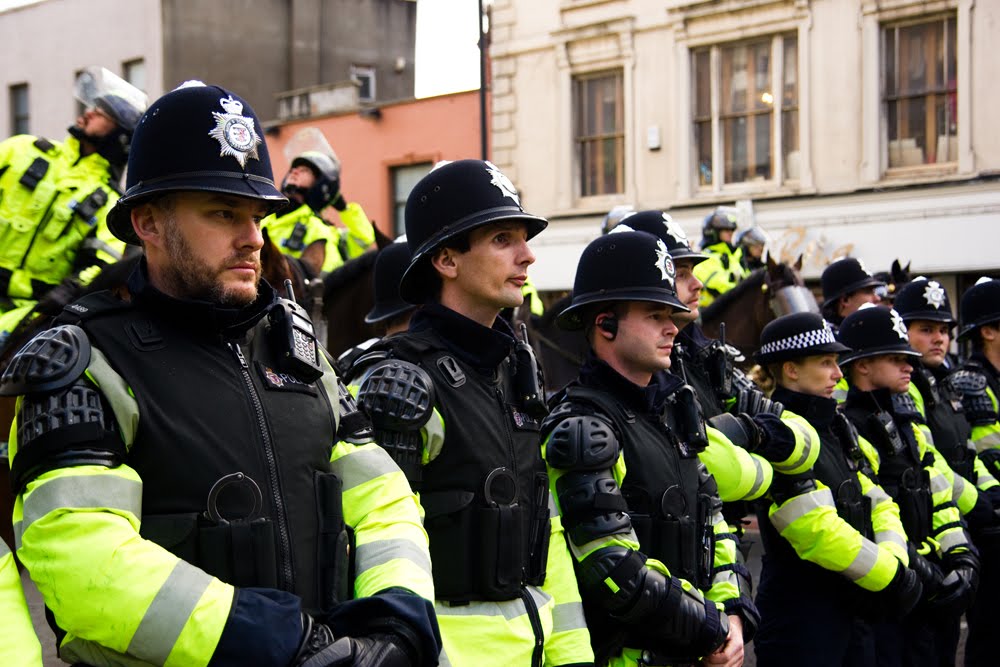
La marcha va por una calle principal cuando vemos más camionetas de la policia llegando. Las con experiencia sabemos que quieren bloquear el camino de la march y acoralarla en una tacticá de acá que se llama “kettle”. Un kettle es una tetera literalmente, en la practica nos rodean por una cerca solída de policia con sus batones por horas. Si no respondemos rapidó lo lograrán y allá estaríamos hasta que nos morimos del frio o nos rebellamos y tratamos de salir a la fuerza y nos golpean. 

La marcha no tiene camino fijo ni organisadores ni voceros. en vez de enfocar la marcha en la llegada a un lugar simbolico se enfoca la marcha en construir poder entre la gente que marchen. en vez de la participacion pasiva comun en las marchas de aca todas participan activamente en decidiendo por donde vamos en el camino experimentando con la democracia directa. Es fundamental que experimentemos con otros formas de democracia como miramos la farsa de democracia de los partidos politicos que dicen una cosa para ser elegidos y luego hace el contrario. Tenemos un gobierno de coalicíon, una de los partidos ganaron puestos diciendo que iban a estar en contra el aumento de las matriculas. Menos que un año despues hacen el contrario.
Al ver las camiones llegando, la gente gritan propuestas de que hacer, se escuchan contra propuestas. La policia bajan de sus camionetas (hasta ahora no se mueva por moto como en Colombia) y gente con astucia muestran propuestas concretas. Corren para pasar antes de que hagan un muro inpenetrable. Lo demás siguen, animada por la idea. Este capacidad para responder rapidó y autonomá (sin que nadie te manda a hacer algo) a la situación que se desarolla nos permita sacar mucha ventaja a la policia. 
 
Para mi, es un ejemplo precioso y un metaforo al camino hacia nuestra propia liberación. Sin jefes orquestrando el movimiento de la gente, le gente mueven por su propia rabia y deseos sea en una marcha o en nuestra organisación. Si, compartamos experiencias del pasado y construyamos teorias desde nuestras observaciones, pero solo nosotras mismos quienes viven el presente deciden el que hacer en el presente. Ofrezco mis observaciones y ideas de acá como un aporte para el trabajo organisativo de ustedes allá.

Mas tarde ganaron la policia :( Unos de nosotras lo vimos venir pero la muchidumbre tenía un velocidad y no logramos cambiarla a tiempo. Rodearon todo la gente con una cerca de policia. Allá los detuvieron por 4 horas. En otras protestas en Diciembre era por 8 horas. No puedes salir para orinar, comprar comida, ir a una cita. No hay legislación que permite que te retengan sin detenerte formalmente. Es un secuestro masivo y siempre salen impunes.
Hasta ahora no se usa los gases lacrimogenos en mi tierra. Pero si te hacen morir de aburrimiento, orinarte o perder tu trabajo por llegar retarde. A veces la gente explotan con rabia y frustración por la situacíon y estás atrapado entre un conflicto.

Con este tactica quieren disuadirte de manifestar. Marco, un anarquista colombiano escribío algo que me parece cierto:
uno deduce ....que si acá nos matan de manera menos higiénica… a punta de bala o motosierra, allá, en Europa, los mecanismos de represión son más tecnificados y asépticos y el control social juega un factor decisivo en ese aspecto.” ver articulo
La tetera es un mecanismo de control de protesta, entre otras. Tanto como en Colombia se usa la sistema de justicia para dar condenas severas a lxs que opongan las politicas violentas del Estado. Un joven quien participó en la ocupación de la sede del partido de los Conservadores (el gobierno actual) fue condenada a 2 años de carcel por tirar un extinguidor del techo sin causar daño a nadie mientras que 2 años despues del asasinato de Ian Tomlinson por la policia aún no hay ningun condena.
Otro mecanismo de control es el uso de la policia secreto. Fue revelado que un compañero, alguien de confianza politica de acá quien participó en movilisaciones sociales y ambientales, es tombo. Da una sensación de nausea pero por lo menos nos confirma que nuestras ideas y practicas de solidaridad, de acción directa y de la horizontalidad son una amenaza a los elites de este pais. Así nuestras actos acá son actos continua de solidaridad con ustedes. El mismo supragobierno económico que quiere encarcelar nuestras vidas acá para callarnos es la misma esctructura que hace la guerra a ustedes. Pero también es el misma deseo humano que nos motiva en cualquier rincon del mundo a liberar nuestra espiritu de la sumisión y levantar la cabeza con orgullo y luchar.

Monday, June 28, 2010

The closure of a chapter and the start of a new one in Casanare

Midday through writing this, I hear that my partner, the organisation he is part of (Solidarity Committee with Political Prisoners) and other compañeros from NGO's and social organisations in Cali have received death threats, the third against him in the last two months. Yet we both know that we must continue telling the stories of how people are trying to resist and build social organisations. All too often news from Colombia is a depressing list of threatened people and organisations. So here is the story of a weekend of weaving webs of hope, written while I chew my nails and my stomach churns.....

I arrive at Tauramena before sunrise and witnessed for the first time the huge gas flares. Just as the gas flares dominate the night sky with a bright orange glow, the oil industry dominates all aspects of life in Casanare. I had come to witness the closure of a chapter in the history of oil in Casanare and the start of a new one. It was a huge privilege to witness.

The previous evening, after five long months of negotiation and mobilizations, the Movement for the Dignity of Casanare signed an agreement with BP that includes action on basic labour, social and environmental issues. The agreement includes among other things a small but significant wage increase, investment in local roads, a commitment to finance a forum on the human rights situation in Casanare and an independent study in to the environmental impacts of the oil industry.

"Our lives are not for sale. BP supports the violence"

Previously, communities and workers have not been able to speak out against BP for fear of being targetted by the paramilitaries. This agreement is historical and important yet I noticed the lack of celebrations. Rather, people spoke about this just being the beginning.

Firstly we need to ensure that BP sticks to the agreement and that the commitments are met. That is not going to be easy. Secondly, we need to build the Movement for the Dignity of Casanare and unite us much more. We could have achieved double, triple what we achieved if we were more united but BP used many dirty tactics to manipulate and turn people against us” Pacho tells me.

Pacho speaking during a community and workers assembly in March 2010

We head over to the school where today's workshop is going to take place: Exchanging Experiences on the Impacts of the Oil Industry. As I greet the people who have travelled from around Casanare, I recognise familiar faces from different documentaries that COSPACC, the NGO I am with, have made. I particularly remember one guy being filmed while harvesting crops from his farm beside the River Ariporo “I'm not leaving Casanare because of all this I have planted, yuca, plantain, maize. Here we live well.” he tells the camera with a big warm grin on his face. And in real life he is just the same. You would warm to him straight away.

We start the workshop with a great exercise which sparks sincere exchange and trust building: we form two concentric circles and pair up with the matching person. We are asked to introduce ourselves, where we are from, and share briefly with the other what is our experience of the oil industry in our municipal. We then return to the whole group and introduce our partner to everyone else, sharing what we have learnt.

We hear stories of how seismic exploration in Visinaca has left vital summer water sources with much less water and in some cases, with no water, cutting off the lifeblood to their farms, especially those that were fish farmers. Efforts at compensation have not been listened to.

We hear stories of how peasant farmers from Monterralo said no to seismic exploration only to later receive a copy of a decree which tells them they have no say or choice over the matter. It is going ahead. Miguel offers information which the authorities and companies would rather was not exchanged. He reminds them that the Colombian constitution states that 'Every person has the right to enjoy a healthy environment. The law will guarantee the community's participation in the decisions that may affect it.' The decree can be challenged he said.

We hear the story of how an U'wa indigenous leader was killed after refusing payment in exchange for allowing oil exploration in indigenous territory. Instead of being weakened, the U'wa people took the decision to not talk with the oil industry until there is a full investigation in to the murder of their leader. “Money is nothing, it will end. What is important is our territory, where we live, where we walk, where we get water from, what we leave for our children. The oil industry is a cancer destroying our mother earth. We must defend our territory

Campesinos from Paz de Ariporo share their tactics for fighting against oil exploration in their municipality . He tells us proudly how they refuse to sign attendance records when meeting with the oil industry, wise to the dirty tactics of these records being used to tick consultation boxes. He tells us their strategy to avoid corruption in their leaders; the community chose four leaders who are prohibited from representing the community in meetings with the oil industry alone. They all must be present. They also took the decision to invite the U'wa people to unite with them despite different cultures and world views. They extend their invitation to unite to all present at this exchange. "If we don't all defend the water of the hills, these plains are nothing."

After lunch, we are taken to see these hills and its rivers, with the solidarity of a local bus driver who lends us his time and bus. We get off the bus by the River Cusiana and Don Alexander leads us down to the river to the place where the water inlet pipe siphons off thousands of litres of fresh water daily to be pumped in to the oil wells. "This water they take is lost forever" Juan David, who participated in the Tauramena environmental negotiations with BP tells us. "BP take it without paying anything and bury it underground, removing it from the water cycle for ever.

Don Alexander warns the others "when they wanted to build the water inlet pipe they arrived like a man who wants to conquest a women, they arrived with flowers and nice words. But just as a women doesn't know who the man really is until later, we didn't know what was behind the flowers until it was too late and the huge damage was done. They arrived with an army of machinery and rerouted the river in to a channel to fill the inlet pipe. We lost lots of land, 20 hectares. And they have never paid us for what we have lost, just as they have never paid for the water they have robbed."

After admiring all the beautiful creepy crawlies that kept jumping out at me, we headed back to the bus, an hour late and the solidarity of the driver wearing a little thinner. As we drove back to Tauramena, people sat with new compañeros and the bus was filled with the buzz of conversations, full of ideas about how to move forward with this new chapter. This new chapter in which these different local resistances to oil exploration and exploitation in Casanare begin once again to weave hope and strength together. This was something really exciting and genuine to celebrate. And the cool beers went down well that evening. Let us hope there are more small steps to continue celebrating in the coming months.

Monday, June 21, 2010

Acknowledging our Wealth amisdt the Poverty: A Step to Stop Pillage

What wealth do you know about in your district, Ciudad Bolivar, we asked them. They looked at us surprised but curious. They are more use to naming Ciudad Bolivar's numerous problems, the poorest and largest district of Bogotá, the Capital of Colombia.

They responded naming air, the soil, land and water. Maria and I listened worriedly, it was as we had feared. The 30 women who came from various different neighbourhood groups did not know or acknowledge the huge amount of wealth there is in their district. The Environmental Forum had organised this tour around the district to explore what the impact of seeing this wealth with their very eyes would be, following the practice of Popular Education.

We boarded our bus and begin winding our way up the potholed roads, and as we gain more altitude the houses become more precarious and the barrios more controlled by paramilitaries.

We arrive at the first stop: Industrial Mining Park. Unluckily for the residents of Ciudad Bolivar they live on top of a enormous quantity of construction materials; sand, agregate, gravel and clay. After Holcim and Cemex rewrote part of the country's mining code, Colombia is now the only country in the world to allow open cast mining in urban areas.

The quarries have been condemned by numerous social organisations for the health impacts and the increased risk of landslides that they cause. The gravel pits, owned by Holcim and Cemex and following a 50km stretch of the River Tunjuelito, have destabilised the land and caused grave damage to the river ecosystem. Furthermore social organsiations that have spoke out against these megaprojects have suffered threats, assassinations and stigmatisation.

"We don't know where these materials are taken. Lots of trucks leave carrying the materials but we don't know where they take it, maybe for building works somewhere” comments Elmira.

Private companies extract the materials and sell them for the construction of Bogota, a city from which the residents of Ciudad Bolviar are excluded. “International capital is getting richer on our resources at the expense of us putting up with this shit situation; families without homes because of the mines and because of the huge inequality in Colombia, social control by paramilitaries to silence and weaken our grassroots organisations, hunger, bad health.....” says Maria angrily. The social and economic injustice is only too clear, and women receive the worst brunt of it, in their gendered role as carer of the entire family, highlighted by Carmen who described how she went without meals in order to buy her boy the medicines he needed.

Furthermore, the women were first excluded from influencing in the planning decisions around the operations of these mines, secondly they have been deceived in to believing that this wealth is not theirs and thirdly they have been kept in the dark around where the resources and profits from these resources end up. The tactics for preventing people from recognising their collective wealth are an essential part of the strategy to take these resources.

A similar situation happens in the United Kingdom where the elite landowners with the complicity of the British State have never revealed how much land they own so as to avoid demands for redistribution from the common folk. If we don't know and don't value the wealth we have, it is all too easy to take it without an outcry, such as what is happening with the Mining Park.

From the mines, we continued climbing the steep hill through densely populated barrios until suddenly we came out on to large extensions of open, barren land.
Here there is so much land that we could work, we could plant and grow food for many people, lets take advantage and start producing” suggested enthusiastically a compañera. The estimated 46000 hectares of land belongs to a member of the Colombian elite who lives in Miami.

While he is there in luxury we are here living in misery. Occupy y reclaim this land would be a good strategy. Land should be for those who work it... We would have to be very organised it to defend ourselves from the violent response by the state as it protects its interests. We know who they would send. All of this land is part of the Industrial Mining Pak which is why they don't let anyone squat this land. They are going to keep opening quarries and within 50 years this whole hillside will have been eaten away” replied Mario. Pointing to Paraiso, a barrio in the distance he continued “those of you live there are going to have serious problems soon. You are going to be in the middle of a quarry.

The Paraiso compañeras fall quiet with thoughtful expressions. “These mines are wealth, but only for a few people, for everyone else they bring us social and environmental problems” concludes Luz Angela

The solemn moment is broken by Marisela enthusiastically pointing out a lake we are passing. “Look, look at the lake, would't it be amazing to be able to come here on Sundays." The lake is in fact the source of one of the many streams that flow down through Ciudad Bolivar, down through the quarries and into the River Tunjuelito. But the water up here is clear and clean.

With so much open green space near where they live, the women are frustrated that they do not have the freedom to enjoy the landscape, to rest and enjoy the peace and quiet, breathe clean air and forget the stresses of daily life. They do not have the freedom as the area is not very safe due to the paramilitary presence. The idea to organise a group outing is suggested.

We continue our tour, entering into land on which peasant farmers are cultivating. The women remark excitedly at all they see; corn, quinoa, peas, potatoes, cows and chickes, allotments and small farms with children playing in the fields. Many of them themselves are campesinas - peasant farmers - who have been displaced by either the armed conflict or the rural economic crisis.

We pass through the rural hamlet of Quiba and arrive at the village of Pasquilla, a campesino village within the City. We all notice the lack of cars and contamination as we eat our locally produced yoghurts in the main square. We watch the campesinos pass by wearing their traditional ruinas.This is wealth too, that there are peasant farmers here using their knowledge of the land to produce food” observed Olivia.

Our next stop was the Doña Juana rubbish dump, the second largest open air rubbish dump in Latin America. The largest is in Sao Paolo, Brasil and communities there have formed organsiations to recycle the materials that arrive. Here 7500 tonnes of Bogotá's rubbish arrives daily and it is all dumped. They are dumping minerals and metals that are taken from communities at great environmental and social cost. Illogical but logical within a profit logic. Rubbish is big business, in Bogotá it is the most expensive public service. We discuss where the dump is wealth or a problem.

“It is a problem because it contaminates the water with leachates” says Isabel. “It is a problem because it contaminates the air. Beside this unbearable smell, it gives off lots of gases that cause health problems, such as rashs and lung problems” contributes Maria. “It is true but the gases could be uses domestically in the nearby communties” says Olivia. And despite the fact that we all have blocked our nose Amelia proposed that “it could be a source of work, we could organise ourselves and recycle here”

We arrive at the conclusion that like the quarries and gravel pits, the rubbish dump is “bad wealth because a few people profit while the rest suffer without any benefits.”

We leave the overpowering stench behind and move in to a new smell, that of mountain rain high in the clouds that surround the Regadera and Chisaca reservoirs.

The public water company provides all of the water for Ciudad Bogota from these two reservoirs. We shelter from the rain under a huge tree to reflect over the tour and the wealth we have found along the way, to laugh and to share our food.

“there was a total lack of knowledge of what wealth we have, we now know what our wealth is”

“we have a lot of wealth, we have seen and named it, we are not poor, we just don't benefit from it”


“we have allowed ourself to thing that this is not ours and so we haven't empowered ourselves to make demands”

“we have to organise ourself so that we can discuss, propose and make demands about the use of our wealth. But we need a lot of people, each one of us should go home and share what we have learnt with our children and our neighbours, those who it is safe to do so with.”

“Organising will bring us problems, it will but we have to do it, we have to value our territory”


“We have to work in community, educate ourselves and strengthen our womens networks so we can demand our rights are respected.”


As we wind our way home, the words of Mercedes Sosa accompanies us.... listen here

Monday, April 19, 2010

BP AGM: confronting power with solidarity

We entered nerviously into the luxurious and modern Excel convention centre in London, but with all the wonderful people we have met and have worked with in Casanare giving us strength and a strong mandate; put pressure on BP to accept as legitimate the list of demands that the Movement for the Dignity of Casanare has presented to one of the world's most powerful multinational corporations.

It was an inmense stage that made clear their symbolic, economic and political power, as well as their huge egos. Their power is all too real; their decisions in Casanare have affected the lives of Casanare people through the intense militrisation and human rights violations which oil exploration brought to the region in the nineties.

It was to their home turf that we brought the voice of the Casanare people, who in spite of the 9000 people dead and in spite of fear, have risen up again and demanding dignity, the right to a trade union, respect for the environment they are dependent on, respect for life and better living conditions. We asked BP if they considered the demands of the communities to be legitimate considering BP has benefitted for 16 years from the oil that flows from this region.

They responded our question saying that they knew of some dialogue happening in Casanare, which is important, but it was not to do with BP. Considering that BP has been in negotiations and meetings with the Movement in Casanare for the past six weeks we pondered whether a lack of capacity to tell the truth is seen as a strength rather than a weakness when applying for a multimillion pound job with BP.

We took the microphone again, telling the audience that what BP said was not the case and that the problem was with BP. We also made clear that the chair's failure to recognise at the very least the legitimacy of communities to demand better environmental, social and labour conditions is very dangerous in the context of Casanare. Every time community organisation have raised their voices against BP, community leaders have been killed and the organisations destroyed. BP's public affirmation of the legitimacy of the right to protest would have been a minimum measure to prevent history repeating itself. They would not do so.

We also shared with the audience that only the night before BP had indeed responded to the list of demands presented by the communities saying that they not going to negotiate with them and furthermore they were going to sue them for slander. This is how a multimillion pound multinational corportation responds to communities asking for some dignity.

Later in the meeting George Poitras, a First nations Indigenous spokeperson, began his intervention about the impact of Tar Sands operation in his lands saying “When i heard my friend from Colombia speaking about what BP has done in his country, my heart bled. We hope that this won't be what their presence brings to our lands.”.

As we left the convention centre, friend on the outside shouted “Canada, Colombia, No Blood for Oil”. In the sunshine we gave a summary of what had happened inside. We were angry but not suprised by the manipulation and lack of answers inside, we were confident that our actions had served as a protecton mechanism for our friends back in Colombia and that BP knows the political costs are high for any future repression in Casanare, and we were excited by the solidarity between Colombians, British and Canadians. Solidarity is our own form of beautiful power, not over but between people, that will be crucial for the ongoing mobilisations in Casanare and for the communities in Canada.


Saturday, February 20, 2010

I really hope that there doesn't need to be a murder for BP to negotiate”

Workers for BP in the department of Casanare, Colombia have been protesting, demanding that the oil multinational improves labour conditions, since 23 January.

We earn $30,000 (£9), this is what we were paid in 2004. Everything has gone up in price. Our salary is the only thing that hasn't increased. After paying food and bills we are left with nothing in the pocket while BP earms millions from Casanare oil. Us poor people need respect too as we are humans, just the same as rich people. And a dignified salary is part of this respect.”

One week ago they were forced to take the decision to go on strike after BP cancelled yet another meeting to discuss the demands. They are tired of being made fun of and walked all over for twenty years.

On Monday 15th February, the notorious Colombian riot police, ESMAD, arrived and without any warning they violently attacked the strikers and community members using tear gas, their batons and shields.


Wilson, a young local commited councillor, told me how ESMADs response to his efforts to calm the situation down through attempting dialogue, was to be pushed to the ground and giving a kicking. He is now being sued by ESMAD for supposedly attacking the police.

Five days later, with wounds visible on many present, worker and community leaders spend the day in a meeting with a delegation of government representatives. BP did not arrive despite promising to attend. The government representatives spent the morning listening to the grievances of the communities and workers who for the first time in 20 years of BP operating in the oil are speaking out clearly, saying enough, this situiation has to change.

It is important to me that the salaries increase so that my kids can study and have a better life and future than what I have.” Community member and wife of worker accompanying the strike.

The government represenatives spent the afternoon trying to confince the workers to lift the strike so that the dialogue could continue calmly. The workers responded saying that they have shown good will repeatedly and BP has refused to listen to them, even refused to accept this as a labour conflict.

We will lift the strike when BP sits down to negotiate with us and we reach a just agreement”

The workers, with their strong sense of belonging to the region, are demanding that BP discusses not just labour issues but also environmental and social investment issues. They are very worried by the contamination of the streams and rivers, and feel totally abused by the lack of social investment in the area by BP.

It is the first time that workers for the BP have managed to organise themselves in a union. In the late 1990’s, B.P. was exposed by the British media for complicity in human rights abuses. The company had contracted the 16th Brigade of the Colombian army to protect its oilfields, despite the Brigade’s dire human rights record, which includes murder, “disappearances”, torture, rape and the forced displacement of communities. B.P. also admitted to having employed the private security company Defence Systems Limited to provide counter-insurgency training to Colombian police and army units charged with the protection of B.P’s installations. This training was described as “lethal” by a DSL employee and included the surveillance and intimidation of peasant leaders who were mounting protests against BP’s ecological damage, denial of labour rights and lack of social.

As is common in our country, the presence of these economic projects are accompanied by state violence and a strong paramilitary presence.” USO Urgent Action (USO is the national oil workers union)

In Casanare, a department with a population of around 500,000 habitants, there have been 9900 selected killings, and 2600 people disappeared between 2000 and 2007 according to COS-PACC, a human rights NGO.


We would wake up wondering who would be killed today. Things aren't as bad now but there has already been people on motorbikes without license plates watching us for hours at the picket line. We are worried. I really hope that there doesn't need to be a murder for BP to negotiate” Dina, local community member.

The USO holds BP and the Colombian State responsible for any possible human rights violations and that could occur. The situation is also urgent as hundreds of workers have not received their salary for a month now.

They are asking for national and international support; both solidarity actions and actions to pressure the company to sit down and negotiate with the union.

The Colombia Solidarity Campaign have called for an emergency picket of the BP HQ, London, Friday 26th February. The workers assembly gave a big cheer when I passed on this news and one women took a copy of the email to go door to door showing people how people were supporting the strike and encouraging all in the village to support the strike too.

Please send letters of support to prensa@usofrenteobrero.org and a copy to espaciobristol@redcolombia.org


Friday, December 18, 2009

One Year Anniversary of Murder of Edwin Legarda by Colombian Army

On December 16th 2008, Edwin Legarda, the husband of Colombian indigenous leader Aida Quilcue, was killed when the Colombian army ambushed Aida´s car that he was driving that morning. Aida Quilcue at that moment was the Chief Councilor for the Indigenous Council of Cauca (CRIC) and spokesperson for the Minga of Social and Community Resistance. The CRIC believe that the bullets were meant for her for the fierce criticism of the Uribe government.(1)

Photo: We demand justice for State Crimes.

On December 16th 2009 we traveled to the Totoro municipal, Cauca where the murder occurred to take part in an event to commemorate the anniversary of Edwin’s death.

After being repeatedly shot in 2008, Edwin managed to drive 3km´s, thus avoiding any tampering of his vehicle or person which could be then be later used to attempt to cover-up the extrajudicial killing by presenting him as a guerilla.

The Observatory of Human Rights and Humanitarian Law of the Colombia-Europe-United States Coordination Group (CCEEU) a coalition of nearly 200 human rights group from Colombia, Europe and the U.S. reported 1,492 non-combat killings by the Colombian army between July 2007 and June 2008. According to the CCEEU, in the majority of cases the state is responsible, due to direct action or tolerance. (2)

Photo: Dario Toto, an indigenous leader, shows us the place where he came across the vehicle with Edwins still just alive at this point

Aida said that if her husband had not bravely driven these 3kms whilst injured, the army would have managed to successfully carry out the false positive then the government would have been able to portray the indigenous movement and the Minga of Social and Communitarian Resistance (which Aida led in social mobilisations in October 2008) as a ‘terrorist organisations’.

The event, attended by Indigenous from across Cauca and other social organizations, began with a symbolic march along these three kilometers, down a dusty unpaved road, accompanied by the sound of sweet, soothing, soul filling Andean indigenous melodies.

As I walk, I look at faces of compañeros around me, listening to their voices and laughter and imagine what Edwin was like. Even though I had shared just two hours with Aida and her daughter, their warmth and humour had been striking, I imagine Edwin must have had a great sense of humour and a great heart.

It is important that the Colombian state´s war against the poor and social organisations does not become just a list of shocking figures.

We arrive at the place where the army had fired 106 bullets at Aida´s vehicle, piercing it 17 times, not knowing she was not in the passenger seat that day. The place is now marked by a memorial, around which we gathered to share music, dance and words.

The current Chief Councilor of the CRIC, Alcibiades Escué spoke about how the event was not only important to support the family, but also to continue denouncing the murder which was a direct attack on the entire movement to both the national and international community. Legarda’s killing took place just two weeks after the Minga of Social and Community Resistance had completed its historic march from Cauca to Bogota, one of the most important acts of collective resistance that the Colombian indigenous movement has carried out.

Legard´s killing is not an isolated attack against the CRIC and the Minga. The 16th December 2009 was also the 18th anniversary of the Nilo massacre, where 20 indigenous people from the Huellas-Caloto community, including five women and four children, were murdered as they met to discuss a struggle over land rights in the estate of El Nilo in northern Cauca. In 1998, President Ernesto Samper acknowledged the responsibility of state actors in the massacre, and on behalf of the Colombian state apologized to the families of the victims and to the Nasa community of Northern Cauca.(3)

The night before this significant and tragic anniversary for the Cauca indigenous movement, two men laid hidden under the beds of Escue´s children waiting until they had gone to sleep. They jumped out and tied up the two children, announced themselves as members of the “Aguilas Negras” paramilitary group and said this was a warning and then left.

On October 29th 2009, Marly Guamanga was murdered in the Damina area of Cerro Tijeras indigenous reserve, Suarez municipality, Cuaca department.

On November 11th 2009, Reinaldo Bomba was murdered in the Bella Vista area of Cerro Tijeras indigenous reserve.

On November 13th 2009, Nilson Campo was murdered and Egdio Huila was seriously injured in the Damian area of Cerro Tijeras indigenous reserve.(4)

This is part of a systematic persecution of not just indigenous, but also afro-colombian and farming communities, whose struggle to remain in their ancestral lands gets in the way of powerful economic interests.

“They have returned to search for what was left after the first plundering 517 years ago. They are motivated by economic interests and seek land, water, gold and other natural resources. Wealth that the “investor friendly” government, is handing over to the highest bidder.” (5)

Aida, trembling at moments yet remaing a dignified emotional composure, spoke about the need to continue speaking out against not just the murder of her husband and the displacement of indigenous community through violence but also to speak out against the multinationals and European and US governments that drive it.

On the same day, Jose Goyes, another indigenous leader, took part in the climate justice mobilisation in Copenhaguen and spoke about what was happening in Cauca, making the links between climate and social iisues

"In the area (Cauca) we have the Anglo Gold Ashanty gold company from South Africa, Union Fenosa from Spain, and Carton Company from Ireland and ... the Cosega company, which is a gold enterprise from Canada. These multinational companies are causing large displacement, threats and even massacres and death sentences to indigenous communities. In our territories the paramilitary groups are supporting the state policy and the multinational policy through the use of violence. Cosega resource from Canada have a large interest in the area and the paramilitary groups have supported their political wish by threathening most of the indigenous leaders that are resisting the exploitation." (6)

Yet despite this huge powerful real threat against their human rights, primarily the very right to life, people continue to laugh, love and organise to resist this genocide against their cultures. This day was both profoundly sad, especially while watching Edwin´s daughter perform a dance in memory of her dad, yet at the same time it was a celebration of life, with shared food, song, laughter and ritual.

Photo: Banner " They can cut off our wings but never our desire to fly"


(1) Assassination of the husband of Ms Aida Quilcue

(2) Colombia: UN confirms ‘systematic’ killings of civilians by soldiers

(3) Embattled Cauca: A New Wave of Violence and Indigenous Resistance, by Mario A. Murillo

(4) Three murdered in Cierro Tijeras Reserve, Cauca

(5) Instruments of War by ACIN

(6) Colombian paramilitaries assassinate indigenous leader in the name of Canadian multinationals

Saturday, October 17, 2009

Day 6: Walking the word - decolonising solidarity

It is the end of the beginning. The last day of an exhausting but amazing week of mobilisations. The closing act of the Peoples Pre-congress takes place in the central park in Cali, after another two hour march. An afro-colombia leader from Choco is given a special place in the closure to make visible the presence of afro-colombian communities in the Minga. Choco is the poorest region in Colombia.
"The only way to travel in Choco easily is by plane and we all know who planes are for. We travelled on foot, in canoes and in buses for several days, sleeping in difficult conditions and going without food to get here, to participate in Minga".

He tells us how the population of Quibdo, the main town in the region, has doubled from 40,000 to 80,000. Choqueños, mainly afrodescendents, have been forced to abandon their territories due to the violent imposition of megaprojects such as mining and palm oil .

"We know that alone we are not able to change things, we need to unite with indigenous, with campesinos, because in the end we are all living with the same difficulties and problems. This is why seven hundred of us have made the huge effort to be here in the Peoples Pre-congress".
Tears trickle out of me as I make links between this declaration of the Peoples Pre-congress and a difficult conversation I had last night.

Last night a friend challenges me to reflect on something I did. He challenged me to look at how I controlled the way in which we discusses a difficult conversation, racism within the Minga. With the bitter taste of irony in my mouth, I, with my full set of colonial priviliges, british, privilige to move wherever I want in the world, white, privilige to walk down the street and for people not to think I am going to mug them, set the terms for how we discussed racism that suited my needs, and not his. As we talk, his anger manifests itself as he goes over and over the two words he has written on a scrap of paper, ego britanico.

I have seen this before many times. The arrogance and preponencia of british people to have their own way, the result of being from a country that has repeatedly colonised and dispossed other peoples throughout history to get its own way”.

His words challenge rather than shock or suprise me. I am grateful to this rare person who critiqued me to my face. I wonder how many people I meet share similar criticisms about my way of doing things but do not tell me. I wonder what this says about ongoing patterns of colonial power within my everyday relationships here. I breathe deeply as I look at my challenge of how to achieve the balance between being myself and being conscious and accountable to how my self has been shaped by my cultural-political-historical context.

Back in the park, we listen to a song by Mercedes Sosa, recently passed away, as the Peoples Precongress in Cali draws to a close in Cali's central park. The thousands of participants stand intently, some listening, some quietly singing alone. The compañeros who sings it, dedicates it to those compañeros no longer with us, including Mateo. As I listen to the beautiful melody, I imagine what he could have taught me. Mateo, a Swiss revolutionary, worked for ten years as part of the Red de Hermandad. He was killed last December in a road accident. Incredibly missed and rememberd within the social movements in Cauca and Valle I wish I had the opportunity to know how he worked to de-colonise himself.
After the song, two compañeros read the final declaration.

"Minga is a collective expression that revives hope, that strengthens resistance and walks the word in defence of dignity and in commitment to collective life. We are conscious of how the neoliberal strategy is strengthened in our territories through the handing over resources and selling of mother earth to international capital, thorugh the recomposition of of corruption and the legalising of crimes against Colombia´s sovereigny, and through impunity and the militrisation of civilian life."

I seek a place to be alone with my emotions of rage and sadness. The weight of being British, of having benefited from so much violence, of being surrounded in the park by so many people who suffer from this violence, overwhelms me. The weight of knowing that the British ego is alive and kicking and that it continues to play a crucial role within the UK in the justification of the violent looting of other peoples natural resources is overwhelming.

I feel a hand on my shoulder and look up to see the caring eyes of an indigenous leader who I have shared words with during the week. He has 5 bullet wounds from attempted assassination attempts and had his farm burnt down. He is now displaced, living between cities. During this week, he was always accompanied by four indigenous guards. He tells me that when he goes back to his community, it is obligatory for him that he travels with thirty indigenous guard, armed with just their bastions of resistance. He listens to my emotions, as the words of the final declaration sound in the background.


"Mingueros and Mingueras, we have gathered in this spaces filled with dreams and ideals and we leave with thoughts on how to legalise with significant popular legitimacy, with proposals on the path to peace, whose route is the word that overflows with solidarity, generosity and resistence."

My solidarity must begin and end with me, a white british folk, learning to notice my colonial mentalities and then taking responsibility for them.

For more thoughs about this work of decolonising solidarity visit decolonizingsolidarity.blogspot.com, the blog a beautiful wise friend.

To read the full closing declaration and the notes from the 5 tulpas that discussed the five points of the Agenda of the Minga check out this blog (in spanish only)

Thursday, October 15, 2009

Day 4: Our Dignified Rage Walks the Word


This is a translation of a newsletter being written by a communication collective in Cali during the mobilisations.

Opening of the Peoples Pre-congress

With the arrival of the last marches and delegations that are part of the Minga of Social and Community Resistance in the Southwest of Colombia as night came, the peoples pre-congress was opened. Thousands of people filled the area in front of the state and the passionate emotive hymn of the Indigenous Guard opened the evening’s activities. The verses of the national anthem were not sufficient to welcome the diversity of the participants and the crowd was quiet with the sound of whispered conversations.

One after another, voices of those who have been in the process of building the Minga and who, tired and angry, expressed and conveyed the dignity of the peoples who are tired of paying the consequences of the current political and economic model. The voices told us of their realities: the impact of the multinationals on their communities and regions, the game that the powerful play with the destiny of the communities, the permanent human rights violations, the impossibility to decide how their economical, environmental and cultural resources will be used, and the militarization in rural and urban areas…… the angry dignity created by these problems exploded in words through different expressions from the heart of the Mingueros. But the voices also told us about their processes, about the steps that they have taken to build another country “where we all fit”, and about the hope and strength of the peoples. After this collective recognition, of knowing who we are and where we come from, the party began with happiness and fraternity.

Organising the path

All the mingueros met in the afternoon in themed working groups to decide on the methodology that they will use in the working groups and the discussions in The Peoples Pre-congress in Cali; also they shared and defined the subthemes that arise from the 5 point agenda that has been created nationally in the Minga de Pensamiento and that will be crucial in organizing and advancing in the construction of some proposals and paths to keep walking the work towards The Peoples Congress. In the Sovereignty, Land and Territory working group, people spoke about: comprehensive agrarian reform, legalization and reclaiming land, privatization, megaprojects, environmental sovereignty and food sovereignty. In the War and Human Rights working groups they looked at how to build a Peace Agenda that looks at the political and social roots of the conflict and how to propose a political solution based on these roots, as well as demanding from the state the guarantee and application of all human rights.

Public Statement

The organizations who are participating in the Minga of Social and Community Resistance denounce to the national and international public opinion and to Colombian social and human rights organizations the attacks to which Mingueros in the department of Cauca have been subjected to. Today in the city of Popayan various people have been detained by the police. They are Omaira A Piamba from the Comitte for the Integration of Mestizo Colombia, ALEX LOPEZ a motorcycle taxi driver and Julio Quiñones who is involved in housing struggles in Popayán.
It is important to note that the people detained by the police were participating at the time in one of many peaceful activities that are happening in different cities in the country as part of the Minga of Social and Community Resistance.

Again the armed forces are brutally attacking the popular and social movement that has taken to the streets to make proposals and work for a better country for everybody.

We demand the immediate freedom of the compañeros detained in Popayan and that the fundamental right to participate in peaceful protest is respected.

We Have Grown

The heavy rains that arrived in the afternoon also brought the force of the campesino, afrodescendents and other social sectors to the Peoples Coliseum. Their arrival was emotional for all as they were greeted with enthusiastic clapping and happy cheering from those who had already arrived. These Mingueros have been walking from different parts of the country for more than a week; Chocó, the North and Central area Valle, Tolima and the coffee región. They entered the coliseum with rallying cries against the multinationals that invade their territories, against the government that persecutes, marginalices and assassinates them and about all shouting with happiness for the opportunities for creation of new possibilities through exchanges with others who are socially conscious with the hope of moving towards a popular uprising and the construction of a new Colombian, dreamed by many.

The Minga continues to nourish itself with people from different places, marchers from Popayán and Antioquia who arrived to join in the process of the Pre-Congress. We are many who are preparing for the congress in July 2010. We are not everyone. We hope to wake more consciousnesses, hearts, and wisdom to keep weaving the Minga of Social and Community Resistance.

Wednesday, October 14, 2009

Day 3: Building Popular Power in Minga

It is nearly 9pm on Tuesday night in the grounds of the Coliseo in the city of Cali. People have rested after the 3 day of walking 15km and young indigeneous are now dancing in large circles in front of the stage. The music fades and Feliciano Valencia, spokesperson for La Minga speaks to the thousands that have gathered to listen to the proposals for tomorrows activities;
  • delegations to visit 5 places in the city to talk about what is Minga and to invite community organisations to walk the word

  • a caravan in the 40 chivas through the streets of Cali to make the Minga visible,

  • join teachers who are marching against labour conditions and have invited us to join.

  • begin thinking collectively about what the Congress of the People, planned for July 2010, actually is with important questions for consideration such as how are we going to legislate and what are the mechanisms and strategies we need so that the peoples laws are put into practice?

With the sheer quanity of people I have been curious to watch how decisions are made at this scale, how different forms of power are working and and how popular power is being built. What I watched was these proposals being created through a serious of meetings. Firstly the political commision of the Minga, which includes representatives of each social organisation involved in the Minga, met and came up with a proposal with Feliciano playing the role of listening, gathering all the opinions and presenting a synthesized proposal. This was then discussed and adapted by some 40 governers of the different Indigenous reservations. This was then presented to everyone. During the night, each community will have discussed it and as I write, another meeting is taking place to finalise the plans for today.

The sheer presence of indigenous from Cauca, through their impressive organisational capacity, is a challenge to the proposal of Minga to be inclusive to all. Yesterday, there was some serious errors such as the idea to start the pre-congress before the second smaller march arrives , yet once this was flagged up the idea was inmediately dropped. There is much to be learnt, and to get wrong and do better the next time, in terms of thinking about how to make proposals that are not based in sectorial thinking, but thinking of all.

Much has already been learnt. The 5 point agenda includes indigenous based proposals around territory and cultural, while also going much beyond and is incredibly inclusive. And as a friend says over a beer last night, "i think there is a distortion of the reality abroad of Colombia. They either thing that all resistence follows the same logic as the insurgency or that the problems in Colombia are all about defending the profits from the drug-trafficing trade. Here, what I think is important to say to people in your country is that we are here saying clearly there is another reality in which many Colombians are living and from this harsh violent reality, we are building a resistance based in the grassroots, and it is a resistance that is building serious proposals collectively to create another country. And the government are worried, the moment the indigenous invited other social organisations to recognise the commonality, they see a threat to their dictatureship"

In Popayan, two hours further south, mainly campesinos organisations held a campesino and popular assembly on Monday in preparation for the precongress in Cali. They declare " In our territories, we, communities and organisations will not allows policies and laws to be applied that are harmful to us, that have not consulted with us, that do not take into account the wellbeing of all and that are not participatory, coordinated or integral. Handing over territory to private hands will not be accepted and we will assert our rights to sovereignty, autonomy and independence to maintain the integrity of our lands."
And in the north of the country, social organisacions write "With happiness and vitality typical of the communities, but also with the hope to change the hard conditions that characterise their lives, the habitants of the Sur de Bolivar and the south of Cesar are "navegating the word" down the river Magdalena towards Cartagena.

"The message that we want to spread nationally and internationally is clear, free mother earth and our territories from the proposals, policies and projects of death with proposals where life and happiness, are the foundations of the people as they build with dignity a free and self-determined future, it is the voice of the people in a country where death took control of the Great River Magdalena and the oblivion tried to occupy all the territory, leaving hope with none.

We are a people who have declared our resistance, faced with a violent and injust state, that acts through the dispossesion of land, natural resources, memoria and identity. Faced with this tough situation, the proposals of life of the communities are representes in the sound of the drums, the flute, the accordion, the bagpipes, and the maracas . This is the sound of the resistance which does not permit us to forget our numerous leaders who have been disappeared and murdered, such as Alejandro Uribe, Edgar Martínez and Edgar Quiroga; it is the rhythm through which victims of state crime, students, women, indigenous, workers miners, afro-colombians, small scale farmers, unions and many more Colombians continue to meet and see their own struggles in the struggle of their brothers and sisters. The proposal of the Minga of Social and COmmunity resistance is needed by all of us. "