Me despierto con dolores por mucho del cuerpo, otro turno se acabó, miles de libras recogido y yo salgo con el salario minimo despues de otra jornada exploitada en un restaurante de lujo en el centro de mi ciudad.
Una compañera tenía que exigir un descanso para comer algo durante su jornada de diez horas. Se lo dieron como si fuera un favor especial que debiéramos recibir con agradecimiento en vez de darnoslo por ser un humano y no una maquina. Adémas, a pesar de ser un restaurante y se botan mucha comida no nos dan comida para no gastar las ganacias, así nos toca salir a comprar algo y comerla en el camino al volver al trabajo. La compañera, a quien conozco desde solo dos semanas, volvió con un sandwich para mi, muy solidaria ella. Conversamos con los otras empleados quienes nos miraron criticamente por exigir el descanso pero luego aceptaron que aun que se han acostumbrado no significa que sea justo. Los actos pequeños de agitatación son necesarios, tanto para mantener mi propia dignidad como para despertar la gente a no seguir siendo maltratando.
Le pregunté a otro compañero de trabajo si recibieran un bono por haber hecho jornadas muy intensas durante la runup a la navidad. "No,....pero tuvimos una buena fiesta de navidad" fue la respuesta verbal. Los expresiones de su cuerpo me mostraron tristeza, resignación y luego un esfuerzo a mirar lo positivo de la situación. Es como si no se atreviera a pensar que merezcara mas, tiene como mucha gente la idea de que uno puedo sobrevivir la exploitación si no te imagines algo distinto. En vez de soñar y pensar en algo mas justo por ti mismo y la gente alrededor, aceptas las migas que los jefes los echan. Al recurrir a lo que mucha gente en Colombia me han enseñado de lo que es vivir con dignidad, le planteé algo distinto, sembrando unas semillas de resistencia.
Cual es la diferencia entre luchar en este contexto, en la cual siento la exploitacion tambien en mi cuerpo y en el contexto de Colombia donde lucho pero las opresiones en la mayoria se sientan en forma empatica, es decir me duelo por que te duele, pero no lo vivo tan vida?
Aca es mas autentica, nace de mi propia respuesta a ser estampada diarimente daily por el trabajo tanto en los musculos de mi cuerpo como en los ritmos de pensamientos. Puedo relacionarme como iguales con las compas del restaurante. Si propongo algo, sufro las consecuencias y vivire las ganancias (medida mas en dignidad propia que en libras). ya estoy sonando de un parito para que nos den las propinas.....
Alla, en los espacios de procesos populares estoy luchando no tanto por mi liberacion sino por la liberacion de otras aunque reconozco los lazos humanos. A pesar de querer estar en la mitad de los esfuerzos de organisarnos, no soy la nosotrxs. Alla con ustedes en Ciudad Bolivar hay un limite al papel que puedo jugar. las propuestas deben nacer de ustedes como respuesta a sus situaciones compartidas agradientes y como parte de la busqueda de hacer sus vidas mas hermosas y menos dolorosas. Es su lucha! pero claro, con solidaridad muy cerca.

Showing posts with label entrada en español. Show all posts
Showing posts with label entrada en español. Show all posts
Tuesday, February 8, 2011

Thursday, January 13, 2011
La tetera: una tactica de la policia de Inglaterra en contra los movimientos sociales
El lugar de luchar cambia, las formas de opresión cambian, pero la necesidad de luchar para liberarnos no cambia.
Estoy en la marcha con un grupo de amigos, formamos un hermoso grupo de afinidad donde nos cuidamos uno al otro. Me siento fuerte, empoderada, rodeada por gente con quien hemos caminado las calles mucho. La marcha es en contra los nuevas leyes del gobierno britanicó que aumentan la matricula a las universidades a $27,000 pesos colombiano por año! Si los salarios son mas altos acá pero la gente de la clase trabajador acá tan poco tienen este cantidad de plata. Este precio hace la univesidad aún mas privado y menos asequible a la mayoria de lxs jovenes. Y lxs jovenes estan molestos, bastantes. 

La marcha va por una calle principal cuando vemos más camionetas de la policia llegando. Las con experiencia sabemos que quieren bloquear el camino de la march y acoralarla en una tacticá de acá que se llama “kettle”. Un kettle es una tetera literalmente, en la practica nos rodean por una cerca solída de policia con sus batones por horas. Si no respondemos rapidó lo lograrán y allá estaríamos hasta que nos morimos del frio o nos rebellamos y tratamos de salir a la fuerza y nos golpean.
La marcha no tiene camino fijo ni organisadores ni voceros. en vez de enfocar la marcha en la llegada a un lugar simbolico se enfoca la marcha en construir poder entre la gente que marchen. en vez de la participacion pasiva comun en las marchas de aca todas participan activamente en decidiendo por donde vamos en el camino experimentando con la democracia directa. Es fundamental que experimentemos con otros formas de democracia como miramos la farsa de democracia de los partidos politicos que dicen una cosa para ser elegidos y luego hace el contrario. Tenemos un gobierno de coalicíon, una de los partidos ganaron puestos diciendo que iban a estar en contra el aumento de las matriculas. Menos que un año despues hacen el contrario. 

Al ver las camiones llegando, la gente gritan propuestas de que hacer, se escuchan contra propuestas. La policia bajan de sus camionetas (hasta ahora no se mueva por moto como en Colombia) y gente con astucia muestran propuestas concretas. Corren para pasar antes de que hagan un muro inpenetrable. Lo demás siguen, animada por la idea. Este capacidad para responder rapidó y autonomá (sin que nadie te manda a hacer algo) a la situación que se desarolla nos permita sacar mucha ventaja a la policia.
Para mi, es un ejemplo precioso y un metaforo al camino hacia nuestra propia liberación. Sin jefes orquestrando el movimiento de la gente, le gente mueven por su propia rabia y deseos sea en una marcha o en nuestra organisación. Si, compartamos experiencias del pasado y construyamos teorias desde nuestras observaciones, pero solo nosotras mismos quienes viven el presente deciden el que hacer en el presente. Ofrezco mis observaciones y ideas de acá como un aporte para el trabajo organisativo de ustedes allá.
Mas tarde ganaron la policia :( Unos de nosotras lo vimos venir pero la muchidumbre tenía un velocidad y no logramos cambiarla a tiempo. Rodearon todo la gente con una cerca de policia. Allá los detuvieron por 4 horas. En otras protestas en Diciembre era por 8 horas. No puedes salir para orinar, comprar comida, ir a una cita. No hay legislación que permite que te retengan sin detenerte formalmente. Es un secuestro masivo y siempre salen impunes. 
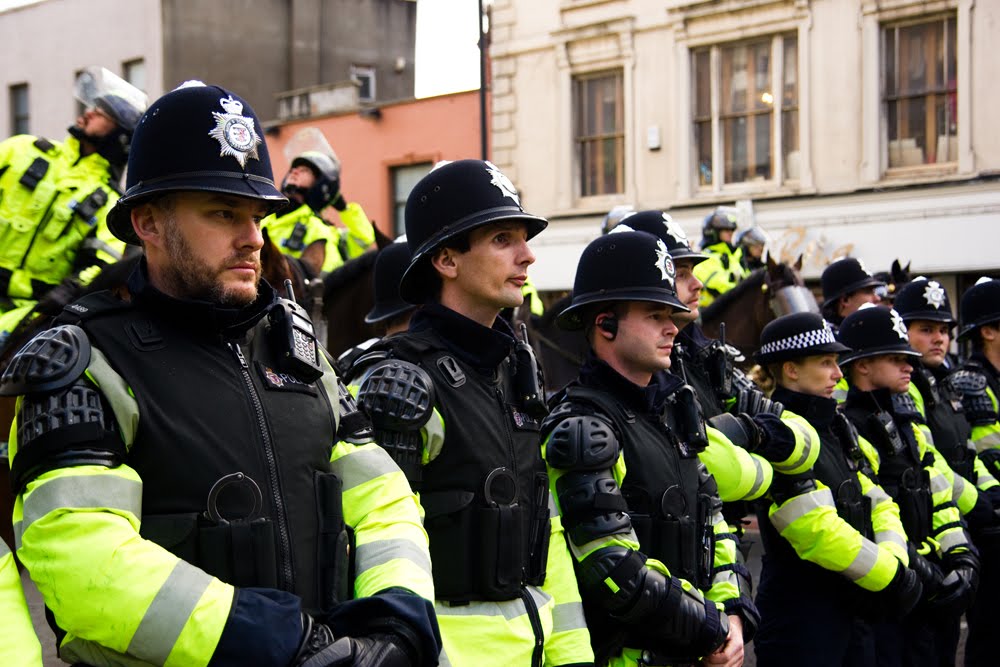
Hasta ahora no se usa los gases lacrimogenos en mi tierra. Pero si te hacen morir de aburrimiento, orinarte o perder tu trabajo por llegar retarde. A veces la gente explotan con rabia y frustración por la situacíon y estás atrapado entre un conflicto.
Con este tactica quieren disuadirte de manifestar. Marco, un anarquista colombiano escribío algo que me parece cierto:
“uno deduce ....que si acá nos matan de manera menos higiénica… a punta de bala o motosierra, allá, en Europa, los mecanismos de represión son más tecnificados y asépticos y el control social juega un factor decisivo en ese aspecto.” ver articulo
La tetera es un mecanismo de control de protesta, entre otras. Tanto como en Colombia se usa la sistema de justicia para dar condenas severas a lxs que opongan las politicas violentas del Estado. Un joven quien participó en la ocupación de la sede del partido de los Conservadores (el gobierno actual) fue condenada a 2 años de carcel por tirar un extinguidor del techo sin causar daño a nadie mientras que 2 años despues del asasinato de Ian Tomlinson por la policia aún no hay ningun condena.
Otro mecanismo de control es el uso de la policia secreto. Fue revelado que un compañero, alguien de confianza politica de acá quien participó en movilisaciones sociales y ambientales, es tombo. Da una sensación de nausea pero por lo menos nos confirma que nuestras ideas y practicas de solidaridad, de acción directa y de la horizontalidad son una amenaza a los elites de este pais. Así nuestras actos acá son actos continua de solidaridad con ustedes. El mismo supragobierno económico que quiere encarcelar nuestras vidas acá para callarnos es la misma esctructura que hace la guerra a ustedes. Pero también es el misma deseo humano que nos motiva en cualquier rincon del mundo a liberar nuestra espiritu de la sumisión y levantar la cabeza con orgullo y luchar.
Friday, November 6, 2009
Where was the arrest warrant when the paramilitaries arrived?
¿Donde fue el orden de captura cuando los paramilitares llegaron?
During an event for victims of paramilitary and state violence in Casanare, the intelligence services turned up with an arrest warrant. Arrests and legal processes are part of the state's strategy across the country to cause fear in people trying to organise to remember their victims and to demand justice.
This video shows clips of a speech made by Gloria Cuartas in response at this attempt to intimidate us. The key question she makes is: Where was the arrest warrant when the paramilitiaries with the support of the army and police arrived here, torturing, disappearing and massacring people eight years ago?
This video shows clips of a speech made by Gloria Cuartas in response at this attempt to intimidate us. The key question she makes is: Where was the arrest warrant when the paramilitiaries with the support of the army and police arrived here, torturing, disappearing and massacring people eight years ago?
Durante un evento por victimas de violencia de los paramilitaries y el estado en Casanara, el CTI llegaron con un order de captura. Detenciones y procesos judiciales son parte de la estrategica del estado Colombia para generar miedo en los que buscan organisarse para recordar sus victimas y exijir justicia.
Este video muesta una intervencion por Gloria Cuartas en respuesta a este intento a intimidarnos. La pregunta clave que les hizo es: ¿Donde fue el orden de captura cuando los paramilitares llegaron con ustedes para torturar, disaparecer y masacrar a la gente?
Biviana's words - Palabras de Biviana
(en español abajo)
I came to this event to support the people here and to bring attention to the fact that the government is doing things wrong. I don't support the government because they do what they want without the the need to think about the people that they affect on the way, walking all over the rights of people humans.
I was scared, there were people that said to me that if you go on the pilgrimage it is really like that they will take reprisals agaisnt you. I am not scared here becuase there is many people that can help you in many things. So,....,no , and fear, you must leave it behind to be able to be to do what you want to do, to be able to be yourself, and to inform people who dont know.
I think it is important that people know becuase we are being tricked with...with practically, the government, the government says, or it goes out on the news, what is in their interest , we never hear about what is not in their interest, people never hear the truth about what is happeneing.
These businesses are supported by the government, why? Because they bring in lots of money for the government and they don't care what a campesino things, rather what is important to them is to get more money at the cost of people having to suffer.
In my daily life, oil production doesnt affect me that much, but with time it is going to affect all of us because it is damaging the land and i think that what this region needs is land for campesinos so they can work and get the resources that they need to survive.
Vine a este evento para apoyar a la gente y dar a conocer de que ellos (el gobierno) esta haciendolo mal hecho. No estoy de acuerdo con el gobierno por lo que buscan sus objectivos o logran lo que quieren sin necesidad de pensar a los personas que les va a afectar a hacer eso, pisoteando todo los derechos de los humanos.
Me imaginé poco gente, nunca esperé que llegaran muchisima gente. Me hubiera gustado la oportunidad a conocer la otra gente más, costumbres y lo que viven otras comunidades, a parte de que se vive acá, acá a todo el mundo ha sufrido este atropello.
En mi comunidad, no se vivía tanto la violenca como acá en Recetor, estan olvidados, son temas que por temor, nunca ha sacado al flote por el temor que puede traer mas violencia. No se puede decir que esto persona murio por que seguro que viene y me va a llever preso, que van a tomar represalias con mi familia o con conocidas,
Quiero seguir viviendo en el campo, buscaré las oportunidades, poder sobrevivir, hasta cuando se puede no, pq pues uno no se saben en que momento vuelva la violenca, y tendremos que salir y buscar otra forma de sobrevivir
I came to this event to support the people here and to bring attention to the fact that the government is doing things wrong. I don't support the government because they do what they want without the the need to think about the people that they affect on the way, walking all over the rights of people humans.
 I imagined that there would be less people, I never expected that so many would arrive. I would have like to have had the opportunity to get to know people from other regions more, their customs and what they have lived through, here everyone has suffered.
I have learnt a lot here, there is much to learn and much to contribute to those people who have no idea, to people who say that this government is the best because of benefits that they may have received but who don't think about the violations that it has brought to many communities. A topic I didnt really have clear before is, that while yes i have suffered from the violence but i have never had the opportunity to understand the topic really well and understand the reality. We say that, over there, they have suffered violence but we have never worried much about why people have suffered violence. Sometimes we have to see things with our own eyes to believe it, sometimes we don't see what we don't want to see.

I was scared, there were people that said to me that if you go on the pilgrimage it is really like that they will take reprisals agaisnt you. I am not scared here becuase there is many people that can help you in many things. So,....,no , and fear, you must leave it behind to be able to be to do what you want to do, to be able to be yourself, and to inform people who dont know.
I think it is important that people know becuase we are being tricked with...with practically, the government, the government says, or it goes out on the news, what is in their interest , we never hear about what is not in their interest, people never hear the truth about what is happeneing.
The two masses that we listened to were good. Sometimes religion lends itself for many things, to cover up things. I have no disagreement with the catholic religion but there are some things that i don't like. I have never been to a mass like this one, where they talk about politics, practically revolutionary, a mass where the father is not bothered by what the high church functionaries think, where he felt and spoke about the reality that people live.

These businesses are supported by the government, why? Because they bring in lots of money for the government and they don't care what a campesino things, rather what is important to them is to get more money at the cost of people having to suffer.
In my daily life, oil production doesnt affect me that much, but with time it is going to affect all of us because it is damaging the land and i think that what this region needs is land for campesinos so they can work and get the resources that they need to survive.

Vine a este evento para apoyar a la gente y dar a conocer de que ellos (el gobierno) esta haciendolo mal hecho. No estoy de acuerdo con el gobierno por lo que buscan sus objectivos o logran lo que quieren sin necesidad de pensar a los personas que les va a afectar a hacer eso, pisoteando todo los derechos de los humanos.
Me imaginé poco gente, nunca esperé que llegaran muchisima gente. Me hubiera gustado la oportunidad a conocer la otra gente más, costumbres y lo que viven otras comunidades, a parte de que se vive acá, acá a todo el mundo ha sufrido este atropello.
He aprendido muchisimo aca, hay mucho para aprender y mucho para aportar a gente que no tiene ni idea, a gente que dicen que eq que esta gobierno es lo mejor por los beneficios que de pronto les han traido pero sin pensar en los tropellos que les ha traido a muchas comunidades.
 Un tema que no tenía en esencia claro, que si, yo sufrí violenca, pero nunca tenía la oportunidad llegar al fondo de tema y conocer la realidad, nosotros, ah si por alla tiene o tenía violencia, pero nunca hemos preocupado el por que esta gente sufrío violencia,
En mi comunidad, no se vivía tanto la violenca como acá en Recetor, estan olvidados, son temas que por temor, nunca ha sacado al flote por el temor que puede traer mas violencia. No se puede decir que esto persona murio por que seguro que viene y me va a llever preso, que van a tomar represalias con mi familia o con conocidas,
Tenía temor, hubo gente que me comente que si vas pa' allá seguro que te tome represarias. Temor no lo tengo en este moment pq hay mucha gente y que lo pueden apoyar a uno en muchas cosas. Entonces, ….no , y temor, hay que dejar lo atrás para poder hacer lo que uno quiere, para poder ser uno mismo, y dar a conocer lo que mucha gente no conoce.
 Creo que es importante que gente conocza por que estamos engañados con.....con practicamente, el gobierno, el gobierno dice o pasa en loas noticas o todo eso , lo que les conviene, nunca pasa lo que no les conviene, nunca la gente se entere, que es la verdad que esta viviendo.
Estas misas eran cheveres. A veces la religion se presta por muchas cosas, se presta por tapar cosas. no estoy en ningun disacuerdo con la religon catolica pero hay cosas que en me gusta. Nunca había ido a una misa donde se han tratado el politico, practicamente revolucionaria, mas que todo es es, una misa donde no le importa lo piensa lo alto cargos en colombia, donde se siente y se dice la realidad que la gente vive,
Pq ellos son una empresa que esta apoyado por el goberino, por que? por que traen mucha plata por el gobierno, y ellos no les importa lo que piensa un campesino, sino lo que les importa es conseguir dinero a costa de hacer sufrir mas gente.

Quiero seguir viviendo en el campo, buscaré las oportunidades, poder sobrevivir, hasta cuando se puede no, pq pues uno no se saben en que momento vuelva la violenca, y tendremos que salir y buscar otra forma de sobrevivir
Thursday, August 27, 2009
Jacquelina's story - La Historia de Jacquelina
El articulo en español aparece al final del texto de inglés.
Sifting through the mound of family's daily washing which all but covered the double bed Jacquelina aged 19 tells me how she doesn't want to get married yet. “Not until I have finished studying and trained in something....If things went badly what would I do, I couldn't leave if I didn't have my own job.”
She tells me about her dad as i edge on to the bed, slowly becoming visible as the clothes get stacked into eight piles, one for each family member. She was nine the day the paramilitaries arrived in La Gabarra and took control through the barrel of their guns. Hundreds were murdeded but her family stayed. Her dad a fisherman in the river Catatumbo. His life and livelihood the river.
His daily catch diversified from the fish the length of his arm, fish that fed his family. He took on the gruesome task of fishing parts of mutilated body out of the river. He would later bury the remnants of touch, smell, sound, sight, taste, spirit, along the banks of the river.

~
She is bored at school. A few years ago she had friends with whom she would play sport, organise fiestas and practice dances. Baseball is her favourite sport. But these girls all left school early, pregnant. She is the only one of the ground left and none of the others want to do anything fun. She goes to school, attends classes and comes home. Bored.
Her dad was taken by a group of paramilitaries one cloudless beautiful early morning. Her mother searched for him, for the shadow of him, from the hour of making the arepas to the hour of washing the kids after much play in the unpaved streets. As dusk passed her rapidly by, she found the courage to visit the paraco in charge in his office. Her mother, with dignity, asked if he knew why her husband had been disappeared. It hadn't been an order and the paraco was feeling generous that cloudless starfull evening. He ordered her husband, not yet a shadow, to be turned out on to the streets.
She loves physics and maths but struggles with chemistry. Snap. She has friend in the town council and is hopeful that once she finishes college she may be able to get a job there, starting at the bottom and working her way up, learning skills and earning a salary as she goes.
Aged 10 her and her mother found a dismembered body on the river bank. Arms, legs and head cut off, the chest wide opened. She describes me the details calmly, no big deal, as we sit resting in chairs outside in the front street, washing all folded and put away now.
She tells me how she bashed into someone earlier, a teenager from one of the delegations who have came on this Pilgrimage, the political – cultural -religous journey that brought 300 of us to La Gabarra. She tells me how embarrased she was but that the lad had responded with a lovely smile and made her laugh.
She was too young for her to be taken as a “girlfriend” by one of the paracos. “Lots of teenage girls had to be the girlfriend of one of them. They did horrible things to them. I don't want to think about it.”
Some of the teengage lads from CISCA walk past a few minutes later. In the dark street she thought it might be one of them. I call them over with the excuse of asking what time we are meeting for the final rehearsal before the perform their drama piece about displacement, death and life. I look at her and she shakes her head, not one of them. They move on.
~

"In spite of the hard hits we endured, we can still smile."
She is really suprise that so many people have come to take part in this event to remember the 10th anniversary of the massacres in La Gabarra. “It's awesome that people have not forgotten what happened to us here. And others are happy too even though they didn't take part in the march this morning. They were waiting for the mass to begin. I saw a big group of people from the village in one corner. And they later went to the bridge and took part in the act there too, throwing flowers into the water. ”
La historia de Jacqueline
Arreglando el montón de ropa para lavar de toda la familia que cubría la cama doble, Jacqueline, de 19 años, me cuenta que todavía no quiere casarse. “No hasta cuando haya terminado mis estudios y aprendido algo … Si las cosas van mal, ¿qué haría, no podría salir si no tuviera mi propio trabajo.”
Me cuenta de su padre en cuanto me acerco a la cama que poco a poco aparece debajo de ocho pilas de ropa, una para cada miembro de la familia. Ella tenía nueve años cuando los paramilitares llegaron a La Gabarra y tomaron el control a través de sus fusiles. Cientos fueron asesinados, pero su familia se quedó. Su padre, un pescador en el río Catatumbo. Su vida y su medio de vida fueron el río.
Entonces sus pescas cambiaron, ya no eran sólo el pescado del tamaño de un brazo, el pescado que alimentaba la familia. Asumió la espantosa tarea de pescar del río partes de cuerpos mutilados. Más tarde enterraría los restos de tacto, olor, sonido, vista, sabor, espíritu en las orillas.
Ella se aburre en la escuela. Hace algunos años tuvo amigas con quienes jugaba deportes, organizaba fiestas y practicaba bailes. Baseball es su deporte favorito. Pero las muchachas dejaron la escuela temprano, embarazadas. Ella es la única que queda y los otros no quieren hacer nada divertido. Ella va a la escuela, asiste a clases, y regresa a casa. Aburrida.
Una hermosa mañana despejada su padre fue llevado por un grupo de paramilitares. Su madre lo buscó, buscó su sombra, desde la hora de marcar las arepas hasta la hora de lavar a los niños luego de muchas horas de juego en las vías destapadas. A la hora de caer el sol juntó la valentía de buscar al paraco encargado en su oficina. Su madre, con dignidad, preguntó si él sabía por qué había desaparecido su marido. No era una orden, y el paraco se sintió generoso esa noche estrellada. Ordenó que soltaran a su marido, todavía no una sombra.
A ella le fascina la física y la matemática, pero lucha con la química. Tiene un amigo en el concejo y espera que cuando termine el colegio vaya a encontrar un trabajo allí, empezando desde abajo y escalando con su trabajo, aprendiendo habilidades y ganando un salario.
Cuando tenía diez años, ella y su madre encontraron un cuerpo desmembrado en la orilla. Brazos, piernas y la cabeza cortados, el pecho abierto. Tranquilamente me describe los detalles, no parece nada serio, nosotras descansando en sillas afuera sobre la calle, con la ropa doblada y ahora guardada.
Me cuenta cómo antes se tropezó con alguien, un joven de una de las delegaciones que vinieron para la Peregrinación, el viaje político-cultural-religioso que trajo a 300 de nosotros a La Gabarra. Me cuenta lo avergonzada que estuvo, pero que el joven respondió con una sonrisa hermosa y la hizo reír.
Ella era demasiado joven como para ser “novia” de un paraco. “Muchas jóvencitas tenían que ser novias de ellos. Hicieron cosas horribles con ellas. No quiero pensar en eso.”
Algunas de los jóvenes del CISCA pasan unos minutos más tarde. En la calles oscura ella piensa que tal vez es uno de ellos. Los llamo con el pretexto de preguntar por la hora en que quedamos para el último ensayo antes de la presentación de su obra de teatro sobre desplazamiento, vida y muerte. La miro y mueve su cabeza, no es uno de ellos. Siguen su camino.
En la mañana escucha a un hombre en una tienda. Está enfadado con nosotros. No es una conmemoración sino una celebración de la muerte. Escupe la palabra. Ella lo traduce. Rabia, impotencia por lo que pasó. Impotencia frente a lo que pueda ocurrir otra vez.
Está realmente sorprendida que tanta gente han venido a participar en ese evento para recordar el décimo aniversario de las masacres de La Gabarra. “Es bacano que la gente no ha olvidado lo que nos pasó acá. Y otros también están felices a pesar de que no participaron en la marcha esta mañana. Estaban en el polideportivo esperando a que empezara la misa. Vi un grupo grande de gente del pueblo en un rincon. Y luego se fueron al puente y participaron en el acto allí también, tirando flores al agua.”
Le gustó lo que dijo el obispo en la misa. Gente que olvida su historia corre el riesgo de repetirla. A mí me gustó también.
Thursday, April 30, 2009
Breaking Fear, Rompiendo Temor
El articulo en español aparece al final del texto de inglés.
"We are tired of our own discourse, of others, of those who tell us a new society can only come with the eternal silence of the nameless bodies …. We choose the language of the art, we trust in its capacity to touch the most profound fibres of humans and that it will produce the arrival of the necessary words, cause us to question our images and social representations."


We transformed the plaza into a visual living memory of 800 victims. I saw before me, using the strength of my imagination, the lives that might have been, the pain of families and friends. I saw people take timid steps to look at their history, to walk slowly past the tombs reading the narrative, talking quietly with their companion.
I also saw products of fear. People walked past with their head down, or straight ahead, refusing to engage, scared of who might be watching. The organisers of the event spoke to me of peoples fear. Some spoke of fear as though it were some inherent quality in the characteristics of people in this region rather than a very human response to a policy of state terrorism.
Others compared themselves to other places where social movements have overcome fear and refused to be quiet. A new friend spoke to me about his frustration at watching the popular uprising in Greece in December unfold after the murder of just one person by the police and asks why not here? In 2008 alone 175 people were murdered by the army and then presented as guerrilla killed in combat, known as false positives a horrific crime against humanity. 
Others speak of the proficiency of the Colombian oligarchy at producing fear and terror. The number of Colombians “disappeared” during Uribe’s first term exceeds the total number of Chileans that vanished during Pinochet’s entire 17-year military dictatorship. And the disappearances continue. In 2008 1015 people were disappeared, four times greater than in 2007. The country’s armed forces are suspects in more than 90% of these cases, according to the Prosecutor’s office.[1]
Everyone wants to know what will it take for people to overcome fear and just say enough.
Today was a simple act. It was inspired by Las Madres del Primero de Mayo who carried out symbolic non-violent actions to bring about public awareness. It was inspired by similar events that have taken place across Colombia in recent months.
Y~ was happily surprised by Sogamoso this day, by their willingness to stop, take time to look, to chat, to participate in the candlelit vigil at dusk. I had taken peoples reactions, stopping to look, as normal, but she had been skeptical during the two months of preparation that people would respond positively; that people would dare to respond. That they have will have deep reverberations in the people of Sogamoso.
Despite their worries, the organisers kept focused on organising the day. I re-realised something yesterday that helped me see why– the importance of outlets for our internal frustrations, pains, anger. A small space appeared for me and suddenly thoughts, frustrations and personal learnings gushed out of me, like water inside a mountain suddenly finding a crack in the rock and pouring out in to the light. The water, carrying the memory of those killed, has begun to flow out to the light, the weight of peoples emotions pushing it out. In Sogamoso they will be back in the plaza with the 800 bricks in July, September and November.
Last night while sat chatting around a fake gas log fire on the rooftop of a swanky bar the desire for peace came up. “What kind of peace do you want?” I asked, knowing how peace is thrown around with as little clarity as the supposedly objective word “development” is in the UK. The question was thrown back at me. Peace is people not having to live in silence and fear but being able to express their torment as they wish. Peace is people receiving answers to their question of why were their loved ones killed, so that the torment of the unknown may transform to grief and acceptance and with time and love, a peace inside.
To see a photo montage from the day click here
.............................................
Rompiendo Temor, Rompiendo unas Bloques
"Estamos cansados de los discursos, los de nosotros y los de otras y otros, de escuchar a quienes aseguran que una sociedad nueva sólo podrá surgir de la impunidad y del silencio eterno de los sepulcros sin nombre y sin dolientes...Hemos recurrido a los lenguajes del arte, pues confiamos en su capacidad para conmover las fibras más profundas de lo humano para convocar el surgimiento de la palablra vital y para interpelar nuestros imaginarios y representaciones sociales."
Transformamos la plaza en una memoria viva de ochocientos muertos. Ví ante mi, con el poder de la imaginacíon, las vidas que podrían haber existido, el dolor de las familias y amigos. Ví a personas dar pasos timidos para mirar su historia , pasaron por las tumbas, leyendo las narrativas y hablando en voz baja con sus compañeros.
Todos quieren saber que se necesita para que la gente venza el miedo y diga basta.
Hoy fue un acto sencillo.
La gente de Sogamoso le inspiraban las madres del plaza de mayo en argentina que llevaron a cabo acciones no-violentas y simbolicas para generar opinion publica. Les inspiraba actos semejantes que han occurido a través de Colombia en los ultimos meses.
Una compañera fue soprendida por Sogamoso ese día, por la voluntad de la gente a parar y tomar el tiempo de mirar, conversar, participar encendiendo las velas al atardecer. Yo asumí que las reaciones de la gente era normales pero ella había sido esceptica durante las dos meses de preparacíon. Temió que no respondieran positivamente; que no se atrevieran a responder. El hecho de hacerlo, tendrá unas hondas de repercusíones en la gente de Sogamoso y de alrededor.
A pesar de las preocupaciones, los y las organizadores seguían enfocados en organizar la jornada. Volví a darme cuenta de algo ayer que me ayudó a ver por que seguíeron y por que seguimos: la importancía de canalizar nuestras frustraciones, dolores y rabías internas. Un espacio pequeño aparecío ante mi y de pronto pensamientos, frustraciones y aprendizajes personales me salieron a borbotones, como agua dentro de una montaña que encuentra una rendija en la roca y vierte a la luz. El agua, llevando las memorias de los asesinados, corre a la luz expulsado por el peso de los sentimientos de muchas personas. En Sogamoso volverán a la plaza con 800 bloques en Julio y Septiembre.
Anoche, mientas que charlabamos alredador de una chimenea de gas en la terraza de un bar lujoso, el deseo por la paz surgío en la conversacon. “Que tipo de paz quieres?” pregunté, conociendo que la palabra paz que se utilisa con tan poca claridad. Me devolvieron la pregunta. Paz es no tener que vivir en silencio y temor sino poder expresar el tormento sin restriciones. Paz es recibir respuestas a las pregunatas del por que se asesinó su ser querido, para que el tormento de estas preguntas se pase a la aceptacíon de la perdida, y con el tiempo y el amor, una paz interna.
Para ver un video de fotos del dia haga clic aca
[1] Segun Gary Leech, un periodista de EEUU. http://www.colombiajournal.org/colombia295.htm
Subscribe to:
Posts (Atom)