Showing posts with label oil. Show all posts

Monday, June 28, 2010

The closure of a chapter and the start of a new one in Casanare

Midday through writing this, I hear that my partner, the organisation he is part of (Solidarity Committee with Political Prisoners) and other compañeros from NGO's and social organisations in Cali have received death threats, the third against him in the last two months. Yet we both know that we must continue telling the stories of how people are trying to resist and build social organisations. All too often news from Colombia is a depressing list of threatened people and organisations. So here is the story of a weekend of weaving webs of hope, written while I chew my nails and my stomach churns.....

I arrive at Tauramena before sunrise and witnessed for the first time the huge gas flares. Just as the gas flares dominate the night sky with a bright orange glow, the oil industry dominates all aspects of life in Casanare. I had come to witness the closure of a chapter in the history of oil in Casanare and the start of a new one. It was a huge privilege to witness.

The previous evening, after five long months of negotiation and mobilizations, the Movement for the Dignity of Casanare signed an agreement with BP that includes action on basic labour, social and environmental issues. The agreement includes among other things a small but significant wage increase, investment in local roads, a commitment to finance a forum on the human rights situation in Casanare and an independent study in to the environmental impacts of the oil industry.

"Our lives are not for sale. BP supports the violence"

Previously, communities and workers have not been able to speak out against BP for fear of being targetted by the paramilitaries. This agreement is historical and important yet I noticed the lack of celebrations. Rather, people spoke about this just being the beginning.

Firstly we need to ensure that BP sticks to the agreement and that the commitments are met. That is not going to be easy. Secondly, we need to build the Movement for the Dignity of Casanare and unite us much more. We could have achieved double, triple what we achieved if we were more united but BP used many dirty tactics to manipulate and turn people against us” Pacho tells me.

Pacho speaking during a community and workers assembly in March 2010

We head over to the school where today's workshop is going to take place: Exchanging Experiences on the Impacts of the Oil Industry. As I greet the people who have travelled from around Casanare, I recognise familiar faces from different documentaries that COSPACC, the NGO I am with, have made. I particularly remember one guy being filmed while harvesting crops from his farm beside the River Ariporo “I'm not leaving Casanare because of all this I have planted, yuca, plantain, maize. Here we live well.” he tells the camera with a big warm grin on his face. And in real life he is just the same. You would warm to him straight away.

We start the workshop with a great exercise which sparks sincere exchange and trust building: we form two concentric circles and pair up with the matching person. We are asked to introduce ourselves, where we are from, and share briefly with the other what is our experience of the oil industry in our municipal. We then return to the whole group and introduce our partner to everyone else, sharing what we have learnt.

We hear stories of how seismic exploration in Visinaca has left vital summer water sources with much less water and in some cases, with no water, cutting off the lifeblood to their farms, especially those that were fish farmers. Efforts at compensation have not been listened to.
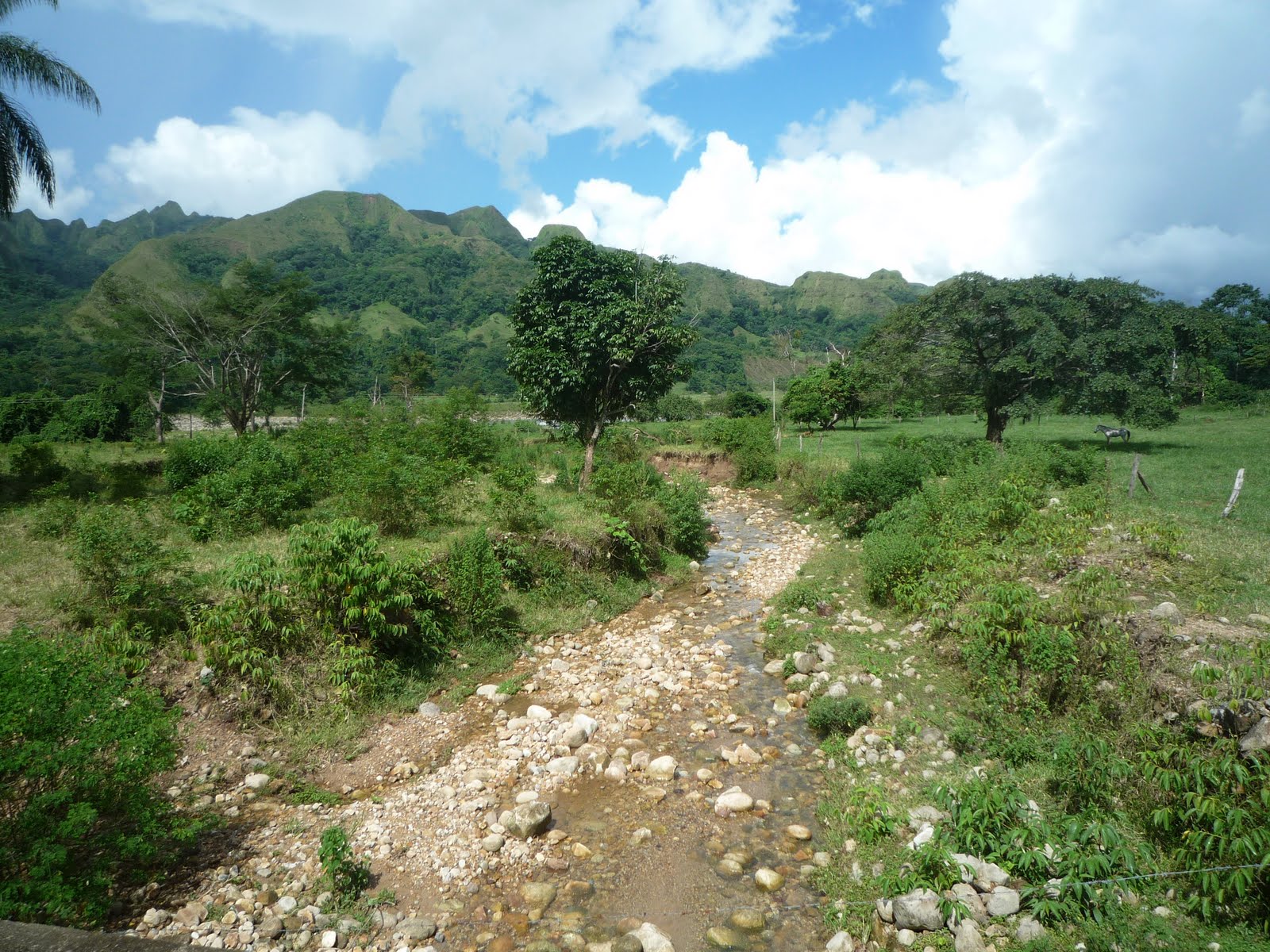
We hear stories of how peasant farmers from Monterralo said no to seismic exploration only to later receive a copy of a decree which tells them they have no say or choice over the matter. It is going ahead. Miguel offers information which the authorities and companies would rather was not exchanged. He reminds them that the Colombian constitution states that 'Every person has the right to enjoy a healthy environment. The law will guarantee the community's participation in the decisions that may affect it.' The decree can be challenged he said.

We hear the story of how an U'wa indigenous leader was killed after refusing payment in exchange for allowing oil exploration in indigenous territory. Instead of being weakened, the U'wa people took the decision to not talk with the oil industry until there is a full investigation in to the murder of their leader. “Money is nothing, it will end. What is important is our territory, where we live, where we walk, where we get water from, what we leave for our children. The oil industry is a cancer destroying our mother earth. We must defend our territory

Campesinos from Paz de Ariporo share their tactics for fighting against oil exploration in their municipality . He tells us proudly how they refuse to sign attendance records when meeting with the oil industry, wise to the dirty tactics of these records being used to tick consultation boxes. He tells us their strategy to avoid corruption in their leaders; the community chose four leaders who are prohibited from representing the community in meetings with the oil industry alone. They all must be present. They also took the decision to invite the U'wa people to unite with them despite different cultures and world views. They extend their invitation to unite to all present at this exchange. "If we don't all defend the water of the hills, these plains are nothing."

After lunch, we are taken to see these hills and its rivers, with the solidarity of a local bus driver who lends us his time and bus. We get off the bus by the River Cusiana and Don Alexander leads us down to the river to the place where the water inlet pipe siphons off thousands of litres of fresh water daily to be pumped in to the oil wells. "This water they take is lost forever" Juan David, who participated in the Tauramena environmental negotiations with BP tells us. "BP take it without paying anything and bury it underground, removing it from the water cycle for ever.

Don Alexander warns the others "when they wanted to build the water inlet pipe they arrived like a man who wants to conquest a women, they arrived with flowers and nice words. But just as a women doesn't know who the man really is until later, we didn't know what was behind the flowers until it was too late and the huge damage was done. They arrived with an army of machinery and rerouted the river in to a channel to fill the inlet pipe. We lost lots of land, 20 hectares. And they have never paid us for what we have lost, just as they have never paid for the water they have robbed."

After admiring all the beautiful creepy crawlies that kept jumping out at me, we headed back to the bus, an hour late and the solidarity of the driver wearing a little thinner. As we drove back to Tauramena, people sat with new compañeros and the bus was filled with the buzz of conversations, full of ideas about how to move forward with this new chapter. This new chapter in which these different local resistances to oil exploration and exploitation in Casanare begin once again to weave hope and strength together. This was something really exciting and genuine to celebrate. And the cool beers went down well that evening. Let us hope there are more small steps to continue celebrating in the coming months.

Monday, April 19, 2010

BP AGM: confronting power with solidarity

We entered nerviously into the luxurious and modern Excel convention centre in London, but with all the wonderful people we have met and have worked with in Casanare giving us strength and a strong mandate; put pressure on BP to accept as legitimate the list of demands that the Movement for the Dignity of Casanare has presented to one of the world's most powerful multinational corporations.

It was an inmense stage that made clear their symbolic, economic and political power, as well as their huge egos. Their power is all too real; their decisions in Casanare have affected the lives of Casanare people through the intense militrisation and human rights violations which oil exploration brought to the region in the nineties.

It was to their home turf that we brought the voice of the Casanare people, who in spite of the 9000 people dead and in spite of fear, have risen up again and demanding dignity, the right to a trade union, respect for the environment they are dependent on, respect for life and better living conditions. We asked BP if they considered the demands of the communities to be legitimate considering BP has benefitted for 16 years from the oil that flows from this region.

They responded our question saying that they knew of some dialogue happening in Casanare, which is important, but it was not to do with BP. Considering that BP has been in negotiations and meetings with the Movement in Casanare for the past six weeks we pondered whether a lack of capacity to tell the truth is seen as a strength rather than a weakness when applying for a multimillion pound job with BP.

We took the microphone again, telling the audience that what BP said was not the case and that the problem was with BP. We also made clear that the chair's failure to recognise at the very least the legitimacy of communities to demand better environmental, social and labour conditions is very dangerous in the context of Casanare. Every time community organisation have raised their voices against BP, community leaders have been killed and the organisations destroyed. BP's public affirmation of the legitimacy of the right to protest would have been a minimum measure to prevent history repeating itself. They would not do so.

We also shared with the audience that only the night before BP had indeed responded to the list of demands presented by the communities saying that they not going to negotiate with them and furthermore they were going to sue them for slander. This is how a multimillion pound multinational corportation responds to communities asking for some dignity.

Later in the meeting George Poitras, a First nations Indigenous spokeperson, began his intervention about the impact of Tar Sands operation in his lands saying “When i heard my friend from Colombia speaking about what BP has done in his country, my heart bled. We hope that this won't be what their presence brings to our lands.”.

As we left the convention centre, friend on the outside shouted “Canada, Colombia, No Blood for Oil”. In the sunshine we gave a summary of what had happened inside. We were angry but not suprised by the manipulation and lack of answers inside, we were confident that our actions had served as a protecton mechanism for our friends back in Colombia and that BP knows the political costs are high for any future repression in Casanare, and we were excited by the solidarity between Colombians, British and Canadians. Solidarity is our own form of beautiful power, not over but between people, that will be crucial for the ongoing mobilisations in Casanare and for the communities in Canada.


Saturday, February 20, 2010

I really hope that there doesn't need to be a murder for BP to negotiate”

Workers for BP in the department of Casanare, Colombia have been protesting, demanding that the oil multinational improves labour conditions, since 23 January.

We earn $30,000 (£9), this is what we were paid in 2004. Everything has gone up in price. Our salary is the only thing that hasn't increased. After paying food and bills we are left with nothing in the pocket while BP earms millions from Casanare oil. Us poor people need respect too as we are humans, just the same as rich people. And a dignified salary is part of this respect.”

One week ago they were forced to take the decision to go on strike after BP cancelled yet another meeting to discuss the demands. They are tired of being made fun of and walked all over for twenty years.

On Monday 15th February, the notorious Colombian riot police, ESMAD, arrived and without any warning they violently attacked the strikers and community members using tear gas, their batons and shields.


Wilson, a young local commited councillor, told me how ESMADs response to his efforts to calm the situation down through attempting dialogue, was to be pushed to the ground and giving a kicking. He is now being sued by ESMAD for supposedly attacking the police.

Five days later, with wounds visible on many present, worker and community leaders spend the day in a meeting with a delegation of government representatives. BP did not arrive despite promising to attend. The government representatives spent the morning listening to the grievances of the communities and workers who for the first time in 20 years of BP operating in the oil are speaking out clearly, saying enough, this situiation has to change.

It is important to me that the salaries increase so that my kids can study and have a better life and future than what I have.” Community member and wife of worker accompanying the strike.

The government represenatives spent the afternoon trying to confince the workers to lift the strike so that the dialogue could continue calmly. The workers responded saying that they have shown good will repeatedly and BP has refused to listen to them, even refused to accept this as a labour conflict.

We will lift the strike when BP sits down to negotiate with us and we reach a just agreement”

The workers, with their strong sense of belonging to the region, are demanding that BP discusses not just labour issues but also environmental and social investment issues. They are very worried by the contamination of the streams and rivers, and feel totally abused by the lack of social investment in the area by BP.

It is the first time that workers for the BP have managed to organise themselves in a union. In the late 1990’s, B.P. was exposed by the British media for complicity in human rights abuses. The company had contracted the 16th Brigade of the Colombian army to protect its oilfields, despite the Brigade’s dire human rights record, which includes murder, “disappearances”, torture, rape and the forced displacement of communities. B.P. also admitted to having employed the private security company Defence Systems Limited to provide counter-insurgency training to Colombian police and army units charged with the protection of B.P’s installations. This training was described as “lethal” by a DSL employee and included the surveillance and intimidation of peasant leaders who were mounting protests against BP’s ecological damage, denial of labour rights and lack of social.

As is common in our country, the presence of these economic projects are accompanied by state violence and a strong paramilitary presence.” USO Urgent Action (USO is the national oil workers union)

In Casanare, a department with a population of around 500,000 habitants, there have been 9900 selected killings, and 2600 people disappeared between 2000 and 2007 according to COS-PACC, a human rights NGO.


We would wake up wondering who would be killed today. Things aren't as bad now but there has already been people on motorbikes without license plates watching us for hours at the picket line. We are worried. I really hope that there doesn't need to be a murder for BP to negotiate” Dina, local community member.

The USO holds BP and the Colombian State responsible for any possible human rights violations and that could occur. The situation is also urgent as hundreds of workers have not received their salary for a month now.

They are asking for national and international support; both solidarity actions and actions to pressure the company to sit down and negotiate with the union.

The Colombia Solidarity Campaign have called for an emergency picket of the BP HQ, London, Friday 26th February. The workers assembly gave a big cheer when I passed on this news and one women took a copy of the email to go door to door showing people how people were supporting the strike and encouraging all in the village to support the strike too.

Please send letters of support to prensa@usofrenteobrero.org and a copy to espaciobristol@redcolombia.org


Friday, November 6, 2009

Biviana's words - Palabras de Biviana

(en español abajo)

I came to this event to support the people here and to bring attention to the fact that the government is doing things wrong. I don't support the government because they do what they want without the the need to think about the people that they affect on the way, walking all over the rights of people humans.

I imagined that there would be less people, I never expected that so many would arrive. I would have like to have had the opportunity to get to know people from other regions more, their customs and what they have lived through, here everyone has suffered.

I have learnt a lot here, there is much to learn and much to contribute to those people who have no idea, to people who say that this government is the best because of benefits that they may have received but who don't think about the violations that it has brought to many communities. A topic I didnt really have clear before is, that while yes i have suffered from the violence but i have never had the opportunity to understand the topic really well and understand the reality. We say that, over there, they have suffered violence but we have never worried much about why people have suffered violence. Sometimes we have to see things with our own eyes to believe it, sometimes we don't see what we don't want to see.

In my community, people haven't lived so much violence as like here in Recetor. They are forgotten about, they are topics that for fear have never been brought out in to the open, for fear that it might bring more violence. One can't say that this person died because it is certain that they will come and imprisonme, or take reprisals against friends and families.

I was scared, there were people that said to me that if you go on the pilgrimage it is really like that they will take reprisals agaisnt you. I am not scared here becuase there is many people that can help you in many things. So,....,no , and fear, you must leave it behind to be able to be to do what you want to do, to be able to be yourself, and to inform people who dont know.

I think it is important that people know becuase we are being tricked with...with practically, the government, the government says, or it goes out on the news, what is in their interest , we never hear about what is not in their interest, people never hear the truth about what is happeneing.

The two masses that we listened to were good. Sometimes religion lends itself for many things, to cover up things. I have no disagreement with the catholic religion but there are some things that i don't like. I have never been to a mass like this one, where they talk about politics, practically revolutionary, a mass where the father is not bothered by what the high church functionaries think, where he felt and spoke about the reality that people live.

About the presence of BP in the region,..., well,...I don't agree with that either. I don't agree because this oil megaproject has caused many violations against people. Instead of bringing benefits for the community what it has brought is more war, more unemployment, more hunger. These companies are taking land from campesinos and not giving them any other opportunities.

These businesses are supported by the government, why? Because they bring in lots of money for the government and they don't care what a campesino things, rather what is important to them is to get more money at the cost of people having to suffer.

In my daily life, oil production doesnt affect me that much, but with time it is going to affect all of us because it is damaging the land and i think that what this region needs is land for campesinos so they can work and get the resources that they need to survive.


I want to keep living here, search for opportunities to be able to survive, as long as I can, because you never know in what moment violence will return again and we will have to leave and look for other ways to survive.


Palabras de Biviana

Vine a este evento para apoyar a la gente y dar a conocer de que ellos (el gobierno) esta haciendolo mal hecho. No estoy de acuerdo con el gobierno por lo que buscan sus objectivos o logran lo que quieren sin necesidad de pensar a los personas que les va a afectar a hacer eso, pisoteando todo los derechos de los humanos.

Me imaginé poco gente, nunca esperé que llegaran muchisima gente. Me hubiera gustado la oportunidad a conocer la otra gente más, costumbres y lo que viven otras comunidades, a parte de que se vive acá, acá a todo el mundo ha sufrido este atropello.

He aprendido muchisimo aca, hay mucho para aprender y mucho para aportar a gente que no tiene ni idea, a gente que dicen que eq que esta gobierno es lo mejor por los beneficios que de pronto les han traido pero sin pensar en los tropellos que les ha traido a muchas comunidades.

Un tema que no tenía en esencia claro, que si, yo sufrí violenca, pero nunca tenía la oportunidad llegar al fondo de tema y conocer la realidad, nosotros, ah si por alla tiene o tenía violencia, pero nunca hemos preocupado el por que esta gente sufrío violencia,

a veces nosotros tenemos que ver para creer las cosas. Aveces no vemos mas allá de lo que queremos ver.

En mi comunidad, no se vivía tanto la violenca como acá en Recetor, estan olvidados, son temas que por temor, nunca ha sacado al flote por el temor que puede traer mas violencia. No se puede decir que esto persona murio por que seguro que viene y me va a llever preso, que van a tomar represalias con mi familia o con conocidas,

Tenía temor, hubo gente que me comente que si vas pa' allá seguro que te tome represarias. Temor no lo tengo en este moment pq hay mucha gente y que lo pueden apoyar a uno en muchas cosas. Entonces, ….no , y temor, hay que dejar lo atrás para poder hacer lo que uno quiere, para poder ser uno mismo, y dar a conocer lo que mucha gente no conoce.

Creo que es importante que gente conocza por que estamos engañados con.....con practicamente, el gobierno, el gobierno dice o pasa en loas noticas o todo eso , lo que les conviene, nunca pasa lo que no les conviene, nunca la gente se entere, que es la verdad que esta viviendo.

Estas misas eran cheveres. A veces la religion se presta por muchas cosas, se presta por tapar cosas. no estoy en ningun disacuerdo con la religon catolica pero hay cosas que en me gusta. Nunca había ido a una misa donde se han tratado el politico, practicamente revolucionaria, mas que todo es es, una misa donde no le importa lo piensa lo alto cargos en colombia, donde se siente y se dice la realidad que la gente vive, 

De la presencia del BP, …..pues..... no estoy de acuerdo tampoco, no estoy de acuerdo por que al hacer un megaproyecto, el petroleo, ha traido muchas tropellas contras las personas, en vez de traer beneficios a la comunidad lo que esta traendo es mas guerra, mas desempleo, mas hambres. Por que son empresas de que, les estan quitando la tierra a los campesinos y no les esta dando otras oportunidades.

Pq ellos son una empresa que esta apoyado por el goberino, por que? por que traen mucha plata por el gobierno, y ellos no les importa lo que piensa un campesino, sino lo que les importa es conseguir dinero a costa de hacer sufrir mas gente.

En mi vida cotidiana el petroleo no me afecta tanto, pero con el tiempo nos va afectar todos pq esta deteriorando mucho la tierra y pienso que lo que necesita en este region es tierra por campesinos y poder trabajar y poder conseguir sus recursos para sobrevivir. 

Quiero seguir viviendo en el campo, buscaré las oportunidades, poder sobrevivir, hasta cuando se puede no, pq pues uno no se saben en que momento vuelva la violenca, y tendremos que salir y buscar otra forma de sobrevivir