Showing posts with label union. Show all posts

Monday, June 28, 2010

The closure of a chapter and the start of a new one in Casanare

Midday through writing this, I hear that my partner, the organisation he is part of (Solidarity Committee with Political Prisoners) and other compañeros from NGO's and social organisations in Cali have received death threats, the third against him in the last two months. Yet we both know that we must continue telling the stories of how people are trying to resist and build social organisations. All too often news from Colombia is a depressing list of threatened people and organisations. So here is the story of a weekend of weaving webs of hope, written while I chew my nails and my stomach churns.....

I arrive at Tauramena before sunrise and witnessed for the first time the huge gas flares. Just as the gas flares dominate the night sky with a bright orange glow, the oil industry dominates all aspects of life in Casanare. I had come to witness the closure of a chapter in the history of oil in Casanare and the start of a new one. It was a huge privilege to witness.

The previous evening, after five long months of negotiation and mobilizations, the Movement for the Dignity of Casanare signed an agreement with BP that includes action on basic labour, social and environmental issues. The agreement includes among other things a small but significant wage increase, investment in local roads, a commitment to finance a forum on the human rights situation in Casanare and an independent study in to the environmental impacts of the oil industry.

"Our lives are not for sale. BP supports the violence"

Previously, communities and workers have not been able to speak out against BP for fear of being targetted by the paramilitaries. This agreement is historical and important yet I noticed the lack of celebrations. Rather, people spoke about this just being the beginning.

Firstly we need to ensure that BP sticks to the agreement and that the commitments are met. That is not going to be easy. Secondly, we need to build the Movement for the Dignity of Casanare and unite us much more. We could have achieved double, triple what we achieved if we were more united but BP used many dirty tactics to manipulate and turn people against us” Pacho tells me.

Pacho speaking during a community and workers assembly in March 2010

We head over to the school where today's workshop is going to take place: Exchanging Experiences on the Impacts of the Oil Industry. As I greet the people who have travelled from around Casanare, I recognise familiar faces from different documentaries that COSPACC, the NGO I am with, have made. I particularly remember one guy being filmed while harvesting crops from his farm beside the River Ariporo “I'm not leaving Casanare because of all this I have planted, yuca, plantain, maize. Here we live well.” he tells the camera with a big warm grin on his face. And in real life he is just the same. You would warm to him straight away.

We start the workshop with a great exercise which sparks sincere exchange and trust building: we form two concentric circles and pair up with the matching person. We are asked to introduce ourselves, where we are from, and share briefly with the other what is our experience of the oil industry in our municipal. We then return to the whole group and introduce our partner to everyone else, sharing what we have learnt.

We hear stories of how seismic exploration in Visinaca has left vital summer water sources with much less water and in some cases, with no water, cutting off the lifeblood to their farms, especially those that were fish farmers. Efforts at compensation have not been listened to.
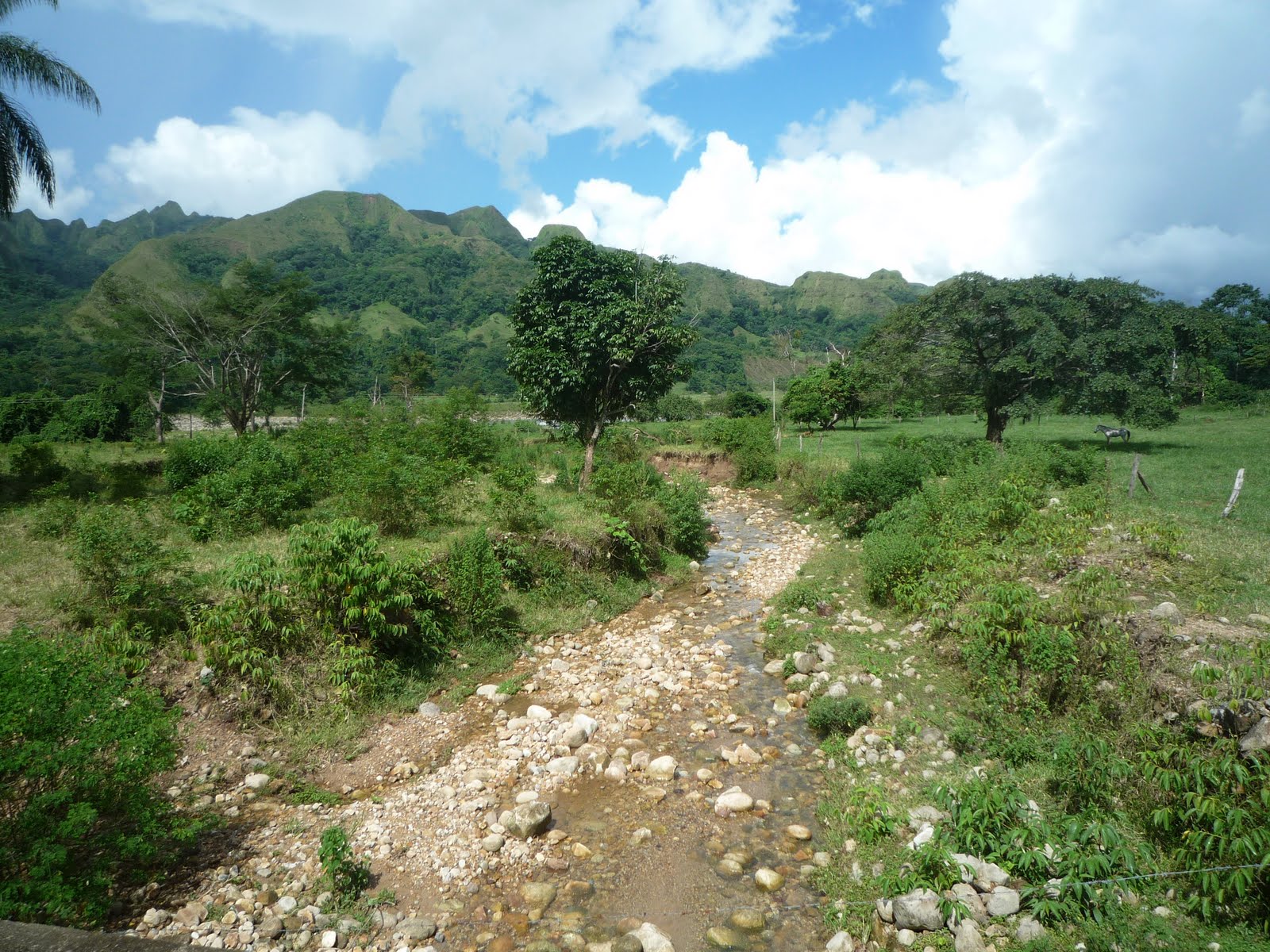
We hear stories of how peasant farmers from Monterralo said no to seismic exploration only to later receive a copy of a decree which tells them they have no say or choice over the matter. It is going ahead. Miguel offers information which the authorities and companies would rather was not exchanged. He reminds them that the Colombian constitution states that 'Every person has the right to enjoy a healthy environment. The law will guarantee the community's participation in the decisions that may affect it.' The decree can be challenged he said.

We hear the story of how an U'wa indigenous leader was killed after refusing payment in exchange for allowing oil exploration in indigenous territory. Instead of being weakened, the U'wa people took the decision to not talk with the oil industry until there is a full investigation in to the murder of their leader. “Money is nothing, it will end. What is important is our territory, where we live, where we walk, where we get water from, what we leave for our children. The oil industry is a cancer destroying our mother earth. We must defend our territory

Campesinos from Paz de Ariporo share their tactics for fighting against oil exploration in their municipality . He tells us proudly how they refuse to sign attendance records when meeting with the oil industry, wise to the dirty tactics of these records being used to tick consultation boxes. He tells us their strategy to avoid corruption in their leaders; the community chose four leaders who are prohibited from representing the community in meetings with the oil industry alone. They all must be present. They also took the decision to invite the U'wa people to unite with them despite different cultures and world views. They extend their invitation to unite to all present at this exchange. "If we don't all defend the water of the hills, these plains are nothing."

After lunch, we are taken to see these hills and its rivers, with the solidarity of a local bus driver who lends us his time and bus. We get off the bus by the River Cusiana and Don Alexander leads us down to the river to the place where the water inlet pipe siphons off thousands of litres of fresh water daily to be pumped in to the oil wells. "This water they take is lost forever" Juan David, who participated in the Tauramena environmental negotiations with BP tells us. "BP take it without paying anything and bury it underground, removing it from the water cycle for ever.

Don Alexander warns the others "when they wanted to build the water inlet pipe they arrived like a man who wants to conquest a women, they arrived with flowers and nice words. But just as a women doesn't know who the man really is until later, we didn't know what was behind the flowers until it was too late and the huge damage was done. They arrived with an army of machinery and rerouted the river in to a channel to fill the inlet pipe. We lost lots of land, 20 hectares. And they have never paid us for what we have lost, just as they have never paid for the water they have robbed."

After admiring all the beautiful creepy crawlies that kept jumping out at me, we headed back to the bus, an hour late and the solidarity of the driver wearing a little thinner. As we drove back to Tauramena, people sat with new compañeros and the bus was filled with the buzz of conversations, full of ideas about how to move forward with this new chapter. This new chapter in which these different local resistances to oil exploration and exploitation in Casanare begin once again to weave hope and strength together. This was something really exciting and genuine to celebrate. And the cool beers went down well that evening. Let us hope there are more small steps to continue celebrating in the coming months.

Tuesday, May 26, 2009

The human price of coal mining

Fifteen years ago Roche was a hub of rural activity in the municipal of Barranca, La Guajira, a dry arid region in the northeastern tip of Colombia. It was home to 500 families but 483 families have gone. In their place is a sea of red and white striped posts, marking out the plots of land that until recently contained the daily lives, cultures and family memories of the thousands of people who have been forced to leave their lives. The posts mark out the land that is now owned by Cerrejón, one of the largest opencast coal mines in the country.

To walk among these posts filled me with an intense feeling of sadness of lives being slowly suffocated as the mine creeps forward. To live among these posts, with the whines of mine machinery playing over the sound of the wildlife, appears to me like psychological torture for the remaining 17 families.


The majority of Roche’s residents, along with those of nearby villages Patilla, Chancleta and Tamaquito, lived off the fertile land by the banks of the River Rancheria. Life revolved around growing food crops both for themselves and on larger farms as hired hands, rearing cattle, hunting rabbit and goat, and fishing. The Roche residents who remain spoke to us of life now. The land has been poisoned by the coal dust and is no longer productive. The track down to the river from which they used to collect sand for making cement had a trench dug across it preventing vehicle access. Men have been detained by the police when fishing, told that Cerrejón now owns the river that runs past their village and thus illegal to fish in it. Men have been detained when hunting, for trespassing on what was once village lands but is now the private property of Cerrejón.


The local socio-economic system of the area is being obliterated, forcing people from the communties of Patilla, Chancleta, Roche and Tamaquito, an indigenous community, to leave in search of a source of food and income elsewhere. The highest levels of displacement in Roche came post 2001 when a nearby village, Tabaco, was razed to the ground by bulldozers protected by the Colombian armed forces.


“Tabaco pyschologically affected us and people began to sell up for whatever price the company was offering. Cerrejón took advantage of the fear to buy the land for next to nothing and people had to leave Roche, their community.” Resident of Roche


Former residents of Tabaco recently signed an agreement with the owners of Cerrejón, BHP Biliton, Anglo American and Xstrata in which they will be relocated and compensated. I was shown the payment slip for the compensation by a woman wanting answers I could not give. She could not understand how the compensation was for just $200,000 pesos (about £50). “Is this it? Is this our compensation after everything we suffered and 8 years of fighting for some justice? It is an insult.”

While there is an urgency for a solution, the communities are adamant that they deserve at the very least a dignified compensation for their physical and psychic losses, and to be relocated to a site of their choosing with a quality of life at least equal to what they had before the communities social fabric was unpicked.


“Every day we feel the contamination getting worse, we need solutions to this now. The good practice of the company would be to relocate the entire village in one go, instead they are doing it individually, and only with people born in the villages, and so dividing the communities.”


On Wednesday 20th April, at the invitation of the communities of Roche, Chancleta, and Tamaquito, and under pressure by a visiting international delegation and Sintracarbon, the union representing Cerrejón workers, representatives of Cerrejón attended a meeting with around 150 people from the communities. More would have liked to have participated but health issues, which they connect to the mine’s presence, made this difficult.


The first issue on the agenda was about the resettlement process. Involuntary resettlement due to mining projects, according to the World Bank, should be done in coordination with the affected communities.


“First Cerreón has to work with us in making a list of what relocation involves, housing, productive projects, amenities. After this is done, they should consult around every one of these points. But they didn’t, their first error. Second error, which can be considered more serious, is that despite the company not doing this, they published on their webpage a completed plan for settlement and said that they had consulted with the communities of Roche, Chancleta and Patilla. What did the company want with this lie? Trick the community? the international community? the local governance? all of the above?“

Roche village leader, community meeting with Cerrejón, 20th May 2009


Other issues presented by the community were around the productive projects, health issues, and the behaviour of the company towards the communities. The final issue of the day was around independent advisors.


Community members had previously reflected that whereas Cerrejón has access to an expert team of advisors, the communities have nothing and as such are being manipulated and lied to by the company. For example, one member spoke about how they were invited to a meeting in the mine, where Cerrejón’s legal advisor told them that they did not need advisors, as the company would just negotiate directly with them. Recognising the near comicalness of being told this by a very advisor of Cerrejón, the communities of Roche, Tamaquito and Chancleta united and presented a proposal to Cerrejón. No more negotiations until they have independent advisors, paid for by the company. Cerrejón must give a yes or no by the 31st May.


The following day we met with community members from Barranco, another village. They told us how representatives of Cerrejón are holding meetings and visiting families to talk about future relocation. What was interesting was how the people had been convinced so quickly that they had no other choice, but to go. They know though that they will have to fight for this to be in a dignified and just manner.


It appears to me that Cerrejón is willing to spend the money necessary on its well paid Corporate Social Responsibility and public relations team but not willing to spend the money necessary for a dignified and just relocation of the communities who live on top of the valuable coal.

What is the thinking, individually and institutionally, that justifies these decisions? The dangers of what a just relocation precedent would mean globally? Historical white racism that sees these communities as inferior and therefore not as deserving? And what thinking justifies extracting the coal out the ground at such an incredible speed that, according to Sintracarbon, in 30 years there will be no coal left, the mine will close and the dominant economy of the region will collapse?


Sunday, January 25, 2009

Historical victory

After rejecting the proposal all was quiet for a few hours. I rested in one of the hammocks, brought my flute down to play a few tunes under the marquee, and felt worried for those who had driven the decision to reject the proposal. If they lost, how would they feel? But I had seen that it was only those at the negotiating table, tired after hours of debate, that wanted to accept the first proposal.

Those at the blockades were firm in their convictions. They set about upping the pressure by blockading more roads out of the village to stopp all subcontracted workers buses, not just those of the directly employed miners. More branches, chunks of iron anmd t-shirts were strung together to turn the buses around.

At midnight came the news. The union had proposed direct contracts for two years and the after another 8 hours of nerve wracking negotiations and meetings of our negotiating team Caves had accepted and signed the papers-

Everyone was over the moon with this situation. The long tired faces of the nogotiating team were now beaming, smiles which had disappeared under the stress.

They have job stability for two years. With just one year they would have just got started negotiating better working conditions when they would have had to return to fight for their jobs. With two years they are confident they can achieve a lot as a union. In the next few weeks they will begin negotiations around pay, health, shift timetable, the community.

The convictions, focus and positive attitude won them a historical victory in Colombia. 18000 sugar cane cutters were on strike for 2 months fighting for direct contracts and did not win what these guys have won in two days.

I am meant to be resting at the moments and been ordered to stop working so will write more reflectionsafter a few days rest but wanted to let my wonderful family know that I am safe and feel really priviliged to have been able to accompany these amazing people as they have stood firm and fought for what they know they deserve. I am already planning my return to La Loma.

Thursday, January 22, 2009

We will win or we will lose but we wont accept the same

this blog will make much more sense if you read ´Catering for the coal industry´first, and probably even more sense if i got some sleep.

The strike is about to kick off as my alarm wakes me at 2.30am yesterday morning after a week of preparations with repeated meetings at 6am, 4pm and 8pm so people from all three shifts can make it. The plan must be clandestine as Caves refuses to recognise the union and so they cannot go through the process of voting and then choosing a day. Lists were drawn up of trusted people and of people who will support the strike once it begins but have a loose tongue or who wont be convinced until it happens.

By 5am the employees of Caves had stopped production in the three Drummond kitchens that feed 2000 workers and administration every day. They blocked entrances and prevented buses leaving the village to take the workers to work. The unionised workers do not work without a hot meal. Quickly the gringos are demanding that Caves go to the negotiating table to resolve this as quickly as possible.

Around 10am two rich gringo toffs arrive in the village to chat with the women. Apparently the agreement between Drummond and Caves was that all employees would receive new contracts for three years with Caves. Amazing, just what they want. And all we have to do is stop the strike then this will be put in writing. “We do not eat words, we want that agreed and signed at the negotiating table” responds Lenis beautifully. The kind offer later becomes a thinly veiled threat. If you don’t agree to that verbal proposal then Drummond will end the contract with Caves and you will all be unemployed he tells us. Whether he really thought they would trust him or rather wanted to spread fear I’m unsure. Lenis, not in the slightest intimidated, sent him on his way with her cool collected words “to secure what we and our families deserve we will carry this to the ultimate consequence if we have to”

Advisors from Sinaltrainal arrived later in the afternoon and I was invited to come to the negotiating table. I worried that I would be perhaps, too frank. Having to listen to such insincere words in the morning got my blood boiling. The gringos accused the women of causing damage to the village and the region, which completely takes the piss when we are stood in a village with such poverty, with workers who earn pittance for working in dangerous conditions while Drummond makes $1.15billion a year. I set off to the mine with excitement, keen to learn how the dynamics of a negotiating table play out and to experience for myself what a 25000acre open cast coal mine looks like.

But nope, we were not allowed to enter the mine, nor was the food we had bought for the compañeros. I was hungry and started eating the food but with a bitterness in my mouth, knowing that I can eat in the village while those inside haven’t eaten all day. The negotiations go on until 2am; I’m unsure quite how they can debate for 8 hours when the demands aren’t complicated: direct contract with Caves for three years and an increase from the minimum salary.

I awake at 2.30am after 3 hours sleep to find out that Caves are offering direct contracts for one year, no increase in salary but recognition of the union which means they can negotiate over the coming year. We sleepily walk back into the centre, stopping for a quick coffee and enjoying the calm knowing that it is going to be another hectic day. Talk about this proposal continues as dawn arrives. Many of the women are unhappy. True that not being sacked but exactly the same working conditions is not something to celebrate or call a victory. I tell them that they have to make sure the negotiating team know how they feel, and if they want to continue fighting then they must tell people and not let the decision be made without their input.

At 5am a group decides they are going to block the road leaving the village to block the contractors’ buses. I accompany then yet we arrive to find 2 women already had the idea and the road is blocked. The new arrivals set about improving the blockade with branches, logs, concrete blocks while the contractors look on quietly: group of determined women saying with their bodies that we are not going to be treated like shit anymore and going to do all in our power to change this situation.

Discontent about the proposal on the table grows and the negotiating team is told not to sign anything without agreement from the three blockades. They arrived at the village a few hours ago, visibly exhausted after a night negotiating. Heated discussions in different groups began while a block of workers stayed sat under the shelter quietly. I urge the discussion I am present in to open this to everyone. After several efforts I succeed and we hold a spontaneous assembly. Marisela starts with an impassioned speech, no way is she moving until they win. Everyone present cheers and no one with a differing perspective is present. I step up to try and explain the different perspectives I have heard so that the compañeros can make a decision knowing the pros and cons of each.

The past two days feel a changing moment for me here in Colombia. For the first time I feel like the person I was in the UK. I have loved having these months to observe, listen, learn but it is fucking amazing to be able to get stuck in, spotting what needs doing and getting it done, chatting with people who look low, giving regular hugs to Lenis and ordering Polo to at least lay down for 5 minutes as he hasn’t slept in two days.

I´m unsure what I think is the right decision but crucial that the decision is made openly by those who are fighting with their bodies, so they do not feel let down by the union if the proposal was accepted without them nor bitter and angry if they lose their jobs.

An hour ago, they decided unanimously to reject the proposal and to endure the lack of sleep, lack of food, prospect of increased militrisation (8 riot vehicles are already parked in the village)lack of money for their families with the vision that they will win a better future for their families. They are well aware that with this decision they may lose everything, but then again they may just win……..

Wednesday, January 21, 2009

Catering for the coal industry

Written on 19th January

The bus droppes me on the highway and a scootertaxi carries me into the centre of La Loma in the midday heat. Dust blows up from the unpaved road and enters into my eyes, behind my teeth, covers my clothes. 4km away is the entrance to the Drummond open cast coalmine, carving 25 million tons of coal out of the Cesar lanscape every year to feed hungry coal power stations in the US and Europe and to fill the pockets of the Drummond family in Alabama.

I am here spending three weeks with the union branch of Sinaltrainal. They want people outside of La Loma to hear of their inhumane, dangerous and humilliating working conditions within the kitchens at the mine. I have put together a report, link which you can read here.

I wanted to come here to listen and learn from people here who work within the global coal infrastructure that the climate change movement believes necessary to dismantle to prevent catastrophic climate change. James Hansen, director of NASA's Goddard Space Institute, has said that ending emissions from coal "is 80% of the solution to the global warming crisis" as coal reserves are far more massive than those of other fossil fuels.

I have listened a lot. Their every day difficulties dominates their conversations and when I have ventured to speak about climate change I have a sense of why on earth would this be of importance to them. They have enough problems; health, lack of decent housing, clean water, insufficient food. The consequences of climate change seem similar to what they are living now. It is not particularly desirable to imagine that life may get tougher.


Does their struggles against exploitation at the Drummond coalmine represent action on climate change? No because they they do not have an analysis of the need to drastically reduce coal production? Yes because they recognise the impacts of the coal mine in their own environment; on the water levels, the wildlife in the region and life in the villages? A friend in the village told me that 9 years ago they went 11 months without rain, unknown in the history of the village.

For me action on climate change must be action to take control of coal production out of the hands of multinationals like Drummond. They only want to expand (they are aiming to increase production from 25million tonnes to 40 million tonnes) and open more mines (a nearby 55000 acre mine, double to size of La Loma mine, is due to open in February) to keep their profits growing.

‘Free market’ reforms enabled Drummond to have total control of coal production in La Loma. Wrestling it back again so production is under popular control will involve supporting unions who organises workers to fight against exploitation, will involve educational work to agitate the workers and communities to fight for more than just a small pay rise or a new paved road. How can it be ever be justified that so many live in poverty while just one US family rakes it in? It will involve the continuation of opposition to the free trade agreement with the USA through popular movements where people understand how their daily lives is connected to international trade.
And during this long process, there will be time to explore the impacts of burning all this coal on the very people whose wellbeing is already impacted as it comes out the ground.

A company that allows workers to be suspended for taking just a bottle of water, forbidden so as to keep costs low and profits high, is not realistically going to accept changes in the laws that reduce its production without a damm powerful fight. Solidarity from people concerned by climate change will be really helpful in this.

Saturday, December 20, 2008

Chained inside an armoured vehicle

Involved with direct action in the UK I am use to seeing security guards as obstacles and potential problems. I spent yesterday with a group of secuirty guards who spend their lives tranporting large quantities amounts of money around in armoured vehicles, dangerous work in Colombia. If they transported people around, solidarity would be more complicated.

A year ago Eyder and Carlos decided to join Sintrabrinks, the national union that organises workers Brinks de Colombia, an affiliate of Brinks Ltd, a global security company. Eyder joined after he was repeatedly refused permission to attend a court case. If he didn’t attend he would be arrested, if he attended he would be sacked. Employees’ work 13 out of every 14 days and sometimes they are denied this day off. Their working day varies from 12 – 15hours. Family time is a fleeting glimpse of a child sleeping, a wife tired but waiting up. Life is lived inside an armoured vehicle.

This vehicle becomes their home. Constantly refused permission to leave the vehicle to go to the toilet, a plastic bag becomes their bathroom. There is no flush, ventilation or door between the other two colleagues. The smell of urine and dirty money fills the vehicle where they sometimes must eat their lunch. Trying to maintain some dignity, they avoid drinking fluids. Dehydration follows.

Brinks de Colombia has a policy of switching routes, driver, security and money handler every day to reduce surveillance and the likelihood of a robbery. When Carlos and Eyder affiliated to Sintrabrinks, they were put together every day for the next three months on the same route. The risk of a union is a greater threat than being robbed for the Multinational.

On the 22nd April 2007 they were attacked by a group of men. Eyder told me how Carlos reacted bravely, doing his job to protect the company’s money, and prevented the loss of any money. However he was shot in the neck and lost movement in his arms and his legs. He has since regained some movement in his arms but is completely paralysed from the waist down. He received $240 in compensation from the company.

More recently, three employees Uberle Pungo, Eduar Vivas and Robinson Tamayo were suddenly sacked. Pungo was thinking about affiliating. Vivas and Tamayo had both just affiliated to Sintrabrinks. They told me how they were offered $5000 each if they withdrew their affiliation. They refused.

Most of Brink’s employees are ex-soldiers. In the army unionist means communist which means guerilla, the enemy. In Brinks a little more than a year ago, union was a dirty forbidden word. When Carlos and Eyder unionised and began to talk with their colleague’s, people stopped sitting with them in the cafeteria and were unreceptive. Today´s protest shows views have shifted - in the small windows of every vehicle that came in and out of the compound, we received smiling faces and thumbs up. “They now recognise that what we are demanding is fair and just. The company only cares about its economic wellbeing while our wellbeing is ignored” Eyder tells me.

Last Saturday Eyder was given a letter, telling his that he was not to return to work due to his ‘emotional state’. They will continue to pay him. Eyder is clear that this is an illegal political act. They are trying to isolate him.


Brinks reported that between 2005 and 2007 “overseas revenue grew by 38%, due largely to rapid growth in Latin America … driven by increased demand, lower service costs and increased margins”

Brinks is not worried about losing Eyder´s labour in the short term. They are worried about his gentle but clear words which have the power and wisdom to effect their profit margins. Their long-term aim is apparent; destroy any union activity.


“I don’t join the union as I see how they persecute you”.

The small union branch know that the workers support them but there is much fear. Eyder describes to me what he has found through joining the union. Despite the incessant descrimination, he feels calm. The anger and frustration at the total control his job has over his life is now channeled in to his organising work. He confided in me, when alone, that even though they don’t talk about it he knows that both Brinks and the Government have links with ‘dangerous people’ and that what he and the others are doing is risky. Yet he feels happier than he has for many years. He is not keeping his head down. He is demanding respect and decent working conditions for him and his colleagues.

Living with dignity. Worth much more than the risks.

……..

If you get bored of Christmas merrities and would like to send a letter to Brinks that would be very appreciated by the guys I met yesterday. They repeatedly thanked me for listening to them and offering to write about what I learnt.

For the moment they are fighting for the:
Reinstation of sacked workers and compensation for loss of earnings.
Respect for all employees’ rights to free association.

You can send emails to:


Please bcc in espaciobristol at redcolombia.org in so we can pass news on to them.


Monday, December 8, 2008

Where death lists become friends

October 2004 and I am leaving a meeting of my university walking club. I am handed this flyer with a note attached “Coca-Cola: Crimes in Colombia. Speaking :Edgar Paez, Sinaltrainal, Colombia. 7.30pm” I decide to stay instead of going to the union bar. The effect of his words put me on a new path.

He spoke about how the policies of this multinational are destroying lives in Colombia – through sacking workers and rehiring them as temporary workers, through unemployment, through the bullet of a gun. This was news, fucked up news, which I had not read about in the papers.

Even more crucially this was news combined with a plan of action. These were not words about violence that submerged me with gloom, desperation. This was a violent reality being told to me but with a refusal to be silenced. Instead there was a request for support coming directly from those affected: organise institutional boycotts of Coca-Cola to show people what was happening in Colombia and to force Coke to sit down and negotiate with the union for integral reparation: to fully repair the emotional, material, cultural and social damage done – in the families affected, in the workplace, in the union and in the community. Restoring dignity weaves through all of these.

This was it, I was being asked to help, to use my privilege as a british student. Ever a pragmatist (very soon to be on the path to becoming a radical one at that) I responded with determination and naïve/focused positivism. Of course we could kick Coca-Cola out of our union. Of course it was the right course of actions. And as I read, questioned, doubted, reaffirmed, I consciously immersed myself more in the Campaign against Coca-Cola. As I analysed, looked at what was going on it became impossible for me not to realise that my earlier moments of doubts came from the twisting and hiding of facts by Coca-Cola and a few unions that opposed the boycott for various complex but shit reasons.

Fast forward through four years of personal/political/emotional/spiritual awakening/maturing /developing, through the difficult slump of the student campaign against coca-cola in the uk through a reawakening within the camp for climate action process and I now arrive here: at the week long national assembly of sinaltrainal. A past me is thrust into the present as my past actions are connected across time to now, as I connect with people I was working with but who I imagined through the three sinaltrainal members I worked with on speaker tours in the uk: edgar, juan and euripides.

Last night while thinking about what I would write in this post I had the urge to read through old sinaltrainal press releases where they have publicised and condemn the threats they have received. Why?

In my speech at the end of the assembly, before being cajoled into playing my flute in front of them all, I spoke of getting over fears. I was thinking about chats during the week with different guys about participation in the political process. Many ideas were shared about how to improve this but it hits me now.

Fear of life ending was never mentioned an unspoken

The focus of the assembly was decision making and not-to-bad internal politics

  • how will they fight against sackings that violate legal and constitutional rights,
  • how can they prepare themselves better for negotiations with companies,
  • how can they counteract the work Nestle is doing to get the wives to be against the union activities of their husbands?
  • how can they build their demands for direct contract rather than through one of a thousand subcontractors where rights are eroded ever quicker.
  • how to continue their grassroots support of the sugar cane cutters who have been politicised by their recent 2 month long strike
  • how will they respond as union to the economic ‘crisis’ (“as opposed to the systemic crisis in which we live permanently”) given than colombia has second highest external and internal debt in the world –meaning a shrinking economy will make it near impossible to make payments.

I enjoyed listening, observing the dynamics without having to take a position – it left my ideas space for much maneuver. But what I didn’t engage with was the depth of the bloody reality for the union, despite knowing the statistics of violence.

Appreciating this more fully now back in Bogota, I see clearly as to why just my very presence was so openly and warmly received, just to spend time with them, with warm, kind men (with varying splashes of sexism thrown in to keep me on my toes) was really appreciated.

I read through old emails. 22nd November 2007: Jose de Jesus, a worker at a Nestle factory is killed…. in Dosquebradas. ... A* is from there. A* with whom we chatted about the internal union politics as we swam breaststroke side by side in the lunch break. He taught me how to play tejo – bit like french boules but with an angled board filled with clay that you have to get your disc to stick in to, he explained things when I got lost in the debates…. he has just been elected to the national committee of sinaltrainal.

I ask R~ if he took into account the security implications when he made the decision a few years to be on the National Committee. “No, I just saw things that needed doing and got on with them, found myself taking the initiative more and more in the union work and it seemed a natural next step to take part in the national organisation of the union. I take precautions like I only sharing my views with people who it is necessary to”

On Thursday night while a group of us were having a beer together in an outside bar they all noticed a guy sat on the table next to us. I didn’t spot him. I let relaxation set in as I made a judgement about what is and isn’t a safe space - based on limited experiences. Instead I noticed a family sat together in silence– women, boy and man - with 12 empty bottles of beer on the table. I felt sad for the emptiness that cloaked their space. R~ and I left to walk back to the holiday park after we could stand no more bad eighties rock that F~ insisted on putting on the duke box. When we got back, R~ got a call asking him to wake up the security and get them down to the plaza quick. The man in the bar and another had followed the group as they left the bar. Paramilitaries. They returned safely. Their jokes about the state of Colombia, about how ridiculous it is that they can’t go for a beer hundreds of miles away from where they do most of their union work attempted to dispel the the charged atmosphere.

I stayed with L~, the daughter of Santi, one of the guys involved, during all of this. She was shaken but not paniced. Seventeen years old and since the age of 11 a bodyguard has followed her father everywhere he goes. Later I catch her having a sneaky hidden kiss with one of the younger guys, all is well.

Twenty-two members of Sinaltrainal have been assassinated.

Reading the list of names makes me feel weak. Death threats are to people I have shared food or had a beer with, even played my flute for. Death threats may arrive for R ~ with whom I shared some beautiful spiritual intimate moments with this week

My soul is starting to root in Colombia.


Monday, November 3, 2008

Daughters of Slaves

“Colombia is built from the physical work of blacks, yet 150 years after the legal end of slavery we continue to work as slaves and live in the worst conditions.”

The Afro-colombian students and young people I met at their National Gathering are very aware that they are the luckier ones, able to get an education and leave poverty, while the vast majority continue live in terrible conditions. They want to change this. It was a full on, powerful, intense, priviliged, exciting experience to be in the presence of three hundred Colombian students as they conversed "how will we create a positive transformation in the lives of Colombia’s black population".

After being delayed twice due to threats from paramilitaries and guerilla groups, the event took place in Buenaventura. Four days of debates, analysis, heated discussion. Daily my mind got too full of new thoughts for me to think any more and my notebook crammed full of reflections. Dancing was a welcome respite at the end of long days where I quietly observed and pondered the debates.......

How to we break Eurocentric control over culture, education, economics? How do we decolonise our minds, our institutions? Is Afro-centrism a good response?

Should our political position reject both left and right wing positions as they are both Euro-centric concepts and have been historically racist? Or can we build alliances with the left, yet maintain our identity and challenge racism.

Is the indigenous struggle over land rights also our problem as Afro-Colombians? How is capitalism and racism connected? How can we demand reparation for the work our ancestors have done?

Is learning about pre-slavery african history important for us in our present situation? Does the term multiculturality mean we are respected but still not included? How about Interculturality?

Outside, taking a break, I met a group of young woman, whose dads’ have been on strike for over 7 weeks and I asked if they would share with me their perspectives. They told me their families’ stories, passing, tugging and sharing the words out between them. We sat all together on the concrete ground. I seated myself carefully so we can talk as equals. I don’t want to interview them, rather hope they take the space as their own, to tell their own story.


Lorenza, Liliana and Vanessa:

Our relationships with our dads are difficult. We rarely see them. They leave for the sugar cane plantations at 5am and get home between 8 and 10pm. At school we were sometimes asked to do projects about our dads but this was nearly impossible. It is only when they have accidents that we see them more. “My dad lost his sight in his right eye”, “my dad had an accident with his leg and couldn’t work for six months – he got sick pay for three months”, “my dad has problems with his lungs from the dust“.

Things are really hard at the moment and we are going hungry because our dads have been paid for over six weeks. But I think the strike is just. They work like slaves in the fields cutting the sugar cane all day under the heat of the sun. Also, they are given protective clothing and a machete twice a year, yet the clothing lasts a month and the machetes just two weeks before they have to change it.

“I work from 7.30am to 6pm, 5 days a week doing housework. I get paid $230000 a month (£70). On Saturday’s I go to college to study nursery education. This costs me $100 000 a month.”

“I don’t have a job. I help at home. Because of the strike I don’t any money to pay for transport, or to print applications so it is difficult to look for a job.

If they win the strike, I will go to college to study nursing. I really want to be a nurse.”

On Sunday’s we all take part in a group [which organised for them to take part in this event]. Here, among many things, we talk about how to improve the relationships with our dads. They are sometimes violent at home.

“If I have an opinion it doesn’t matter to him because I am a women. If I do something, it’s often wrong, yet for my brothers it’s all good. I confronted my dad recently telling him this. He accepted it and we are talking more about this now.”

Our dads worry that if we go out to dance, we will get pregnant, but we get sex education at school and have a higher-level education than them. They have to understand that they can learn from us, their daughters. If education was free there would’t be this violence in the home, nor this war happening. Some students miss sex education at school, as they have to go to work. If our dads received higher wages this wouldn’t happen. If they win the strike there will be less poverty and less women getting pregnant.

We want this, we want something better for ourselves, for our children.