Showing posts with label campesinos. Show all posts

Monday, June 28, 2010

The closure of a chapter and the start of a new one in Casanare

Midday through writing this, I hear that my partner, the organisation he is part of (Solidarity Committee with Political Prisoners) and other compañeros from NGO's and social organisations in Cali have received death threats, the third against him in the last two months. Yet we both know that we must continue telling the stories of how people are trying to resist and build social organisations. All too often news from Colombia is a depressing list of threatened people and organisations. So here is the story of a weekend of weaving webs of hope, written while I chew my nails and my stomach churns.....

I arrive at Tauramena before sunrise and witnessed for the first time the huge gas flares. Just as the gas flares dominate the night sky with a bright orange glow, the oil industry dominates all aspects of life in Casanare. I had come to witness the closure of a chapter in the history of oil in Casanare and the start of a new one. It was a huge privilege to witness.

The previous evening, after five long months of negotiation and mobilizations, the Movement for the Dignity of Casanare signed an agreement with BP that includes action on basic labour, social and environmental issues. The agreement includes among other things a small but significant wage increase, investment in local roads, a commitment to finance a forum on the human rights situation in Casanare and an independent study in to the environmental impacts of the oil industry.

"Our lives are not for sale. BP supports the violence"

Previously, communities and workers have not been able to speak out against BP for fear of being targetted by the paramilitaries. This agreement is historical and important yet I noticed the lack of celebrations. Rather, people spoke about this just being the beginning.

“Firstly we need to ensure that BP sticks to the agreement and that the commitments are met. That is not going to be easy. Secondly, we need to build the Movement for the Dignity of Casanare and unite us much more. We could have achieved double, triple what we achieved if we were more united but BP used many dirty tactics to manipulate and turn people against us” Pacho tells me.

Pacho speaking during a community and workers assembly in March 2010

We head over to the school where today's workshop is going to take place: Exchanging Experiences on the Impacts of the Oil Industry. As I greet the people who have travelled from around Casanare, I recognise familiar faces from different documentaries that COSPACC, the NGO I am with, have made. I particularly remember one guy being filmed while harvesting crops from his farm beside the River Ariporo “I'm not leaving Casanare because of all this I have planted, yuca, plantain, maize. Here we live well.” he tells the camera with a big warm grin on his face. And in real life he is just the same. You would warm to him straight away.

We start the workshop with a great exercise which sparks sincere exchange and trust building: we form two concentric circles and pair up with the matching person. We are asked to introduce ourselves, where we are from, and share briefly with the other what is our experience of the oil industry in our municipal. We then return to the whole group and introduce our partner to everyone else, sharing what we have learnt.

We hear stories of how seismic exploration in Visinaca has left vital summer water sources with much less water and in some cases, with no water, cutting off the lifeblood to their farms, especially those that were fish farmers. Efforts at compensation have not been listened to.
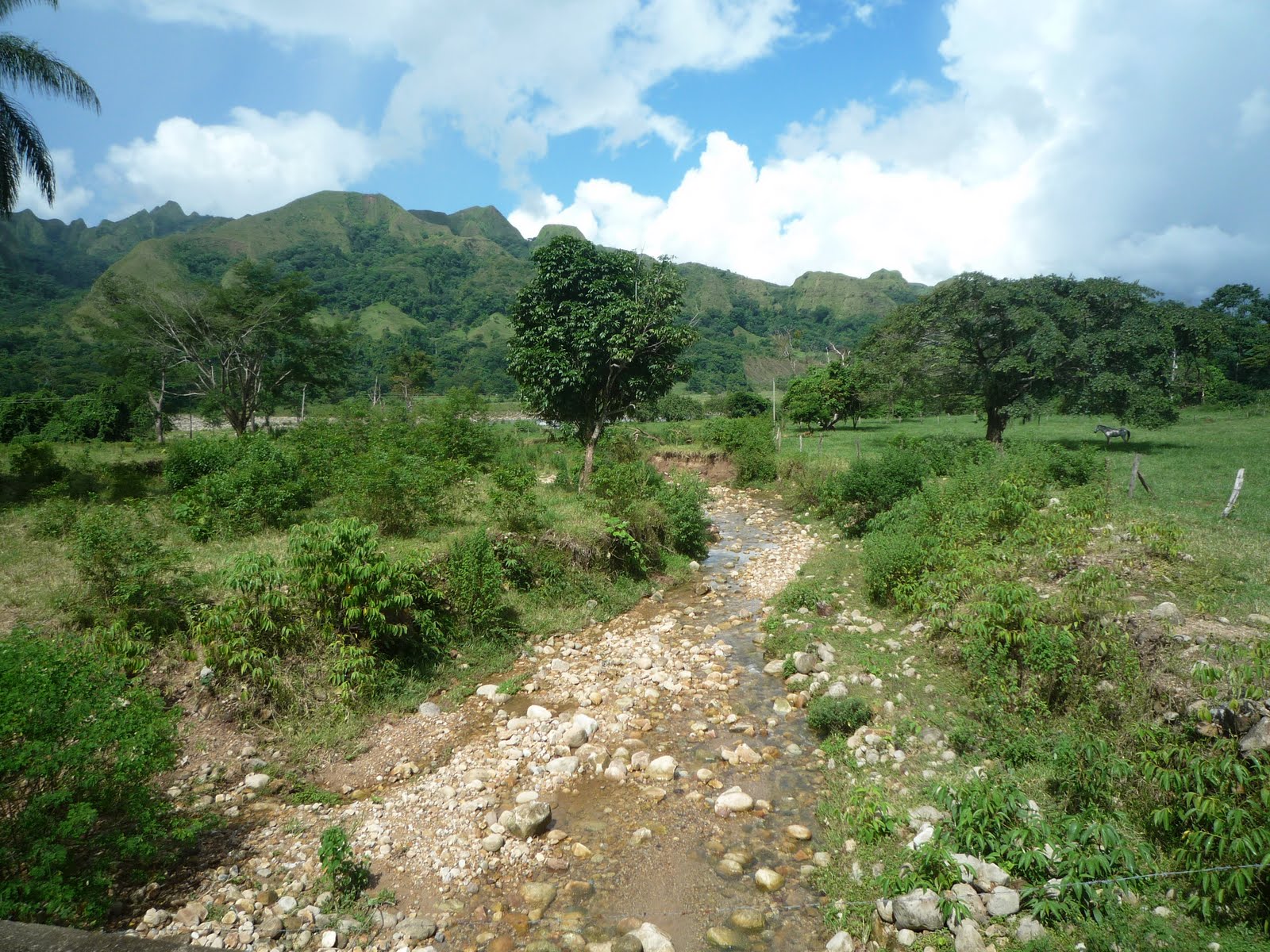
We hear stories of how peasant farmers from Monterralo said no to seismic exploration only to later receive a copy of a decree which tells them they have no say or choice over the matter. It is going ahead. Miguel offers information which the authorities and companies would rather was not exchanged. He reminds them that the Colombian constitution states that 'Every person has the right to enjoy a healthy environment. The law will guarantee the community's participation in the decisions that may affect it.' The decree can be challenged he said.

We hear the story of how an U'wa indigenous leader was killed after refusing payment in exchange for allowing oil exploration in indigenous territory. Instead of being weakened, the U'wa people took the decision to not talk with the oil industry until there is a full investigation in to the murder of their leader. “Money is nothing, it will end. What is important is our territory, where we live, where we walk, where we get water from, what we leave for our children. The oil industry is a cancer destroying our mother earth. We must defend our territory”

Campesinos from Paz de Ariporo share their tactics for fighting against oil exploration in their municipality . He tells us proudly how they refuse to sign attendance records when meeting with the oil industry, wise to the dirty tactics of these records being used to tick consultation boxes. He tells us their strategy to avoid corruption in their leaders; the community chose four leaders who are prohibited from representing the community in meetings with the oil industry alone. They all must be present. They also took the decision to invite the U'wa people to unite with them despite different cultures and world views. They extend their invitation to unite to all present at this exchange. "If we don't all defend the water of the hills, these plains are nothing."

After lunch, we are taken to see these hills and its rivers, with the solidarity of a local bus driver who lends us his time and bus. We get off the bus by the River Cusiana and Don Alexander leads us down to the river to the place where the water inlet pipe siphons off thousands of litres of fresh water daily to be pumped in to the oil wells. "This water they take is lost forever" Juan David, who participated in the Tauramena environmental negotiations with BP tells us. "BP take it without paying anything and bury it underground, removing it from the water cycle for ever.

Don Alexander warns the others "when they wanted to build the water inlet pipe they arrived like a man who wants to conquest a women, they arrived with flowers and nice words. But just as a women doesn't know who the man really is until later, we didn't know what was behind the flowers until it was too late and the huge damage was done. They arrived with an army of machinery and rerouted the river in to a channel to fill the inlet pipe. We lost lots of land, 20 hectares. And they have never paid us for what we have lost, just as they have never paid for the water they have robbed."

After admiring all the beautiful creepy crawlies that kept jumping out at me, we headed back to the bus, an hour late and the solidarity of the driver wearing a little thinner. As we drove back to Tauramena, people sat with new compañeros and the bus was filled with the buzz of conversations, full of ideas about how to move forward with this new chapter. This new chapter in which these different local resistances to oil exploration and exploitation in Casanare begin once again to weave hope and strength together. This was something really exciting and genuine to celebrate. And the cool beers went down well that evening. Let us hope there are more small steps to continue celebrating in the coming months.

Monday, June 21, 2010

Acknowledging our Wealth amisdt the Poverty: A Step to Stop Pillage

What wealth do you know about in your district, Ciudad Bolivar, we asked them. They looked at us surprised but curious. They are more use to naming Ciudad Bolivar's numerous problems, the poorest and largest district of Bogotá, the Capital of Colombia.

They responded naming air, the soil, land and water. Maria and I listened worriedly, it was as we had feared. The 30 women who came from various different neighbourhood groups did not know or acknowledge the huge amount of wealth there is in their district. The Environmental Forum had organised this tour around the district to explore what the impact of seeing this wealth with their very eyes would be, following the practice of Popular Education.

We boarded our bus and begin winding our way up the potholed roads, and as we gain more altitude the houses become more precarious and the barrios more controlled by paramilitaries.

We arrive at the first stop: Industrial Mining Park. Unluckily for the residents of Ciudad Bolivar they live on top of a enormous quantity of construction materials; sand, agregate, gravel and clay. After Holcim and Cemex rewrote part of the country's mining code, Colombia is now the only country in the world to allow open cast mining in urban areas.

The quarries have been condemned by numerous social organisations for the health impacts and the increased risk of landslides that they cause. The gravel pits, owned by Holcim and Cemex and following a 50km stretch of the River Tunjuelito, have destabilised the land and caused grave damage to the river ecosystem. Furthermore social organsiations that have spoke out against these megaprojects have suffered threats, assassinations and stigmatisation.

"We don't know where these materials are taken. Lots of trucks leave carrying the materials but we don't know where they take it, maybe for building works somewhere” comments Elmira.

Private companies extract the materials and sell them for the construction of Bogota, a city from which the residents of Ciudad Bolviar are excluded. “International capital is getting richer on our resources at the expense of us putting up with this shit situation; families without homes because of the mines and because of the huge inequality in Colombia, social control by paramilitaries to silence and weaken our grassroots organisations, hunger, bad health.....” says Maria angrily. The social and economic injustice is only too clear, and women receive the worst brunt of it, in their gendered role as carer of the entire family, highlighted by Carmen who described how she went without meals in order to buy her boy the medicines he needed.

Furthermore, the women were first excluded from influencing in the planning decisions around the operations of these mines, secondly they have been deceived in to believing that this wealth is not theirs and thirdly they have been kept in the dark around where the resources and profits from these resources end up. The tactics for preventing people from recognising their collective wealth are an essential part of the strategy to take these resources.

A similar situation happens in the United Kingdom where the elite landowners with the complicity of the British State have never revealed how much land they own so as to avoid demands for redistribution from the common folk. If we don't know and don't value the wealth we have, it is all too easy to take it without an outcry, such as what is happening with the Mining Park.

From the mines, we continued climbing the steep hill through densely populated barrios until suddenly we came out on to large extensions of open, barren land.
“Here there is so much land that we could work, we could plant and grow food for many people, lets take advantage and start producing” suggested enthusiastically a compañera. The estimated 46000 hectares of land belongs to a member of the Colombian elite who lives in Miami.

“While he is there in luxury we are here living in misery. Occupy y reclaim this land would be a good strategy. Land should be for those who work it... We would have to be very organised it to defend ourselves from the violent response by the state as it protects its interests. We know who they would send. All of this land is part of the Industrial Mining Pak which is why they don't let anyone squat this land. They are going to keep opening quarries and within 50 years this whole hillside will have been eaten away” replied Mario. Pointing to Paraiso, a barrio in the distance he continued “those of you live there are going to have serious problems soon. You are going to be in the middle of a quarry.”

The Paraiso compañeras fall quiet with thoughtful expressions. “These mines are wealth, but only for a few people, for everyone else they bring us social and environmental problems” concludes Luz Angela

The solemn moment is broken by Marisela enthusiastically pointing out a lake we are passing. “Look, look at the lake, would't it be amazing to be able to come here on Sundays." The lake is in fact the source of one of the many streams that flow down through Ciudad Bolivar, down through the quarries and into the River Tunjuelito. But the water up here is clear and clean.

With so much open green space near where they live, the women are frustrated that they do not have the freedom to enjoy the landscape, to rest and enjoy the peace and quiet, breathe clean air and forget the stresses of daily life. They do not have the freedom as the area is not very safe due to the paramilitary presence. The idea to organise a group outing is suggested.

We continue our tour, entering into land on which peasant farmers are cultivating. The women remark excitedly at all they see; corn, quinoa, peas, potatoes, cows and chickes, allotments and small farms with children playing in the fields. Many of them themselves are campesinas - peasant farmers - who have been displaced by either the armed conflict or the rural economic crisis.

We pass through the rural hamlet of Quiba and arrive at the village of Pasquilla, a campesino village within the City. We all notice the lack of cars and contamination as we eat our locally produced yoghurts in the main square. We watch the campesinos pass by wearing their traditional ruinas. “This is wealth too, that there are peasant farmers here using their knowledge of the land to produce food” observed Olivia.

Our next stop was the Doña Juana rubbish dump, the second largest open air rubbish dump in Latin America. The largest is in Sao Paolo, Brasil and communities there have formed organsiations to recycle the materials that arrive. Here 7500 tonnes of Bogotá's rubbish arrives daily and it is all dumped. They are dumping minerals and metals that are taken from communities at great environmental and social cost. Illogical but logical within a profit logic. Rubbish is big business, in Bogotá it is the most expensive public service. We discuss where the dump is wealth or a problem.

“It is a problem because it contaminates the water with leachates” says Isabel. “It is a problem because it contaminates the air. Beside this unbearable smell, it gives off lots of gases that cause health problems, such as rashs and lung problems” contributes Maria. “It is true but the gases could be uses domestically in the nearby communties” says Olivia. And despite the fact that we all have blocked our nose Amelia proposed that “it could be a source of work, we could organise ourselves and recycle here”

We arrive at the conclusion that like the quarries and gravel pits, the rubbish dump is “bad wealth because a few people profit while the rest suffer without any benefits.”

We leave the overpowering stench behind and move in to a new smell, that of mountain rain high in the clouds that surround the Regadera and Chisaca reservoirs.

The public water company provides all of the water for Ciudad Bogota from these two reservoirs. We shelter from the rain under a huge tree to reflect over the tour and the wealth we have found along the way, to laugh and to share our food.

“there was a total lack of knowledge of what wealth we have, we now know what our wealth is”

“we have a lot of wealth, we have seen and named it, we are not poor, we just don't benefit from it”


“we have allowed ourself to thing that this is not ours and so we haven't empowered ourselves to make demands”

“we have to organise ourself so that we can discuss, propose and make demands about the use of our wealth. But we need a lot of people, each one of us should go home and share what we have learnt with our children and our neighbours, those who it is safe to do so with.”

“Organising will bring us problems, it will but we have to do it, we have to value our territory”


“We have to work in community, educate ourselves and strengthen our womens networks so we can demand our rights are respected.”


As we wind our way home, the words of Mercedes Sosa accompanies us.... listen here

Tuesday, March 9, 2010

Dominga: an unknown victim of EU "free" trade agreement

News is just coming out that in the EU “free” trade negotiatons with Colombia, the first victims are to be the small scale milk and cheese producers. The Andean price band, a system that stops the price going too low or too high, will be elimiated and Colombian milk will have to compete with subsidised milk arriving from Europe. This will have an effect on 450,000 milk producers

“Thousands of small milk producers, that are not able to access loans nor do they have leverage in high government, will suffer from an avanlanche of 5500 tonnes of powdered milk, 2310 tonnes in cheese and 1100 tonnes of other milk products those arrival in the country will increase by 10% annually until this vital part of the peasant economy disappears. Is this not about the human rights of thousands of peasant families?”[1]

Photo: Dominga leaving to take her cheese down to the main road, one hour away.

One of these families is that of Dominga, who I first met and wrote about in October 2008. I have been to stay with her several times since then. Darian is now living in the nearby small town where he can continue his studies. There is no secondary education in his hamlet. Cheese production pays for his transport, food and accomodation costs.

The last time I stayed with Dominga was in January. I told her about my good friend who has recently been sentenced for a year and a half after being found with two kilos of cocaine on him. He was doing the more risky job of carrying out the region as his two babies had rashes and he needed to buy medicines urgently.

She wasn't that sympathetic. “those lads in the

se coca areas just want easy money without having to do much work” I remember her saying. An interesting conversation around the kitchen table followed where we chatted about why we each thought that there had been a big increase in coca production in Catatumbo:

- paramilitaries imposing it as got 70% of their national revenue from cocaine in that one region

- twelve hour walks from many farms to just get to the road makes transporting yam or plantain very costly (you would need a lot of donkeys) for the price you would be able to sell it at while a kilo of cocaine in the rucksack is practically actually possible
- lack of State support for peasant farmer agriculture

Photo: Milking her cattle, the daily morning work.

I wonder if Dominga will remember this conversation as she hears news of this threat to her livelihood. Will she have to turn to coca looking for a way to get food on the table and an education for her kids as the neoliberal policies continue to destroy peasant farming?


[1] RECALCA (Colombian Action Network against Free Trade) http://www.recalca.org.co/


Friday, November 6, 2009

Biviana's words - Palabras de Biviana

(en español abajo)

I came to this event to support the people here and to bring attention to the fact that the government is doing things wrong. I don't support the government because they do what they want without the the need to think about the people that they affect on the way, walking all over the rights of people humans.

I imagined that there would be less people, I never expected that so many would arrive. I would have like to have had the opportunity to get to know people from other regions more, their customs and what they have lived through, here everyone has suffered.

I have learnt a lot here, there is much to learn and much to contribute to those people who have no idea, to people who say that this government is the best because of benefits that they may have received but who don't think about the violations that it has brought to many communities. A topic I didnt really have clear before is, that while yes i have suffered from the violence but i have never had the opportunity to understand the topic really well and understand the reality. We say that, over there, they have suffered violence but we have never worried much about why people have suffered violence. Sometimes we have to see things with our own eyes to believe it, sometimes we don't see what we don't want to see.

In my community, people haven't lived so much violence as like here in Recetor. They are forgotten about, they are topics that for fear have never been brought out in to the open, for fear that it might bring more violence. One can't say that this person died because it is certain that they will come and imprisonme, or take reprisals against friends and families.

I was scared, there were people that said to me that if you go on the pilgrimage it is really like that they will take reprisals agaisnt you. I am not scared here becuase there is many people that can help you in many things. So,....,no , and fear, you must leave it behind to be able to be to do what you want to do, to be able to be yourself, and to inform people who dont know.

I think it is important that people know becuase we are being tricked with...with practically, the government, the government says, or it goes out on the news, what is in their interest , we never hear about what is not in their interest, people never hear the truth about what is happeneing.

The two masses that we listened to were good. Sometimes religion lends itself for many things, to cover up things. I have no disagreement with the catholic religion but there are some things that i don't like. I have never been to a mass like this one, where they talk about politics, practically revolutionary, a mass where the father is not bothered by what the high church functionaries think, where he felt and spoke about the reality that people live.

About the presence of BP in the region,..., well,...I don't agree with that either. I don't agree because this oil megaproject has caused many violations against people. Instead of bringing benefits for the community what it has brought is more war, more unemployment, more hunger. These companies are taking land from campesinos and not giving them any other opportunities.

These businesses are supported by the government, why? Because they bring in lots of money for the government and they don't care what a campesino things, rather what is important to them is to get more money at the cost of people having to suffer.

In my daily life, oil production doesnt affect me that much, but with time it is going to affect all of us because it is damaging the land and i think that what this region needs is land for campesinos so they can work and get the resources that they need to survive.


I want to keep living here, search for opportunities to be able to survive, as long as I can, because you never know in what moment violence will return again and we will have to leave and look for other ways to survive.


Palabras de Biviana

Vine a este evento para apoyar a la gente y dar a conocer de que ellos (el gobierno) esta haciendolo mal hecho. No estoy de acuerdo con el gobierno por lo que buscan sus objectivos o logran lo que quieren sin necesidad de pensar a los personas que les va a afectar a hacer eso, pisoteando todo los derechos de los humanos.

Me imaginé poco gente, nunca esperé que llegaran muchisima gente. Me hubiera gustado la oportunidad a conocer la otra gente más, costumbres y lo que viven otras comunidades, a parte de que se vive acá, acá a todo el mundo ha sufrido este atropello.

He aprendido muchisimo aca, hay mucho para aprender y mucho para aportar a gente que no tiene ni idea, a gente que dicen que eq que esta gobierno es lo mejor por los beneficios que de pronto les han traido pero sin pensar en los tropellos que les ha traido a muchas comunidades.

Un tema que no tenía en esencia claro, que si, yo sufrí violenca, pero nunca tenía la oportunidad llegar al fondo de tema y conocer la realidad, nosotros, ah si por alla tiene o tenía violencia, pero nunca hemos preocupado el por que esta gente sufrío violencia,

a veces nosotros tenemos que ver para creer las cosas. Aveces no vemos mas allá de lo que queremos ver.

En mi comunidad, no se vivía tanto la violenca como acá en Recetor, estan olvidados, son temas que por temor, nunca ha sacado al flote por el temor que puede traer mas violencia. No se puede decir que esto persona murio por que seguro que viene y me va a llever preso, que van a tomar represalias con mi familia o con conocidas,

Tenía temor, hubo gente que me comente que si vas pa' allá seguro que te tome represarias. Temor no lo tengo en este moment pq hay mucha gente y que lo pueden apoyar a uno en muchas cosas. Entonces, ….no , y temor, hay que dejar lo atrás para poder hacer lo que uno quiere, para poder ser uno mismo, y dar a conocer lo que mucha gente no conoce.

Creo que es importante que gente conocza por que estamos engañados con.....con practicamente, el gobierno, el gobierno dice o pasa en loas noticas o todo eso , lo que les conviene, nunca pasa lo que no les conviene, nunca la gente se entere, que es la verdad que esta viviendo.

Estas misas eran cheveres. A veces la religion se presta por muchas cosas, se presta por tapar cosas. no estoy en ningun disacuerdo con la religon catolica pero hay cosas que en me gusta. Nunca había ido a una misa donde se han tratado el politico, practicamente revolucionaria, mas que todo es es, una misa donde no le importa lo piensa lo alto cargos en colombia, donde se siente y se dice la realidad que la gente vive, 

De la presencia del BP, …..pues..... no estoy de acuerdo tampoco, no estoy de acuerdo por que al hacer un megaproyecto, el petroleo, ha traido muchas tropellas contras las personas, en vez de traer beneficios a la comunidad lo que esta traendo es mas guerra, mas desempleo, mas hambres. Por que son empresas de que, les estan quitando la tierra a los campesinos y no les esta dando otras oportunidades.

Pq ellos son una empresa que esta apoyado por el goberino, por que? por que traen mucha plata por el gobierno, y ellos no les importa lo que piensa un campesino, sino lo que les importa es conseguir dinero a costa de hacer sufrir mas gente.

En mi vida cotidiana el petroleo no me afecta tanto, pero con el tiempo nos va afectar todos pq esta deteriorando mucho la tierra y pienso que lo que necesita en este region es tierra por campesinos y poder trabajar y poder conseguir sus recursos para sobrevivir. 

Quiero seguir viviendo en el campo, buscaré las oportunidades, poder sobrevivir, hasta cuando se puede no, pq pues uno no se saben en que momento vuelva la violenca, y tendremos que salir y buscar otra forma de sobrevivir

Wednesday, October 14, 2009

Day 3: Building Popular Power in Minga

It is nearly 9pm on Tuesday night in the grounds of the Coliseo in the city of Cali. People have rested after the 3 day of walking 15km and young indigeneous are now dancing in large circles in front of the stage. The music fades and Feliciano Valencia, spokesperson for La Minga speaks to the thousands that have gathered to listen to the proposals for tomorrows activities;
  • delegations to visit 5 places in the city to talk about what is Minga and to invite community organisations to walk the word

  • a caravan in the 40 chivas through the streets of Cali to make the Minga visible,

  • join teachers who are marching against labour conditions and have invited us to join.

  • begin thinking collectively about what the Congress of the People, planned for July 2010, actually is with important questions for consideration such as how are we going to legislate and what are the mechanisms and strategies we need so that the peoples laws are put into practice?

With the sheer quanity of people I have been curious to watch how decisions are made at this scale, how different forms of power are working and and how popular power is being built. What I watched was these proposals being created through a serious of meetings. Firstly the political commision of the Minga, which includes representatives of each social organisation involved in the Minga, met and came up with a proposal with Feliciano playing the role of listening, gathering all the opinions and presenting a synthesized proposal. This was then discussed and adapted by some 40 governers of the different Indigenous reservations. This was then presented to everyone. During the night, each community will have discussed it and as I write, another meeting is taking place to finalise the plans for today.

The sheer presence of indigenous from Cauca, through their impressive organisational capacity, is a challenge to the proposal of Minga to be inclusive to all. Yesterday, there was some serious errors such as the idea to start the pre-congress before the second smaller march arrives , yet once this was flagged up the idea was inmediately dropped. There is much to be learnt, and to get wrong and do better the next time, in terms of thinking about how to make proposals that are not based in sectorial thinking, but thinking of all.

Much has already been learnt. The 5 point agenda includes indigenous based proposals around territory and cultural, while also going much beyond and is incredibly inclusive. And as a friend says over a beer last night, "i think there is a distortion of the reality abroad of Colombia. They either thing that all resistence follows the same logic as the insurgency or that the problems in Colombia are all about defending the profits from the drug-trafficing trade. Here, what I think is important to say to people in your country is that we are here saying clearly there is another reality in which many Colombians are living and from this harsh violent reality, we are building a resistance based in the grassroots, and it is a resistance that is building serious proposals collectively to create another country. And the government are worried, the moment the indigenous invited other social organisations to recognise the commonality, they see a threat to their dictatureship"

In Popayan, two hours further south, mainly campesinos organisations held a campesino and popular assembly on Monday in preparation for the precongress in Cali. They declare " In our territories, we, communities and organisations will not allows policies and laws to be applied that are harmful to us, that have not consulted with us, that do not take into account the wellbeing of all and that are not participatory, coordinated or integral. Handing over territory to private hands will not be accepted and we will assert our rights to sovereignty, autonomy and independence to maintain the integrity of our lands."
And in the north of the country, social organisacions write "With happiness and vitality typical of the communities, but also with the hope to change the hard conditions that characterise their lives, the habitants of the Sur de Bolivar and the south of Cesar are "navegating the word" down the river Magdalena towards Cartagena.

"The message that we want to spread nationally and internationally is clear, free mother earth and our territories from the proposals, policies and projects of death with proposals where life and happiness, are the foundations of the people as they build with dignity a free and self-determined future, it is the voice of the people in a country where death took control of the Great River Magdalena and the oblivion tried to occupy all the territory, leaving hope with none.

We are a people who have declared our resistance, faced with a violent and injust state, that acts through the dispossesion of land, natural resources, memoria and identity. Faced with this tough situation, the proposals of life of the communities are representes in the sound of the drums, the flute, the accordion, the bagpipes, and the maracas . This is the sound of the resistance which does not permit us to forget our numerous leaders who have been disappeared and murdered, such as Alejandro Uribe, Edgar Martínez and Edgar Quiroga; it is the rhythm through which victims of state crime, students, women, indigenous, workers miners, afro-colombians, small scale farmers, unions and many more Colombians continue to meet and see their own struggles in the struggle of their brothers and sisters. The proposal of the Minga of Social and COmmunity resistance is needed by all of us. "

Friday, October 2, 2009

biofuels and begging

Here is a letter I have just wrote to Bristol City Council opposing a proposed biofuel powerstation near the city. I thought I would share it.

I wish to object to W4B’s planning application to build a 50 MW biofuel power station at Avonmouth Docks, which would burn 90,000 tonnes of vegetable oil every year.

I have been working in Colombia since September 2008 and see daily the impact of monocrops, such as palm oil, have both on people and the environment. Just two days ago I had a really intense sad experience that, above all, is what is motivating me to write to object to this biofuel plant. Waiting at the traffic lights on route to an event about Climate Justice here in Bogota, the captial of Colombia, an old man approached my taxi. He was dressed as smartly as he could, dark suit, a tie and a felt hat, but he didn't look like your average suited man., his clothes while clean and tightly ironed were old and shabby. And his old, sunweathered face, that makes guessing ages very difficult, showed such a sadness. He held a carefully handwritten sign in his hand, "Please help my family, god bless you. We are displaced from the Magdalena Medio”.

The Magdalena Medio is a low lying tropical region through which the river Magdalena flows. The relationship between paramilitarism and african palm is clear. In the Magdalena Medio the african palm expanded after the paramilitary takeover of the region. The paramilitary takeover of the region, through violence and the threat of violence, caused massive displacement, the result of which is thousands of old men like this begging at traffic lights. The fear of violence meant that opposition to palm oil projects has been small, and those who have opposed it live at risk.

In April 2009 I attended the funeral of Edgar Martinez, a farmer on the banks of the river Magdalena and community leader, who was killed after leaving a meeting with the mayor San Pablo. He strongly spoke out about the impacts of palm oil plantations on his farming community and opposed new palm plantations. The murder of Edgar is not an isolated case, but a systematic repression of those who try to oppose monocrops becuase of the damage to the environment, their culture and their livelihoods.

Palm from the Magdalena Medio is exported to Europe and the USA for both use in cosmetics, food and biofuels. Since the beginning of September, the network I work with has been accompanying a village which was violently evicted by riot police at the orders of a palm oil company which sells to the Body shop.
www.guardian.co.uk/world/2009/sep/13/body-shop-colombia-evictions

If the use of palm oil grows in Britain, people will continue to be violently evicted from their homes and forced to urban areas to beg at traffic lights.

Bristol City Council must consider the impacts of planning decisions, not only in Bristol but globally and take a lead in acting responsibily to protect lives wherever they may be. If this biofuels plant is granted planning permission, it is very likely that it will contribute to yet more violent displacement for Colombian people. Thus I ask you to reject this development.


If you feel motivated to write a letter and right  now (as decision day is Tuesday) go to : biofuelswatch action page 

In recent months Biofuel power plant applications have been rejected in Newport, Weymouth and London. Could Bristol be a fourth?

Monday, August 24, 2009

In your country, is there also war?

Helicopters overhead, vallenato tunes reaching my ears from all direction, children squealing as they bathe together, the cluck of chickens searching for any sign of food in the bare yard, soldiers pass through the village, buying lunch, just an average day here. I go to use the toilet at 6am to find a solider showering there. His helmet on the wall where I wash my hands. I am in the municipal of El Tarra, one of the most heavily militarised municipals in the region, with an estimated one thousand soldiers present.

Two weeks ago the Colombian government gave the USA permission to use seven military bases for US soldiers from which they will carry out military operations both inside and outside of Colombia. The argument given for this unconstitutional agreement is anti-drugs and anti terrorism. In Catatumbo I have met young people with far smarter answers to these arguments than foreign military in their territory. 

Yesterday I watched a group of children and young people prepare small sketches. One of the groups portrayed the paramilitary invasion in to their community ten years ago. As the armed men broken into the house shooting, the daughter feigning death, heard her parents being slaughtered. Filled with revenge she escaped and went to join the guerillas. Filled with bitterness, knowing the army had allowed the paramilitaries to carry out many massacres, she fought against the army. And yet in her improvisation, the desire for no more deaths overwhelmed her in a moment and she took out the white t-shirt, held it high above her head and cried out “why cant we just have peace, peace for my country?”

And in this piece she told me a simple reason for why many young people continue to join the guerrilla groups. One of many. 

Another is the near impossibility to learn new skills, get good work. Fighting is one current option to get paid work: army, police, paramilitary, FARC, ELN. Another popular option is raspando, picking coca leaves to make cocaine. 

Bullet Holes and Aguilas Negras Graffiti: Classroom occupied by the paramilitaries in 2002 in the village of Filo Gringo. 

While in a shop the owner immediately started asking us if we knew of opportunities for his son to become a professional solder. His son had heard there was a shortage and wanted to train. Did we know of any veterinary courses that had programmes to support students from poor backgrounds. His nephew wanted to work with cattle. Did we know of a way to get on a mechanics course. Another nephew thought he could make a living if he got good qualifications. 

We did not know. 

If the Colombian government really wanted a anti-drugs policy they would know where these sons and nephews could get support to study. They would be trying to open doors for young people so they can follow dreams and not get drawn in to the conflict and coca.

They are not.

They are permitting a foreign army to become involved in the internal armed conflict thereby exacerbating the confrontation and diminishing the possibility of peace. They are giving military bases to the USA from which attacks could be launched on neighboring democratic and progressive governments. They are giving US soldiers full impunity for crimes that they may commit.

After the rehearsal, one of you teenage girls asked me:

“y en tu pais, hay guerra tambien?”

“in your country, is there war as well? ” 

The following day a boy asked me:

"el conflicto alla, donde vives, es mas fuerte que aca o menos?"

"the conflict there, where you live, is it worse than here?"

Conflict is such a part of everyday life that kids assume that it is normal. Twisted brutal reality.

Yet it is staggeringly beautiful that while they improvised much conflict and murders in their sketches, that they also had the vision to improvise peace, performing the possible.

Written on 11th August


Wednesday, July 15, 2009

Planting among landmines

Sitting on our friend's porch in Ocaña, with the mountains in the distance and the early morning sun warming my face, I felt happy to be back in Catatumbo. Yet this contentment was odd, considering that that same day we were heading to an area where the local population live with the daily fear of landmines. Just two weeks before a campesino had to have his left leg amputated after stepping on one.

I wondered, when told, what I could do constructively with this information. Several options came to mind: be worry and be nervous; forget I was ever told; or trust the people I am going with that the paths we will use will be safe. Yet what I thought about most when we were walking these paths was that I know that I would have a much much higher chance of getting a replacement limb (if I survived) than the dear friends from the region I was walking with. And that is fucked up. It hurts me thinking about it; that because of my passport I could get a new leg and they could get a new stick to help them walk. I struggled to think whether there was any value in sharing this reflection with my friends. I didn't. But is silence on an all to apparent privilege useful? Is it kinder to them not to speak the truth, not to remind them of what they already know. That the current global hierarchy based on passport/racialised identity/class puts them pretty low down. And so their right to health and consequently, their very right to life is deemed less important than mine.

Perhaps the question should have been, speak truth to who?

I ponder and I feel that the best option is what I am doing right now, speaking truth to you english speaking priviliged folk. England did not gain their/our/its wealth and fairly good free health care system from just the hard work of the english. Wealth was gained through several hundred years of colonialism, that continues today in the form of multinational corporations controlling and carrying away the wealth of the minerals that rest in the Andean mountains.

People from colonised countries deserve equal standards of health care as us english do.

I was told that the mines are left by both guerilla and army who combat in the area. The farm where we stayed is to become a model farm based on principles ; a seed bank to rescue traditional seeds of the region, many types of local chickens, pigs and cattle and a program to improve the quality of these local breeds. The owner, who has donated the land to this project, a step towards the vision of food sovereignty in the region, showed us where they want to turn some of the wooded areas into fields. Yet it is known that various armed actors use this as a route from one valley to another, and rumours have it that there may be mines, or there may not be.

The presence of land mines has grown as conflict between the army and the guerrilla has intensified. Control of this territory has geo-strategic importance as it borders Venezuela and is rich in oil, gold, coal and land suitable for growing palm. The pipeline carrying oil from Arauca to the Atlantic coast for export also runs through the mountainous region. Yet control of the territory is not just about destroying the guerrilla, for the Colombian state it is also about destroying the social organisations and fabric in the region so that people are left with no possibility of organising to ensure that development means development for and by those who live there, and not for foreign corporations who would control and benefit from the mega-projects.

The paramilitary occupation of the region from 1999 to 2005 destroyed Catatumbo's social organisations and community fabric; communities divided and dispersed, farms and crops abandoned, community shops burnt down by paracos, schools closed for lack of students, community leaders particularly targetted. Campesinos in Catatumbo have never doubted the institutional links between the paramilitaries violence and the Colombian States and slowly information is beginning to coming to light proving what they have always known: that the State and the paramilitaries worked together to terrorise local populations in order to develop the oil, coal and palm oil industry.

On Sunday 5th July, hours before catching the bus from Bogota to the region a friend sent me a link for an article from La Semana, a major weekly national magazine.

“The Army allowed the Paramilitaries into Catatumbo
.

For the first time a high official publically admits how he participated in one the most bloody paramilitary invasions.

One of the first things that Llorente admitted was the way in which they paramilitaries arrived in Catatumbo. On 29th May 1999, in an unprecendented operation several lorries, carring 200 heavily armed paramilitaries, travelled from Córdoba across five departments to La Gabarra, Catatumbo without any obstacle. Two generals participated in the planning meeting and designed the strategy with Mancuso and Carlos Castaño [leaders of the AUC, national paramilitary group]. His witness statement coincides with those made by demobilised paramilitaries.”
[1]

In the first year of the paramilitary incursion in Catatumbo more than 20000 people were displaced, an unknown number of people disappeared, and 800 official murders, the majority of which took place in massacres.

Living with fear of landmines is not a new fear for the Catatumberos.


Yet last week, dancing in Bogota with people from the region who had travelled for 24 hours for the launch of a Campaign for the Victims of Catatumbo, you would not easily spot fear in the room. Hidden deep in layers of resilience, dignity and survival, the victim of Catatumbo is more likely to be found laughing about Bogota people trying to drink boligancho or complaining it is an hour past dinner time and they still haven't eaten.


[1]www.semana.com/noticias-nacion/ejercito-abrio-catatumbo-paras/125852.aspx

Tuesday, May 26, 2009

The human price of coal mining

Fifteen years ago Roche was a hub of rural activity in the municipal of Barranca, La Guajira, a dry arid region in the northeastern tip of Colombia. It was home to 500 families but 483 families have gone. In their place is a sea of red and white striped posts, marking out the plots of land that until recently contained the daily lives, cultures and family memories of the thousands of people who have been forced to leave their lives. The posts mark out the land that is now owned by Cerrejón, one of the largest opencast coal mines in the country.

To walk among these posts filled me with an intense feeling of sadness of lives being slowly suffocated as the mine creeps forward. To live among these posts, with the whines of mine machinery playing over the sound of the wildlife, appears to me like psychological torture for the remaining 17 families.


The majority of Roche’s residents, along with those of nearby villages Patilla, Chancleta and Tamaquito, lived off the fertile land by the banks of the River Rancheria. Life revolved around growing food crops both for themselves and on larger farms as hired hands, rearing cattle, hunting rabbit and goat, and fishing. The Roche residents who remain spoke to us of life now. The land has been poisoned by the coal dust and is no longer productive. The track down to the river from which they used to collect sand for making cement had a trench dug across it preventing vehicle access. Men have been detained by the police when fishing, told that Cerrejón now owns the river that runs past their village and thus illegal to fish in it. Men have been detained when hunting, for trespassing on what was once village lands but is now the private property of Cerrejón.


The local socio-economic system of the area is being obliterated, forcing people from the communties of Patilla, Chancleta, Roche and Tamaquito, an indigenous community, to leave in search of a source of food and income elsewhere. The highest levels of displacement in Roche came post 2001 when a nearby village, Tabaco, was razed to the ground by bulldozers protected by the Colombian armed forces.


“Tabaco pyschologically affected us and people began to sell up for whatever price the company was offering. Cerrejón took advantage of the fear to buy the land for next to nothing and people had to leave Roche, their community.” Resident of Roche


Former residents of Tabaco recently signed an agreement with the owners of Cerrejón, BHP Biliton, Anglo American and Xstrata in which they will be relocated and compensated. I was shown the payment slip for the compensation by a woman wanting answers I could not give. She could not understand how the compensation was for just $200,000 pesos (about £50). “Is this it? Is this our compensation after everything we suffered and 8 years of fighting for some justice? It is an insult.”

While there is an urgency for a solution, the communities are adamant that they deserve at the very least a dignified compensation for their physical and psychic losses, and to be relocated to a site of their choosing with a quality of life at least equal to what they had before the communities social fabric was unpicked.


“Every day we feel the contamination getting worse, we need solutions to this now. The good practice of the company would be to relocate the entire village in one go, instead they are doing it individually, and only with people born in the villages, and so dividing the communities.”


On Wednesday 20th April, at the invitation of the communities of Roche, Chancleta, and Tamaquito, and under pressure by a visiting international delegation and Sintracarbon, the union representing Cerrejón workers, representatives of Cerrejón attended a meeting with around 150 people from the communities. More would have liked to have participated but health issues, which they connect to the mine’s presence, made this difficult.


The first issue on the agenda was about the resettlement process. Involuntary resettlement due to mining projects, according to the World Bank, should be done in coordination with the affected communities.


“First Cerreón has to work with us in making a list of what relocation involves, housing, productive projects, amenities. After this is done, they should consult around every one of these points. But they didn’t, their first error. Second error, which can be considered more serious, is that despite the company not doing this, they published on their webpage a completed plan for settlement and said that they had consulted with the communities of Roche, Chancleta and Patilla. What did the company want with this lie? Trick the community? the international community? the local governance? all of the above?“

Roche village leader, community meeting with Cerrejón, 20th May 2009


Other issues presented by the community were around the productive projects, health issues, and the behaviour of the company towards the communities. The final issue of the day was around independent advisors.


Community members had previously reflected that whereas Cerrejón has access to an expert team of advisors, the communities have nothing and as such are being manipulated and lied to by the company. For example, one member spoke about how they were invited to a meeting in the mine, where Cerrejón’s legal advisor told them that they did not need advisors, as the company would just negotiate directly with them. Recognising the near comicalness of being told this by a very advisor of Cerrejón, the communities of Roche, Tamaquito and Chancleta united and presented a proposal to Cerrejón. No more negotiations until they have independent advisors, paid for by the company. Cerrejón must give a yes or no by the 31st May.


The following day we met with community members from Barranco, another village. They told us how representatives of Cerrejón are holding meetings and visiting families to talk about future relocation. What was interesting was how the people had been convinced so quickly that they had no other choice, but to go. They know though that they will have to fight for this to be in a dignified and just manner.


It appears to me that Cerrejón is willing to spend the money necessary on its well paid Corporate Social Responsibility and public relations team but not willing to spend the money necessary for a dignified and just relocation of the communities who live on top of the valuable coal.

What is the thinking, individually and institutionally, that justifies these decisions? The dangers of what a just relocation precedent would mean globally? Historical white racism that sees these communities as inferior and therefore not as deserving? And what thinking justifies extracting the coal out the ground at such an incredible speed that, according to Sintracarbon, in 30 years there will be no coal left, the mine will close and the dominant economy of the region will collapse?


Wednesday, April 15, 2009

Nourishing our processes

He arrives just after dark in El Paso, exhausted from travelling for six hours. “On moto-taxi” I ask. “No, no, this was just the last hour from Asserío, the rest was walking” he replies. Despite time here I still forget that walking serious distances is a transport option, sometimes the only option.

We have a strong nice hug, I’m happy that we are going to be working and hanging out together again. Meeting and spending time with him at CISCA’s consultiva was a joy. We shared a very honest space; his openess and engagement with me quickly created a sincere communication between us. Recognition of who I am varies widely among the people I accompany. People acknowledge me, thank me, appreciate me but it is a me that at times I feel could be anyone, well, anyone with a white identity.

As O~ sits resting and drinking some home made equivalent of iron bru, I ask what he has been doing. Working on a finca comes the answer. Doing what I, ask without thinking. Raspando he quietly says. Doh, of course, picking coca leaves is a main source of casual work in the region. I tell him later I felt very stupid for my question. Thankfully he already knows me and laughs supportively with me.

Photo: Our hopes as young people.
More education and less work
More liberty and less violence
We were meeting for three days; 12 young people from the region, J~, an ally from a Bogota NGO and me. The aim was to look together at the problems they face as young people, their needs, wants and dreams, the organising spaces that already exist (or don’t in many cases) and based on this day long inquiry, devise a plan for the year. Bristol life felt like a continuous sequence of short term, high speed planning, with occasional bigger events requiering more time and planning. We knew why we were doing each action, we looked at the whole picture but I don feel we made thought out decision on how we wanted to use our limited resources of time, energy and money. This led, for me, to a lack of continuity and a lack of collective clarity as to how it all pieces together. The plan that they agreed on was a mixture of specific and general actions: agricultural projects, training in human rights, communications work, creating greater political spaces for young people, participating in the community councils and the highlight – a regional gathering of young Catatumberos.

I saw excitement, passion and drive in their voices. Their words have an authenticity, a normality and a good amount of humour (which I occasionally excitedly got) that is mostly lost in the older generation of leaders as they become moulded into a particular cultural style of meeting participation. The young people decided that they wanted active participation in their space and when it was not happening, wiggly hands (to show agreement) got introduced which they got well into.

I also saw moments of seriousness and concern in their faces. They talk briefly about the difficulties they will/may face: time, money, personal problems, problems from la guerrilla, obligatory recruitment in to army, paramilitary presence in the towns. O~ tells me he spent a fair bit of the 3 day meeting worrying about how he is going to earn enough to maintain his family and accomplish everything he wants to with CISCA. I spend a few hours later motivating and helping him to devise his own plan de trabajo so he stops wasting his energy stressing. I never imagined I’d momentarily I’d become a financial avisor while accompanying in Colombia, but it is in moments like these where I feel my ability to nourish their process with small details like this. This is my strength. With CISCA I spot my weakness, or less harshly, where I have the most to learn and least to contribute. CISCA are organising in Catatumbo to create and build Plans for Life, “for life, territory and integration” as the catchwords go; a project that has a long-term vision in which creation and resistance go hand in hand. It is not resistance for the sake of not wanting change; it is resistance so they can create the Catatumbo they desire, not what the rich desire.

In my motherland we are a way from collectively creating an integral vision for another Bristol, another South West and another Britain. While we are constantly visibilising and resisting facets of capitalism (climate change, war, no social housing, economic crisis…) the work is often not deeply integrated with those creating. Partially as those who are creating don’t often don’t get why we need to resist as part of this creation and write me off. Do you think it is an important goal that we try to entwine these two supposed opposites within a shared political coordinating space? Or impossible because of class backgrounds?

I feel hugely inspired (I am already lining up two months here in Europe’s summer) by how CISCA is creating a space where many different struggles, projects and visions in different parts are brought together and from this, they collectively are shaping a vision of life for the region. And this vision is ambitious, yet they are confident, proud and most of all serious when talkng about it.

Do we really have confident in ourselves when we talk about our ideas? Are we really serious that we are going to make this happen? Do we have clear what our ideas are? Are we thinking about how and what is needed to walk our words, as the indigenous and popular Minga says?

Monday, December 15, 2008

Dignity of Women - a women's space

In August 2004 the Colombia army detained Raquel in Saravena, Arauca. In November 2006 she and Samuel were convicted of “rebellion”, a common strategy by the Colombian government against those who insist on contining to educate, organise and mobilise communities to defend their rights to life and territory against the big oil sponsored militrisation of their lands. Another response is to murder them. In the same 2004 military operation three trade unionists were shot at point blank range by the Colombian army.

In August 2007 she was released but is unable to live in Arauca. “They [the state] wouldn’t let me return. They would get rid of me again if I dared” she tells me. Yet last Tuesday we are on a bus together travelling to Saravena for the First Assembly of AMAR (Organisation ‘Awakening of Women in Arauca’) As the event unfolds I see what drives Raquel to return .
Raquel was an outspoken and active member of the Teachers Union of Arauca for the twenty years before her arrest. It is as a passionate educator that her contribution to this assembly is really important to the growth of this young organisation (just 2 years old – very young in Colombian terms).

She tells me that in the assembly there is a session for exchange of experiences and wants me to speak. I ask S~ what she sees as the difficulties to participation in AMAR. Answer: choices controlled by jealous (or insecure?) husbands; societal pressure to be a ‘good’ wife and ‘good’ mother (so stay at home to cook, clean and bring up the kids), a cycle of women being told they have nothing to contribute outside of the kitchen, never learning new skills and thus reinforcing the myth that they are of no use; those who do break the cycle have their contributions criticised and undervalued. Constant battles with self-esteem

For many women just getting permission to attend the assembly is a big deal. A tactic used is to be very attentive to their husbands in the run up so they can get a pass out. Tellingly, the women who live this reality do not tell me this. A two-day event, with underconfident women is very little (compared to two-days with confident trade unionists) for building trust across differences.

I decide to share with them my community’s response to me being sexually harassed in Bristol. I had worries about doing this but decided to continue, and to also share the worries. I hoped they would contribute to building a space of truth and respect.

“I worry that what happened to me is so small that you will think why all the fuss. It is certain that far worse things happen to women in England and Colombia. But this does not cancel out the reaction that I had nor how it affected my daily life.”

I shared with them details of the harassment, how low level fear affected my and how it affected my confidence. I spoke about how if it wasn’t for the words and love of both informal and formal groups around me it would have been much harder; how my community took responsibility to hold him accountable for his behaviour.

“He wasn’t the enemy but every person has to take responsibility for the impact of their actions on others”.

This echoes the delicate path that AMAR are walking – holding men accountable for the violence within families yet clear that they are not the enemy. The women of AMAR wish to walk side by side with other social organisations, united against the violent policies of the government. It is already a hard task. They desire to build trust with men in the social organisations, showing them that that they are on the same side, build unity but just not ignore the shit the women have to put up with in their homes. Dignity for all, women and men.

“Alone, we are weak, our fears, insecurities overwhelm us. But together I had the strength and support to manage this situation. I see that AMAR can play a similar role for the women of Arauca. Creating a space where we can support each other, grow together, encourage each other, be gently critical without damaging our self-esteem. We must laugh together”

These were my honest words to these women. Speaking honestly with these women when I live such different experiences and priviliges is tough, it challenges me. I do not live surrounded by police, army, paramilitaries (who work alongside the army), and guerillas. When I share my perspective, shaped to encourage and support them, what accountability do I have to the suggestions I make? When I am told that to take action about an abusive neighbour is dangerous because you don’t know who they might be it reminds me how little I understand how this two decade long war over a land rich in oil weaves in to daily life. When I do not have to live with the daily consequences of my perspective what is my responsibility to the influence I may or may not have?

But as I spoke, nods, laughter and smiles held my hand and gave me a squeeze of reassurance. And it is these nods and smiles, not just to me, but to every woman who shared a part of herself, that makes AMAR such a powerful, exciting and necessary organisation. It is this womens’ space, where quiet women come alive with hidden energy and enthusiasm when we started talking about ideas for projects, where Sa~ shares an inspiring story of how she managed to help another women find her dignity and leave her violent husband, where we can dance together to end the meeting, that draws Raquel back in to the fabric of an Araucan social organisation. ”Having to live in Bogota and work on a computer all day as a continued prison, a form of pyschological torture.” Here she feels and acts with vibrancy I had not seen before. So despite the police monitoring of the house where we were sleeping, despite the nervous hands which shows what her face has the strength to hide, I imagine we will be back.

Tuesday, November 18, 2008

Evolving rural life

The boy Darien shies from me, hiding his face in Dominga’s embrace. “Why does she look different from us, mami? Why does she look a bit like a man, mami?” Doña Dominga answers “because people are different.” And yet hours later we are sharing animal noises, laughing at the different sounds a cockerel makes in our different languages. The following morning he leaves some plastic yellow flowers on top of my bag as he leaves for his school. If we could learn from children – to trust and love across difference so easily.

That evening when Damien returns from school we study together, sharing new words, how to shape our mouths, tongues so the syllables sound right. As he, the sharpest and quickest english student I have ever met, writes ‘I like sheep, you like cows, we like pigs,…’ the sun sets and we switch on the bare light bulb.

It took twenty men from the community seventy working days to bring light to their farms. After many years of pressure, the council provided the materials. This was in 2004.

It’s so easy to see people living without amenities (running water, electricity, gas, roads, schools) as a permanent state and not recognise the sheer amount of hard hard physical work that has gone in to getting what they do have, nor to know of their plans for improvements for the future. Their time scale due is different – growing food and getting the money to pay for the materials must come first (no buy now pay later offers for a new bathroom - but change comes. And rather than just ‘home improvement’ change, they also have an idea of community improvements. Their next task is to dig drainage for the road to prevent it eroding away in the rains.

Education and collective organising are crucial to improving their lives. As Dominga told me “with education comes the confidence and skills to confront those in power who would otherwise ignore us.” With collective organising comes the capacity to improve more than just their homes and gardens, but their schools, roads, health access.….

Raul and I were there to help build some basic shelters for making compost for all in the vereda. The land, while lush and green, is not too fertile. I helped the men with the building - they didn’t comment on me doing such work, they didn’t say much to me. Shy – perhaps unsure of this strange person like Damien on the first morning. But with age – insecurities around difference are deeper, and it was tough for me to break through.

With Dominga, it took time too but through conversations while milking cows, making cheese together and washing up, we shared intimate moments. With me, she spoke openly about how her brother and husband ignore her opinion, yet later say she was right in the first place. She tells me she has had very little education, “women don’t need an education as they are only going to cook and look after the house and children" she was told..... I ask her how she has continued learning, despite being denied formal education. “I started recently going to meetings and there I have learnt a lot. I don’t speak but I learn. Some of the women think it is odd that I go to meeting but I tell them that we are as much a part of this community as the men”.

Our farewell suprises and moves me – we embrace for what feels like hours. She cries and tells me she loves me. I hold her dear to me. What do I mean to this kind strong woman? Why was my stay of just two days and two nights a profound experience for her? I hope I can return and spend more time with her, to find answers to these questions. For now I can only imagine.....

....that to spend time with another person with whom she could talk more openly (my gender was crucial for this trust to be built so quickly) is something she rarely has the opportunity to do as her imposed responsibility in life has been in the kitchen. Certainly not to talk and share ideas with others outside of her family.

This relationship prepared me a little more for the next part of my trip – participating in a workshop with a group of rural women, some of whom asked COS-PACC (the org. i was accompanying) for support in creating a women’s organisation so that ‘we leave from the kitchen’.

We did a few activities, intended to help them understand and reflect on their own situation in their community, and to start thinking of possible responses to their dignostic. I have my own views on what I think is really good about the rural way of life and what is not. But what I liked about the workshop was that the women from COS-PACC asked questions, instead of judging or being opinionated.

What did surprise me was how unique and rare the space created is and that the idea of the women of the community coming together every few months to eat, laugh, talk together is a powerful act for them. We left it in their hands. We could support them but they had to decide what they wanted and make the next step. I hope I go back there, as will mean that even though they were mainly pretty shy, that they enjoyed and valued the space and want to continue meeting.